
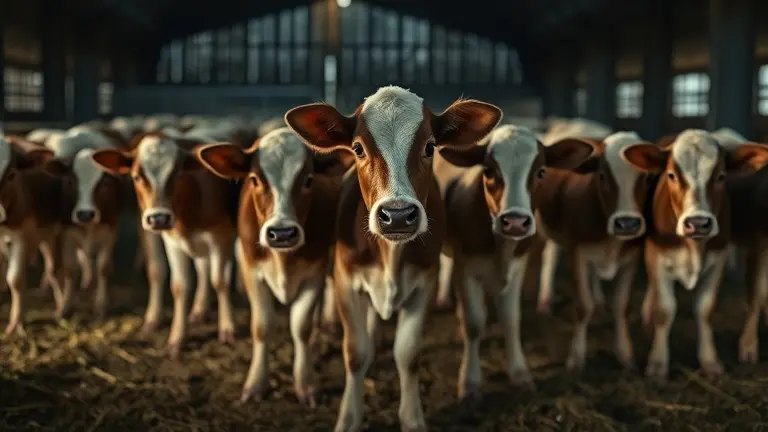
In the quiet early hours of May 3, 2026, the agricultural community in Mercer County, Ohio, faced a chilling reality that many farmers pray never to encounter. A professional-grade theft occurred near the intersection of State Route 219 and Coldwater Creek Road, where 64 Holstein calves were systematically removed from a converted turkey barn. The sheer scale of the operation—requiring significant logistics to transport 64 animals overnight—points to a coordinated effort that has sent shockwaves through the local region. For those who believe their remote facilities are safe, this incident serves as a stark reminder that complacency is perhaps the greatest vulnerability a farmer can possess.
While local authorities continue their investigation, the broader agricultural community must pivot from shock to proactive defense. Livestock protection is no longer just about basic fencing; it requires a sophisticated approach to site security that deters potential intruders before they can strike. Whether your facility is a specialized starter unit or a traditional barn, the logistical sophistication seen in the Mercer County incident underscores the urgent need to harden your physical infrastructure against unauthorized access.
Understanding the Mercer County Calf Theft: A Critical Incident Overview
In the early morning hours of May 3, 2026, the agricultural community in Ohio was shaken by a significant security breach. A total of 64 Holstein calves, estimated to be approximately 13 weeks old, were stolen from a specialized calf starter facility located near the intersection of State Route 219 and Coldwater Creek Road in Mercer County. The incident, which occurred during an overnight window between 10:00 PM on May 2 and 6:00 AM on May 3, represents a severe financial and operational blow to the affected farm. Local authorities, led by the Mercer County Sheriff’s Office, have since launched an active investigation, urging the public to come forward with any information that could assist in recovering the livestock or identifying the perpetrators.
The professional execution of this crime has drawn widespread attention, highlighting the inherent vulnerabilities of remote or converted agricultural structures. The facility, which operated as a converted turkey barn, was clearly targeted. Law enforcement officials have noted that the sheer scale of the theft—moving 64 young calves—points to a highly coordinated effort requiring significant logistics, including heavy-duty trailers and specific knowledge of the facility’s layout. This event serves as a stark reminder of the risks currently facing modern livestock operations:
- Targeted Logistics: The thieves possessed the necessary equipment to transport a large volume of livestock in a single window of time.
- Facility Vulnerability: Even secure, functional starter facilities face risks when they become targets for sophisticated criminal syndicates.
- Economic Impact: Beyond the immediate loss of 64 calves, the event creates long-term operational instability for the farm.
As the investigation into the 64 calves stolen in Mercer County continues, the agricultural sector is left to grapple with the reality that even established operations are not immune to high-level theft. This incident underscores a critical need for enhanced surveillance, improved inventory management, and a re-evaluation of security protocols for farm facilities handling high-value livestock assets across the region.
The Logistics of Agricultural Theft: Why Large-Scale Facility Security Matters
The recent incident involving 64 calves stolen in Mercer County serves as a sobering reminder of the logistical precision required to carry out large-scale agricultural crimes. Transporting 64 Holstein calves—a significant volume of livestock—requires more than just opportunistic theft; it necessitates heavy-duty trailers, coordinated labor, and an intimate understanding of the facility’s layout. Because these animals were taken from a converted turkey barn, it is clear that the perpetrators possessed knowledge of the facility’s operational rhythm and potential blind spots. This level of coordination suggests that modern agricultural crime is evolving into a professional, high-stakes enterprise that views livestock as highly liquid assets.
Beyond Basic Security
For many producers, the “it will never happen to us” mindset relies on traditional deterrents like basic chains, padlocks, or standard barn lighting. However, these measures are proving increasingly insufficient against organized threats. To fortify a modern farm, producers must shift their perspective toward “asset hardening.” When livestock are housed in remote or converted facilities, physical security must account for the following vulnerabilities:
- Access Point Control: Implementing gate sensors and heavy-duty, tamper-resistant locking systems that log entry and exit times.
- Surveillance Infrastructure: Moving beyond static cameras to AI-integrated motion detection systems that provide real-time alerts to mobile devices when activity is detected in restricted zones during off-hours.
- Inventory Management: Maintaining digital, up-to-date headcounts that can be quickly shared with local authorities, such as the Mercer County Sheriff’s Office, to accelerate response times and investigative accuracy.
- Infrastructure Layout: Modifying facility entrance and egress points to restrict the maneuverability of large trailers, effectively making it harder for unauthorized vehicles to navigate the site undetected.
The transition from a passive farm security model to a proactive, technology-driven approach is no longer an optional luxury—it is an economic necessity for protecting the herd. By treating livestock as high-value assets requiring the same security scrutiny as equipment or grain, farmers can significantly raise the risk for potential thieves and reduce their own operational exposure.
Hardening the Perimeter: Practical Security Upgrades for Livestock Facilities

The recent incident involving 64 calves stolen in Mercer County serves as a sobering reminder that agricultural operations are increasingly targeted by organized criminal elements. Because livestock facilities are often isolated and encompass large acreage, they present unique logistical challenges for property owners. To deter potential theft, farmers must shift from a passive posture to a proactive security strategy that focuses on perimeter hardening and rapid detection. Modernizing your defense system is no longer optional; it is a critical investment in your livelihood.
Strategic Surveillance and Detection
Visibility is the primary deterrent against nighttime incursions. Implementing a multi-layered surveillance strategy can significantly reduce the likelihood of unauthorized access. Consider the following hardware upgrades to monitor your property effectively:
- Remote-Monitored Surveillance: Utilize high-definition cameras equipped with infrared night vision and motion-sensing capabilities. Ensure these systems are connected to a cellular or satellite network, providing cloud backup so that footage is preserved even if the recording device is stolen or destroyed by intruders.
- Motion-Activated Lighting: Deploy powerful LED floodlights at all entry points and high-value animal housing areas. Sudden illumination is a proven psychological deterrent that forces intruders to operate under the pressure of potential discovery.
- Perimeter Sensors: Install infrared or seismic ground sensors along fence lines and primary access roads. These devices can trigger silent alerts to your smartphone, providing critical early warning minutes before an intruder reaches your livestock.
Controlling Access Points
Organized thefts, such as the one in Mercer County, require significant planning and logistical coordination, often involving trailers. By restricting physical access, you make your facility a less attractive target. Ensure that all primary entrances are secured with heavy-duty industrial-grade gate locks and use high-visibility signage to indicate that the property is under 24/7 video surveillance. Limiting the number of entry points allows you to channel traffic through monitored zones, making it significantly harder for unauthorized vehicles to enter or exit undetected. Regularly reviewing your site’s vulnerability, especially at isolated structures like converted barns, is essential to staying one step ahead of those seeking to exploit agricultural security gaps.
Developing a Proactive Security Culture for Your Farm

The incident involving the 64 calves stolen in Mercer County serves as a sobering reminder that agricultural operations are increasingly vulnerable to sophisticated, targeted theft. While high-tech surveillance and perimeter fencing provide essential barriers, a truly secure operation relies on a deeply ingrained culture of vigilance. Farmers must move beyond reactive measures and adopt a comprehensive strategy that prioritizes community awareness, rigorous record-keeping, and stringent personnel management. By fostering a collective mindset of security, farmers can significantly increase the difficulty for potential offenders, as professional thieves often target facilities with lax protocols or predictable routines.
Strengthening Community and Operational Oversight
Building an effective security culture starts with transparency and communication. Localized farm watch programs—modeled after neighborhood watch initiatives—can be transformative for rural safety. By maintaining active communication channels with neighboring farms, producers can share real-time alerts regarding suspicious vehicles or unusual activity, creating a regional support system that makes stealthy operations like the one in Mercer County much harder to execute.
To further fortify your facility, implement these proactive organizational strategies:
- Detailed Livestock Documentation: Maintain an up-to-date, digitized inventory of your herd. Include high-resolution photographic logs and unique identification markers for every animal, which assists law enforcement in recovery efforts if a theft occurs.
- Vetted Access Protocols: Establish strict, written access policies for all employees, contractors, and delivery personnel. Require gate logs for every vehicle entering or exiting the facility, particularly during off-peak hours or overnight shifts.
- Controlled Entry Points: If possible, move toward a single, monitored entry point for your farmstead. Ensure that all secondary gates are locked and clearly marked with “No Trespassing” and “Surveillance in Progress” signage.
- Routine Audits: Conduct random, unscheduled site inspections to ensure that protocols are being followed and that all security hardware remains functional.
Ultimately, shift the operational narrative from “it will never happen to us” to a proactive stance of constant readiness. By documenting every movement on your farm and engaging with local authorities and peers, you transform your agricultural facility from an easy target into a fortified, community-backed operation that is far less susceptible to criminal interference.
Fortify Your Facility Against Agricultural Threats
The theft of 64 calves is a devastating loss that highlights the critical need for robust, physical site reinforcement. Relying solely on surveillance is rarely enough when professional thieves target your livelihood; you must create physical barriers that make theft logistically impossible or unacceptably time-consuming. Securing your farm goes beyond just cameras; it requires physical fortifications such as reinforced gates, heavy-duty barn enclosures, and secure access points that truly deter those looking for easy targets.
You do not need to hire expensive contractors or wait for a security firm to act. By taking control of your infrastructure, you can build custom, professional-grade deterrents tailored specifically to your farm’s layout. This is where Ted’s Woodworking becomes an indispensable asset in your security arsenal. Rather than struggling with trial-and-error, you gain access to 16,000 professional-grade workshop plans that provide the exact blueprints and material lists necessary to build superior security structures—from reinforced storage barriers to hardened livestock enclosures—ensuring that every project is completed to the highest standard.
Transforming your farm from a vulnerable site into a fortress starts with the right technical resources. Take the step today to safeguard your herd and equipment by utilizing the most comprehensive building resource available to modern farmers.
 Start fortifying your property today by accessing 16,000 professional-grade workshop plans to build the secure enclosures and storage barriers your farm needs.Secure My Farm Infrastructure Today!