
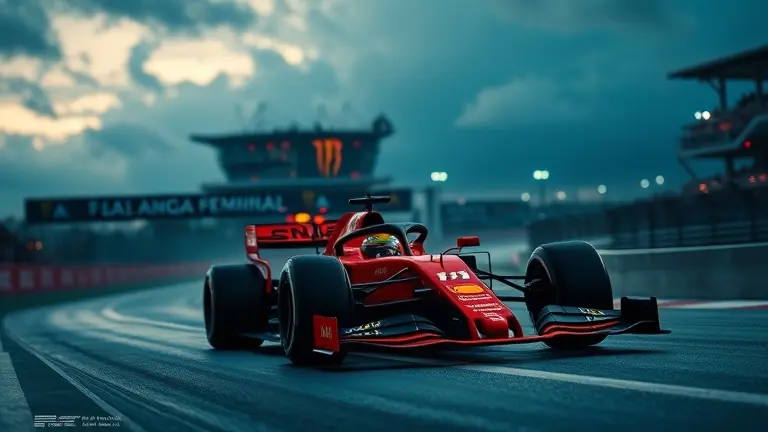
The Miami Grand Prix has officially shifted into high gear with a tactical schedule change, moving the 2026 race start to 1 p.m. ET to outrun a volatile forecast of severe thunderstorms. While the logistics of the event have dominated headlines, the true narrative lies beneath the surface: how the 2026 car regulations—tested for the first time in such grueling conditions—will handle the extreme aquaplaning risks at the Miami International Autodrome. This isn’t just about tires and track temperatures; it is a profound test of mechanical and human resilience.
As the F1 circuit returns from its five-week hiatus, the weather in Miami is forcing teams to confront the psychological toll of uncertainty. When the stakes are at their highest and a red flag could interrupt the rhythm of the race at any moment, the drivers’ ability to maintain unwavering concentration becomes the deciding factor between a podium finish and a DNF. Understanding this high-pressure landscape provides critical insight into the science of focus—a discipline that applies as much to the corporate arena as it does to the cockpit of a Formula 1 machine.
Weather Miami: Why the 2026 Grand Prix Start Time Shifted to 1 p.m. ET
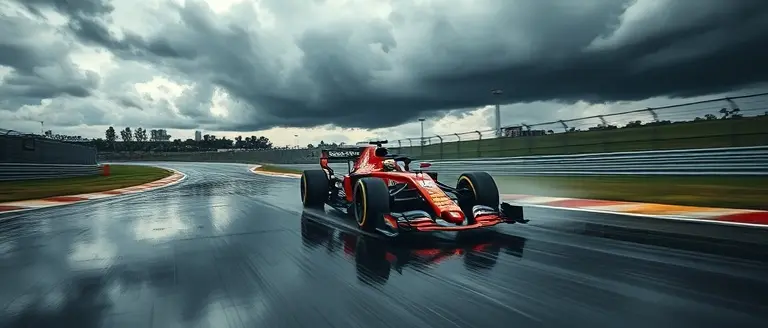
The decision to move the 2026 Formula 1 Miami Grand Prix start time to 1 p.m. ET was not merely a scheduling preference, but a high-stakes operational necessity driven by volatile weather Miami forecasts. With the season already reeling from the cancellation of races in Bahrain and Saudi Arabia, the FIA and F1 officials operated under extreme pressure to ensure the Miami event could proceed safely. Meteorologists provided high-confidence models indicating that severe thunderstorms and heavy rain were slated to strike the Miami International Autodrome by mid-afternoon. By shifting the race start forward by three hours, organizers aimed to capitalize on a shrinking window of stable air to complete the required race distance before the onset of dangerous tropical squalls.
Meteorological Data and Operational Risk
The rapid shift reflects a shift in how the sport manages environmental risks in an era of unpredictable climate patterns. Data provided to race control highlighted several critical factors that necessitated immediate intervention:
- Storm Trajectories: Radar imagery showed a high probability of intense, slow-moving convective cells developing during the original 4 p.m. slot, which would have rendered the track surface untraceable and unsafe for the 2026-spec cars.
- Aquaplaning Risks: With the 2026 F1 regulation overhaul, the new aerodynamic packages were untested in extreme wet conditions, forcing the FIA to prioritize driver safety over standard broadcast windows.
- Safety Infrastructure: Under Florida’s jurisdictional safety protocols, local emergency declarations are often tied to lightning proximity and storm intensity, which could have forced a total evacuation of the grandstands had the race continued into the predicted severe weather window.
This proactive strategy highlights a new collaborative approach between F1 and local stakeholders to prevent the logistical and financial fallout associated with another mid-season cancellation. By prioritizing the “window of opportunity” over commercial norms, the organizers successfully insulated the F1 Miami 2026 event from the disruptive weather patterns that have plagued the early part of this year’s calendar.
Aquaplaning and 2026 Aero Regulations: A Stress Test Under Pressure

The 2026 Formula 1 Miami Grand Prix serves as a critical, high-stakes proving ground for the sport’s radical aerodynamic overhaul. With the race start time pulled forward to 1 p.m. ET to mitigate the risks posed by weather Miami forecasts, teams are now facing the first real-world trial of their new machinery under severe, wet-track conditions. The 2026 regulation changes, which emphasize active aerodynamics and simplified floor geometries, have fundamentally altered how these vehicles manage water displacement and high-speed stability.
Technical Challenges in Wet Conditions
Engineers are particularly focused on how the redesigned floor profiles interact with the standing water often found on the Miami International Autodrome. Previous generations of F1 cars relied heavily on ground-effect tunnels that, while efficient in the dry, were notoriously prone to losing suction during heavy rain. The 2026 configuration aims to optimize the “spray curtain” to improve visibility for trailing drivers, but the trade-offs are significant:
- Tire Displacement: The new tire compounds must work in tandem with the updated diffuser geometry to evacuate water faster, reducing the risk of aquaplaning during high-speed cornering sections.
- Aero Sensitivity: With less reliance on complex bargeboard vortices, the 2026 cars show different sensitivity levels when the vehicle hits a puddle, potentially making the platform more stable but less predictable if the balance is upset.
- Cooling and Drag: In the humid Miami climate, the transition to wet-weather engine mappings is a balancing act between power deployment and preventing thermal stress on critical internal components during the earlier, cooler start time.
As drivers navigate the circuit, the technical focus remains on whether these new aero packages can maintain enough downforce to keep the car glued to the tarmac without compromising the ability to “slice” through the surface water. Evidence suggests that while the 2026 regulations were designed to facilitate closer racing, the volatility of the current weather has turned this Grand Prix into an unplanned stress test for the entire grid’s design philosophy.
The Psychology of the Red Flag: Strategic Readiness in High-Stakes Interruptions
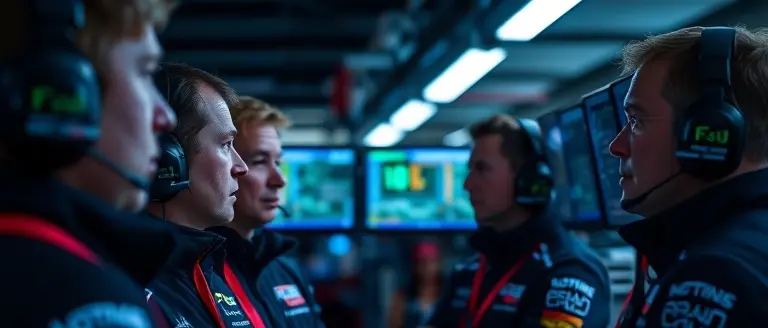
When weather miami forecasts mandate a race start adjustment, the psychological strain on F1 teams intensifies, transforming the paddock into a pressure cooker of tactical uncertainty. The transition from a 4 p.m. start to a 1 p.m. slot for the F1 Miami 2026 event forces engineers to recalibrate their understanding of track evolution. Humidity levels and surface temperatures are radically different in the early afternoon, meaning data gathered during practice sessions may be rendered obsolete. Drivers, meanwhile, must manage the “red flag mentality”—the cognitive load required to maintain peak focus while idling in the cockpit or the garage during mandatory delays caused by torrential rain or safety concerns.
Strategic Pivot Points During Weather Delays
The primary challenge during a red flag is the rapid, logistical pivot required to manage tire strategy. Teams must navigate the thin margin between selecting the correct rubber and falling into a “strategy trap.”
- Tire Degradation Variables: Early race starts shift the track temperature, significantly impacting the graining profiles of intermediate tires compared to full-wets.
- The Window of Opportunity: With the race distance potentially curtailed by incoming storms, teams prioritize track position over raw pace, knowing that a single strategic error regarding tire compounds could cost a podium finish.
- Communication Discipline: Race engineers must filter external noise to keep drivers calm; the psychology of the team hinges on the ability to react to sudden weather shifts without succumbing to the anxiety of an unpredictable Formula 1 Miami environment.
Ultimately, the ability to maintain composure under the threat of a premature race conclusion defines the top contenders. As the 2026 regulations emphasize precision in wet-weather handling, the teams that successfully integrate weather-sensitive data into their live race models gain a significant competitive edge over those reacting purely to the visual appearance of the track.
Weather Volatility as an F1 Variable: Evaluating Miami’s Unique Microclimate
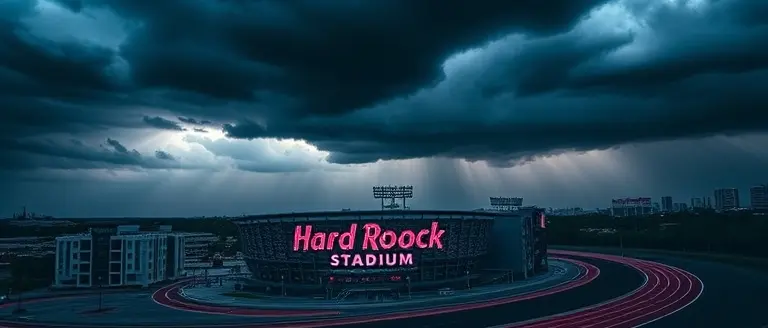
The Miami International Autodrome presents a distinct meteorological challenge that has become a defining factor for the 2026 Formula 1 season. Positioned within a subtropical zone, the circuit is uniquely susceptible to rapid, high-intensity convective storms. For teams returning from a challenging five-week hiatus, the current weather Miami forecast serves as an immediate, high-stakes test of operational agility. Unlike permanent circuits, the track surface at Hard Rock Stadium acts as a heat sink, creating complex interactions with sudden rainfall that can lead to localized aquaplaning, testing the limits of the new 2026 aero-regulations.
Strategic Implications of Climate-Driven Racing
The decision to move the race start to 1 p.m. ET is not merely a logistical update; it represents a tactical shift in how teams manage thermodynamic variables. In Miami’s humid climate, track temperature is a volatile metric. When heavy rain hits, the rapid cooling of the asphalt—compounded by the humidity—drastically alters the tire degradation profile. Modern constructors must now view weather adaptability as a core engineering competency.
- Thermal Management: The 1 p.m. start risks higher track temperatures before potential storms, challenging the working window of intermediate tires.
- Aero-Sensitivity: The 2026 car regulations, which prioritize cleaner wake and downforce, will face their first significant “wet” test on a street-style circuit, where surface grip levels fluctuate violently between sun and shower.
- Data Readiness: The extended break has forced teams to rely heavily on predictive simulation tools rather than real-world data, placing a premium on the rapid decision-making of race strategists when the radar indicates incoming instability.
Mastering the f1 miami 2026 environment requires more than car speed; it demands the ability to interpret micro-patterns in real-time. As the grid prepares for a race under threat of severe weather, the focus remains on which team can best optimize their setup for the narrow window of transition between dry racing and the unpredictable, storm-heavy conditions characteristic of the South Florida coastline.
Mastering Your Cognitive Edge Under Pressure
The 2026 F1 Miami Grand Prix serves as a masterclass in adaptation, proving that success—whether on a rain-soaked track or in the high-stakes boardroom—hinges on the ability to maintain composure when chaos ensues. The shift in race strategy is not merely about timing; it is about the mental fortitude required to process complex variables, from regulation-specific aquaplaning dynamics to the psychological weight of potential red-flag interruptions.
Just as F1 drivers rely on split-second mental processing to navigate unpredictable conditions, your ability to maintain sharp focus during high-stress moments is your ultimate performance advantage. High-pressure environments often trigger cognitive fog, clouding the judgment needed for peak output. This is precisely why elite professionals are turning to The Brain Song, a modern, tech-forward solution designed to combat mental fatigue and sharpen focus.
By integrating neuroscience-backed brain-wave training into your routine, you can simulate the cognitive optimization that elite athletes use to stay ahead. It is the natural next step for anyone looking to eliminate the mental haze that hinders high-level decision-making, ensuring that when your own personal ‘weather’ turns volatile, your mind remains steady, clear, and ready to perform. Don’t leave your potential to chance; optimize your mental hardware today.
 Optimize your own mental performance and sharpen your focus like an elite athlete with a daily 12-minute brain-wave training session.Yes, I Want To Sharpen My Focus Now!