
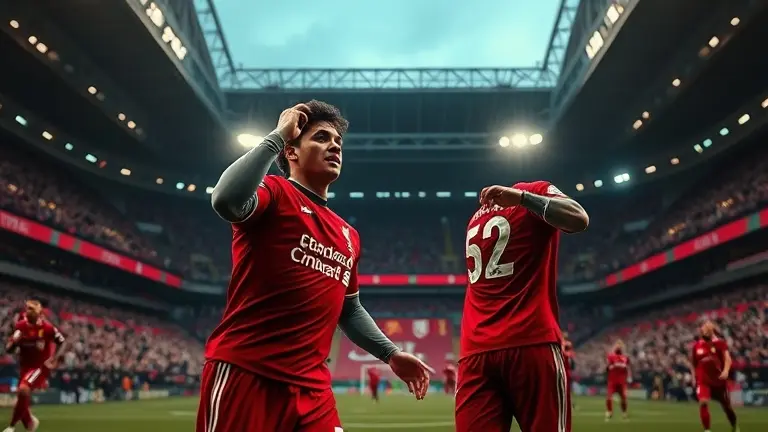
The dust has finally settled at Old Trafford, but the tremors from Manchester United’s 3-2 victory over Liverpool on May 3, 2026, are still being felt across the Premier League. While the immediate headlines were dominated by Kobbie Mainoo’s late-game heroics and the chaotic collapse of a two-goal lead, the true significance of this derby lies buried in the Manchester United vs Liverpool F.C. standings. By securing a Champions League spot and pushing their arch-rivals to the brink of a top-four disaster, United has fundamentally altered the trajectory of both clubs.
However, scorelines only tell half the story. As the initial adrenaline fades, the real work begins. This isn’t just about three points; it is about the cold, hard reality of squad rebuilding, summer budget strategies, and the tactical evolution under interim manager Michael Carrick. For the discerning analyst, navigating the noise of the media requires more than just passion—it requires the same sharp, unwavering focus that managers use to translate a chaotic 90-minute battle into a long-term strategic vision for the 2026/27 season.
The Old Trafford Shift: How the May 3rd Derby Reshaped the Premier League Table

The 3-2 result at Old Trafford on May 3, 2026, serves as the definitive inflection point of the current Premier League season. By securing a hard-fought victory against Liverpool, Manchester United effectively solidified their position in the top four, officially ending a grueling two-year exile from the UEFA Champions League. The match was more than a mere three points; it was a psychological turning point that validated the recent tactical evolution overseen by the coaching staff. Data surrounding the manchester united f.c. vs liverpool f.c. standings now reflects a widening gap, as United’s late-season surge has distanced them from the chasing pack, while Liverpool is left to navigate the logistical and financial fallout of potentially missing out on Europe’s premier club competition.
The Mathematical and Tactical Consequences
The volatility of the match—highlighted by United overcoming a two-goal deficit and clinching the win via a stunning Kobbie Mainoo strike—underscores the shifting power dynamic between these two giants. For Man Utd, the implications are twofold:
- Financial Windfall: Qualification for the 2026/27 Champions League provides the necessary capital to aggressive retooling during the summer transfer window.
- Recruitment Power: The ability to offer elite European football acts as a significant lever in attracting marquee talent, a hurdle the club has struggled to clear in recent seasons.
Conversely, for Liverpool, the defeat represents a severe blow to their top-four aspirations. The loss has forced a recalibration of their long-term project, as the absence of Champions League revenue complicates squad rebuilding efforts. Analysts point to the “combustible” nature of this derby as evidence of the high stakes involved, with United’s resilience under pressure signaling a more mature tactical approach. As the season concludes, this specific fixture will be remembered as the moment the manchester united project regained its European trajectory, leaving their Merseyside rivals in a precarious position regarding their strategic development and immediate future competitiveness.
Tactical Evolution: Management Philosophies Under the Spotlight

The high-stakes clash at Old Trafford served as a definitive case study in modern managerial adaptability. While the Manchester United vs Liverpool f.c. standings provided the dramatic backdrop, the 3-2 result was forged by a stark contrast in mid-game tactical adjustments. Interim manager Michael Carrick’s ability to stabilize Man United after surrendering a two-goal lead demonstrated a pragmatic evolution in his philosophy. Rather than succumbing to the pressure of a Liverpool comeback, Carrick adjusted the defensive block to neutralize the transition-heavy threats that plagued his side early in the second half. By tucking the wide midfielders inward, United forced the visitors into congested central channels, effectively stifling the momentum that had shifted in Liverpool’s favor.
Tactical Rigidity vs. Dynamic Response
The pivotal difference in this derby was Liverpool’s apparent tactical rigidity when the game reached its climax. While Liverpool sought to maintain their high-pressing identity, they struggled to pivot once United’s structural adjustments closed the half-spaces. Key tactical takeaways from the match include:
- Structural Resilience: Man Utd showcased improved discipline in their defensive transition, preventing the kind of isolated defensive errors that defined their earlier 2025-26 campaign.
- The Mainoo Factor: Kobbie Mainoo’s tactical freedom in the final third allowed him to exploit gaps that opened up when Liverpool over-committed during their search for a winning goal.
- Liverpool’s Inflexibility: Evidence suggests that Liverpool failed to adjust their defensive line depth in response to United’s rapid counter-attacks, a recurring issue that forced them to chase the game rather than control it.
Heading into the 2026/27 season, these tactical identities suggest diverging paths. For Manchester United, the ability to secure Champions League football through tactical grit provides a stable foundation for a more permanent long-term project. Conversely, Liverpool must address the tactical fatigue that manifested during this high-intensity match, as their current approach appears increasingly vulnerable to opponents who are willing to absorb pressure and punish them through calculated, vertical transitions. This victory serves as a crucial endorsement of Carrick’s flexible management style over the more rigid, heavy-metal football that once defined the visiting side.
The Financial Windfall: Champions League Qualification and United’s Transfer War Chest

The seismic 3-2 victory at Old Trafford did more than settle a grudge match; it fundamentally altered the fiscal trajectory for Manchester United. By securing their return to the UEFA Champions League, the club has unlocked a substantial financial windfall that directly influences the upcoming summer transfer window. Following this pivotal manchester united f.c. vs liverpool f.c. standings shift, the Red Devils transition from a position of relative austerity to one of significant market leverage. Evidence suggests that the guaranteed revenue from group-stage participation, broadcasting rights, and associated commercial bonuses will provide the necessary capital to move beyond budget-constrained scouting and target marquee, world-class reinforcements.
Strategic Leverage and Elite Recruitment
With the Champions League anthem set to return to Old Trafford in the 2026/27 season, Man Utd can now offer a platform that elite, trophy-hungry players demand. This status change is vital for attracting top-tier talent who might have previously looked toward clubs with higher competitive ceilings. The financial injection serves several strategic purposes:
- Expanded Transfer Budget: Increased liquidity allows the front office to bid competitively for primary targets without the immediate need for high-volume squad sales.
- Player Retention: Champions League football acts as a persuasive tool for keeping current core talent committed to the club’s long-term vision under the current management.
- Enhanced Negotiating Power: The ability to offer European competition improves the club’s position when negotiating contracts, reducing the risk of being outmaneuvered by continental rivals.
For Manchester United, this windfall serves as the cornerstone of their rebuilding effort. While the squad’s resurgence—spearheaded by tactical adjustments and late-season heroics—has been impressive, the 2026 summer window will be the true test of the club’s administrative strategy. By pivoting toward a more aggressive recruitment policy fueled by their improved league standing, the club is now positioned to close the gap on the top of the Premier League table permanently.
Liverpool’s Crossroads: Rebuilding for a Post-Top-Four Reality

The seismic 3-2 defeat at Old Trafford against Manchester United did more than shift the manchester united f.c. vs liverpool f.c. standings; it signaled a potential end to an era for the Merseyside club. Failing to secure Champions League football for the upcoming season creates a significant financial and prestige vacuum. Without the guaranteed revenue of Europe’s elite competition, Liverpool faces a difficult summer where the allure of recruiting top-tier talent may wane, and the ability to retain key squad members will be tested under the microscope of budgetary constraints.
Addressing the Squad’s Aging Core
The current roster composition suggests that a fundamental overhaul is no longer a luxury but a necessity. Several veteran pillars within the squad have reached a stage where their physical output no longer matches the high-intensity demands of the Premier League. Evidence suggests that the club’s recruitment strategy must pivot toward a younger, more dynamic profile to regain parity with rivals like Man Utd. Key areas requiring immediate investment include:
- Defensive Reinforcement: Improving central defensive stability to prevent the late-game collapses witnessed in recent derbies.
- Midfield Engine: Injecting athleticism into the center of the pitch to better transition between defensive duties and vertical attacking plays.
- Forward Depth: Identifying clinical options to reduce reliance on aging stars who have struggled with consistency throughout the 2025-26 campaign.
For Liverpool, the path forward requires a clinical, data-driven approach to squad building. The transition from a “challenging” team to a rebuilding project is never linear, but management must act decisively. By prioritizing long-term squad health over short-term fixes, the club can aim to close the gap that Manchester United—having solidified their Champions League spot—has successfully exploited. Whether the current leadership can execute this pivot will define the club’s trajectory for the next several seasons.
Navigating the Tactical Shift Ahead
As we move beyond the excitement of the derby, the stark reality of the league table serves as a blueprint for the summer. Manchester United must now pivot from the intensity of the match to the meticulous, high-stakes negotiations of the transfer market, armed with the financial security of Champions League qualification. Meanwhile, Liverpool faces a critical rebuilding phase, requiring a level of cold, clinical decision-making that separates successful clubs from those destined for a period of stagnation.
Much like the managers who must clear away the emotional noise of a win or loss to focus on recruitment, you need mental clarity to digest the complex data driving these strategic shifts. Analyzing these deep-seated tactical changes and market movements requires peak cognitive performance. This is where The Brain Song becomes your essential analytical tool. Just as an elite manager relies on sharp focus to execute a game plan, our formula is designed to cut through mental fog, ensuring you stay as sharp as the tactics we analyze.
By integrating this focus-enhancing solution into your daily routine, you move from being a mere spectator to a high-level observer, fully capable of tracking the intricacies of squad development and financial maneuvering as they unfold throughout the transfer season.
 Optimize your analytical edge and sharpen your focus for the upcoming transfer season with The Brain Song.Yes, I Want to Sharpen My Focus Now!