
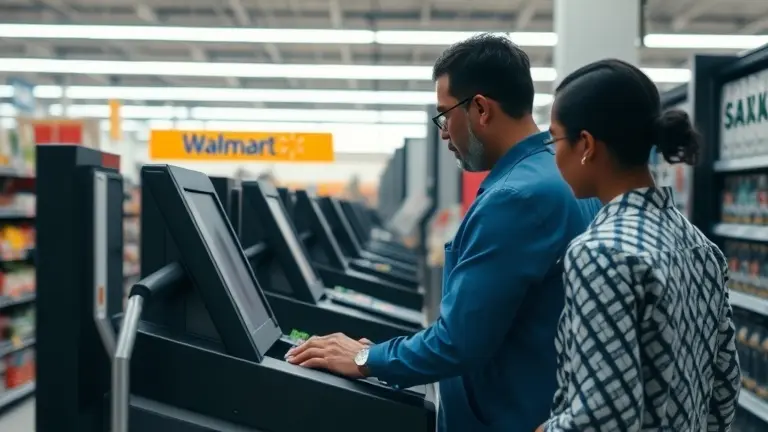
For years, the promise of self-checkout at Walmart was one of seamless efficiency: a frictionless path from shelf to exit, powered by innovation. However, as of May 2026, that narrative is shifting. From South Philadelphia to major hubs nationwide, the familiar blue-lit kiosks are quietly disappearing. While initial headlines point toward rising retail theft—or ‘shrink’—as the primary culprit, the reality is a complex corporate recalibration. Walmart is not merely removing machines; it is systematically re-evaluating the trade-off between labor costs, customer throughput, and the actual human experience of shopping in an era increasingly defined by digital-first logistics.
This transition signifies more than just a return to human cashiers; it represents a fundamental pivot in retail strategy. As Walmart simultaneously rolls out massive digital shelf label initiatives across 4,600 locations, it is clear that the ‘frictionless’ dream of the early 2020s is being replaced by a more controlled, tech-integrated, and supervised environment. For the consumer, this marks the end of the ‘guesswork’ era, forcing us to ask: why did we accept broken, high-frustration systems for so long, and what happens when we finally demand precision instead of mere speed?
The Strategic Rollback: Why Walmart Is Reconfiguring Self-Checkout in 2026
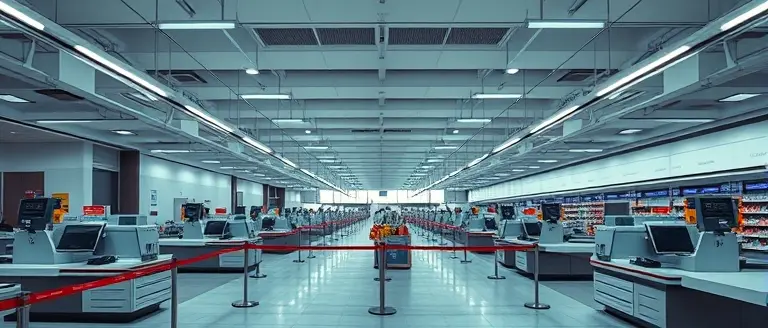
As of mid-2026, the retail landscape at Walmart is undergoing a calculated transformation. Contrary to viral speculation suggesting a total abandonment of automated systems, the current self-checkout at Walmart strategy is a highly targeted, data-driven initiative. The company is actively removing or restricting self-checkout kiosks primarily in locations identified as “high-shrink” zones—stores where inventory loss due to theft or procedural error has reached unsustainable levels. By shifting back to traditional cashier-staffed lanes in these specific markets, Walmart is prioritizing the protection of its profit margins and ensuring a more secure retail environment.
Data-Driven Loss Prevention
This move is not a universal policy change but rather a flexible, site-specific response designed to mitigate financial leakage. Retail “shrink”—a comprehensive term covering shoplifting, organized retail crime, and internal errors—has pressured many national chains to reconsider the accessibility of unattended payment kiosks. By returning to manned registers, store managers can provide better oversight during the final point of sale, effectively reducing the ease with which items are missed or improperly scanned.
Balancing Technology and Service
While the removal of kiosks has sparked debate, it is essential to view these changes through the lens of a broader, systemic evolution:
- Localized Optimization: Removals are localized to areas where the cost of shrink outweighs the operational efficiency gains of self-checkout.
- Customer Experience Focus: In many instances, the reintroduction of human cashiers is being leveraged to improve customer service speed and assist shoppers who find the self-checkout process cumbersome.
- Infrastructure Synergy: These physical changes are occurring alongside the deployment of digital shelf labels across thousands of stores, which allow for real-time price management and inventory tracking, signaling a move toward a more tech-integrated, yet supervised, store model.
Ultimately, Walmart is rebalancing its operational equation. By scaling back automation where necessary, the retailer is testing a hybrid model that seeks to maintain the benefits of innovation while reclaiming the control offered by traditional, staff-supported checkout lanes.
The Economic Calculus: Shrink, Labor, and Retail Profitability

The decision to rollback self checkout at Walmart locations is fundamentally a reaction to the shifting economics of retail. For years, the industry operated under the assumption that automation would provide a seamless trade-off: higher throughput and lower labor costs in exchange for a modest increase in inventory “shrink.” However, by mid-2026, the escalation in organized retail crime and accidental scanning errors has forced a reevaluation of this model. The financial burden of lost merchandise—often cited as a significant contributor to eroded profit margins—has begun to outweigh the payroll savings once associated with unmanned kiosks.
The Trade-off: Loss Prevention vs. Payroll Efficiency
The core of this economic transition lies in the friction between loss prevention and labor utilization. When a store removes self-checkout stations in favor of traditional, human-staffed lanes, Walmart is effectively choosing a more controlled environment over theoretical efficiency. While human cashiers represent a direct, recurring labor cost, they serve as a critical gatekeeper that automated systems cannot replicate.
Key considerations influencing this pivot include:
- Shrink Mitigation: Human presence serves as a visual and procedural deterrent, drastically reducing both intentional theft and legitimate scanning errors.
- Operational Throughput: While self-checkouts promise speed, they often create bottlenecks when technical errors occur or age-restricted items require manual overrides.
- Customer Service Metrics: Returning to staff-led lanes allows for a more personalized experience, potentially increasing customer loyalty in stores where frustration with automated systems had reached a tipping point.
By reallocating labor back to the front-end, Walmart is shifting its strategy from pure automation to a hybrid model that prioritizes asset protection. This transition suggests that in high-shrink markets, the “convenience” of the self-checkout experiment is being sacrificed to ensure long-term, sustainable store profitability. As the retailer integrates advanced technology like digital shelf labels, the checkout experience may eventually become more streamlined, but for now, the data indicates that human oversight remains the most effective tool against inventory loss.
The Digital Store Transformation: Beyond the Checkout Lane

While the recent reduction of self checkout at Walmart locations has dominated news cycles, these adjustments represent only one component of a broader, systemic modernization strategy unfolding in 2026. Rather than viewing the removal of kiosks as an isolated retreat, industry analysts categorize it as a strategic pivot toward a more controlled and tech-integrated store environment. This transformation aims to mitigate “shrink” while simultaneously gathering granular data to optimize store performance, labor allocation, and supply chain logistics.
The Integrated Ecosystem
Walmart’s current retail strategy relies on a multi-layered technological stack that extends far beyond the point of sale. Key initiatives currently being scaled across thousands of stores include:
- Digital Shelf Labels (DSLs): With plans to reach 4,600 stores, these electronic displays allow for real-time pricing updates and inventory synchronization, effectively reducing the labor required for manual tag changes and improving price accuracy.
- Enhanced RFID Integration: Walmart is increasingly utilizing RFID technology to maintain near-perfect real-time inventory visibility. This reduces the need for frequent manual shelf-stocking checks and assists in loss prevention by tracking high-value goods throughout the store footprint.
- Computer Vision and Surveillance: Advanced AI-driven monitoring systems are being deployed to assist associates in identifying out-of-stock items, monitoring aisle activity, and ensuring a secure shopping environment.
This interconnected ecosystem creates a feedback loop where every product interaction is monitored. By shifting away from purely automated, unmonitored checkout experiences, the retailer is effectively reclaiming physical control of the sales floor. The goal is to balance operational efficiency with proactive loss prevention, ensuring that human intervention—now focused on customer service and floor management—complements the high-tech surveillance and inventory management tools governing the rest of the store. As Walmart integrates these digital layers, the checkout lane evolves from a standalone automated process into a single, high-stakes touchpoint within a sophisticated, data-rich retail architecture.
The Consumer Experience: Balancing Convenience and Friction

The evolving landscape of self checkout Walmart operations has created a profound split in the American consumer experience. For many, the transition away from automated kiosks represents a return to a more predictable, human-centric service model. However, for shoppers accustomed to the rapid speed of scanning their own items, the rollback introduces significant “friction.” This tension highlights a critical shift in how the nation’s largest retailer balances operational security with the demand for frictionless commerce. Evidence suggests that while theft-driven kiosk removals reduce shrink, they concurrently force shoppers back into queue-based systems that may feel antiquated in an era of digital-first convenience.
The Trade-off: Efficiency vs. Security
The consumer sentiment regarding the reduction of self-checkout lanes is polarized, largely depending on individual shopping habits. A “hybrid” store model—which blends limited self-checkout capacity with staffed registers—is increasingly being viewed as the new industry standard. To understand this shift, shoppers should consider the following impacts:
- Wait Times: Stores relying solely on manual registers often see an increase in wait times during peak hours, creating a perceived regression in customer service.
- Transactional Reliability: Staff-assisted lanes reduce the “unexpected item in bagging area” errors that frequently plague automated systems, potentially increasing overall throughput despite the physical line length.
- Psychological Comfort: Many shoppers report feeling less like “unpaid labor” when interacting with a cashier, whereas others feel that the loss of autonomy at self-checkout removes a key pillar of modern retail convenience.
Ultimately, the future of the Walmart shopping experience appears to be moving toward a highly controlled, tech-integrated environment. As digital shelf labels become ubiquitous alongside these checkout changes, Walmart is effectively digitizing the store floor to compensate for the reduction in front-end automation. This suggests that while individual self-checkout kiosks may become less prevalent in high-shrink zones, the broader retail strategy is not abandoning technology; rather, it is refining the point of sale to ensure that retail theft does not compromise the store’s long-term operational sustainability. For the average consumer, this means adapting to a more managed flow that prioritizes store integrity over the sheer speed of a DIY checkout lane.
The Cost of Cutting Corners: Finding Precision in a Chaotic World
The rollback of self-checkout systems serves as a stark reminder that when we trade quality and oversight for cheap, automated shortcuts, the ‘shrink’ is inevitable. Whether it is a multi-billion dollar retail giant losing stock to inefficient kiosks or an individual amateur enthusiast losing time and materials to flawed projects, the lesson remains the same: convenience without structure is simply a recipe for failure. The era of settling for ‘good enough’ is coming to a close, as both businesses and savvy individuals pivot back toward reliable, human-centric craftsmanship.
Just as Walmart is realizing that replacing human oversight with faulty automation creates systemic chaos, many of us are finding that cutting corners in our own work leads to similar waste. You don’t have to be a victim of incomplete systems or vague instructions. If you value doing it right the first time over the temporary allure of a quick fix, you deserve the ‘Gold Standard of Precision.’ Our comprehensive library provides the technical certainty that modern automation lacks, transforming the frustration of guess-work into a streamlined, high-certainty experience that guarantees professional results.
Stop settling for the broken, ‘low-friction’ systems that have failed both retailers and makers alike. Reclaim your control and master your environment with the exact, proven blueprints used by masters of the craft. It is time to replace chaos with a system that actually works.
 Stop settling for broken processes; master your own results with the precise, proven systems found in the world’s largest library of professional woodworking plans.Yes, I Want This Precision Now!