
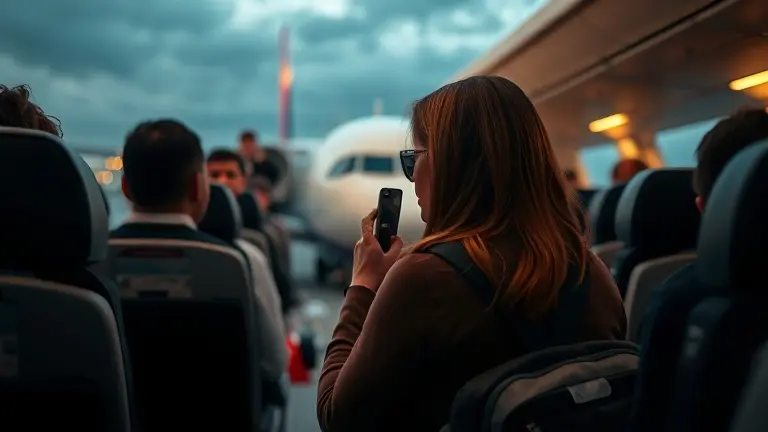
When Delta Flight 1323 was delayed after a passenger refused to end a phone call, the resulting chaos at Miami International Airport captured the internet’s attention. While the viral footage of passengers chanting “Hang up or get out” makes for gripping social media content, the reality behind the arrest is far less entertaining. It represents a growing crisis in modern aviation: the erosion of cabin etiquette and the severe, life-altering legal consequences of ignoring FAA safety protocols under the pressure of air travel.
This incident is not an isolated case but a symptom of a broader issue involving cognitive fatigue and emotional dysregulation in the sky. As passengers, we are often pushed to our breaking points by delays, confined spaces, and rising stress. However, as we break down the legal ramifications and the anatomy of this volatile situation, we must ask: how can we, as modern travelers, better regulate our own internal states before a standard delay escalates into a federal offense?
Delta Flight 1323: The Incident Behind the Viral Video
The disruption involving Delta Flight 1323 at Miami International Airport on April 27, 2026, serves as a stark reminder of the strict safety protocols governing modern aviation. The incident began during the final stages of boarding and taxi preparation when a female passenger refused to adhere to the explicit instructions of the flight crew to end a phone call. Under FAA safety regulations, passengers are required to comply with all crew directives regarding the use of electronic devices to ensure the safety and security of the aircraft. When the passenger remained defiant despite multiple verbal requests, the captain made the necessary decision to return the aircraft to the gate to address the security concern.
Escalation and Passenger Intervention
The situation rapidly intensified as the delay stretched past an hour, causing significant frustration among those on board. As the aircraft sat stationary, fellow travelers began to vocalize their discontent, eventually chanting “Hang up or get out” in a public display of frustration that was later captured on viral video. This phenomenon highlights a growing trend of “passenger policing,” where travelers are increasingly willing to collectively intervene when they perceive a fellow passenger is violating cabin etiquette or safety rules. Key details of the escalation include:
- Non-compliance: The refusal to follow crew instructions regarding electronic device usage triggered a mandatory security protocol.
- Operational Impact: Returning to the gate resulted in an hour-long delay, affecting the travel schedules of all passengers on board.
- Law Enforcement Response: Upon returning to the gate, law enforcement officials boarded the aircraft, removed the passenger, and placed her under arrest.
- Legal Consequences: The incident is currently being reviewed for potential violations of federal aviation safety laws, which can carry severe penalties, including hefty fines and placement on airline “no-fly” lists.
By the time law enforcement completed the removal process, Delta flight 1323 was delayed after a passenger refused to end a phone call, demonstrating how one individual’s disregard for instructions can have cascading consequences for the entire airline operation. The incident remains a focal point in discussions regarding air travel conduct and the legal ramifications of failing to obey cabin crew commands.
Cabin Crew Authority and FAA Compliance
When Delta Flight 1323 was delayed after a passenger refused to end a phone call, it highlighted a critical misunderstanding among travelers: flight attendant instructions are not mere suggestions or customer service requests—they are federal mandates. Under FAA regulations, flight crews are the final authority regarding safety and security during flight operations. When a crew member issues a directive to stow electronic devices, terminate a call, or fasten a seatbelt, they are acting in accordance with Title 14 of the Code of Federal Regulations, which requires all passengers to comply with crew instructions to ensure the safe operation of the aircraft.
The Legal Implications of Non-Compliance
The incident in Miami serves as a stark reminder of the legal repercussions that follow when a passenger refuses to comply. Obstructing a crew member’s duties is a serious violation that can lead to severe federal consequences. When a delta flight delayed an hour after passenger refused to end phone call, the situation escalated beyond a simple etiquette breach into a security matter. Flight crews are empowered to:
- Order the removal of disruptive passengers: If a passenger poses a threat to the safety of the flight or refuses to follow safety protocols, the captain may request local law enforcement intervention.
- Facilitate federal charges: Non-compliance can result in hefty civil penalties and potential criminal charges under federal law.
- Enforce “No-Fly” status: Airlines maintain internal watchlists, and severe incidents often lead to permanent bans from future travel with that carrier.
The authority granted to cabin crew is absolute, particularly during the critical phases of taxi, takeoff, and landing. Compliance is mandatory because, in an emergency, every second counts; a passenger distracted by a phone call may miss vital safety briefings or be unable to respond quickly to crew commands. Ultimately, the collective frustration captured in viral videos mirrors the aviation industry’s firm stance: individual convenience does not supersede the safety protocols necessary to protect everyone on board.
The True Cost of Air Rage: A Data-Driven Timeline
When Delta Flight 1323 was delayed after a passenger refused to end a phone call, the incident served as more than just a viral moment; it highlighted the immense systemic burden caused by individual non-compliance. The economic and logistical footprint of such an event extends far beyond the tarmac at Miami International Airport. When a flight must return to the gate, the “cost” is measured in thousands of gallons of wasted jet fuel, additional crew hours, and the cascading impact on the airline’s daily schedule. For fellow travelers, the frustration of a delta flight delayed an hour after passenger refused to end phone call often manifests as missed connecting flights, lost hotel reservations, and the erosion of consumer trust in air travel reliability.
The Ripple Effects of Cabin Disruption
The aviation ecosystem operates on tight, precision-based margins. When a single individual ignores FAA safety protocols, the administrative and legal repercussions create a multi-layered ripple effect:
- Operational Stagnation: Returning to the gate consumes valuable runway slots and forces ground crews to re-evaluate load balancing and flight plan clearances.
- Administrative and Legal Drain: The intervention of local law enforcement and the subsequent processing of an arrest utilize public resources that could be directed elsewhere, not to mention the potential federal investigations into interference with a flight crew.
- The Passenger Penalty: The collective time lost by 150+ passengers on a single flight is staggering. If each person is delayed by one hour, the event effectively “steals” over a week of productive human time in a single afternoon.
These incidents, increasingly characterized by “passenger policing,” illustrate a growing friction between entitlement and the non-negotiable safety requirements of commercial aviation. As airlines adjust their de-escalation strategies, the data remains clear: a single refusal to follow a simple crew instruction creates a measurable, detrimental impact on the entire aviation grid, highlighting why air rage remains a critical focus for regulators in 2026.
Consequences Beyond the Tarmac: Federal Charges and No-Fly Lists
When Delta Flight 1323 was delayed after a passenger refused to end a phone call, the immediate outcome was a collective frustration from travelers at Miami International Airport. However, the long-term repercussions for the individual involved extend far beyond a single interrupted itinerary. Under United States federal law, interfering with the duties of a flight crew is not merely a breach of airline policy; it is a serious criminal offense. Per 49 U.S. Code § 46504, individuals who intimidate, threaten, or interfere with crew members can face significant federal penalties, including heavy fines and potential imprisonment. The incident serves as a stark reminder that the cockpit and cabin are strictly regulated environments where non-compliance can trigger a cascade of legal liabilities.
The Lasting Impact of In-Flight Non-Compliance
Beyond criminal charges, disruptive passengers often face administrative sanctions that permanently alter their ability to travel by air. Airlines maintain internal “no-fly” lists, which are independent of government-managed security watchlists but effectively ban an individual from purchasing tickets or boarding flights with that carrier.
Key consequences of such behavior include:
- Federal Prosecution: Charges related to “interfering with a flight crew” are investigated by the FBI and can lead to significant jail time.
- Internal Airline Bans: Once placed on a carrier’s prohibited passenger list, regaining flying privileges is notoriously difficult and often impossible.
- Civil Penalties: The FAA has the authority to pursue civil penalties against passengers for unruly behavior, which can reach tens of thousands of dollars per violation.
- Reputational and Employment Risks: As viral incidents like the one involving the delta flight delayed an hour after passenger refused to end phone call circulate, the public nature of these arrests can have lasting professional and personal consequences.
In an era of heighted “passenger policing,” airlines are increasingly empowered to enforce safety protocols with zero tolerance. Engaging in defiant behavior during pre-takeoff safety checks is no longer viewed as a simple etiquette breach; it is now treated as a threat to aviation security, carrying consequences that persist long after the aircraft reaches its gate.
Mastering Your Mind in the Modern Cabin
The viral incident involving Delta Flight 1323 serves as a sobering reminder of how quickly the pressures of modern air travel can unravel our composure. When the cabin environment shifts from orderly to chaotic, the difference between a minor annoyance and a life-altering legal nightmare often comes down to internal emotional regulation. Understanding the legal and social consequences of non-compliance is vital, but so is acknowledging that our brains are not always equipped to handle the high-stress, cramped conditions of a commercial flight.
As we navigate an era of increased air rage, the true power lies in proactive self-care. This is where The Brain Song becomes an essential component of your travel toolkit. By utilizing science-based sound therapy, you can actively combat the cognitive overload and emotional dysregulation that lead to the type of explosive behavior we witnessed in Miami. This isn’t just about listening to music; it’s about providing your nervous system with the clarity and resilience needed to maintain your cool, regardless of flight delays or surrounding tensions.
You don’t have to be a victim of your own stress response. By integrating this mental training into your pre-flight routine, you ensure that you arrive at your destination with your reputation, your freedom, and your peace of mind fully intact. It is the smartest, most effective way to protect your well-being in an increasingly unpredictable world.
 Learn how to use sound therapy to keep your composure and clarity, no matter how chaotic your travel day becomes.Protect My Peace and Focus Today!