
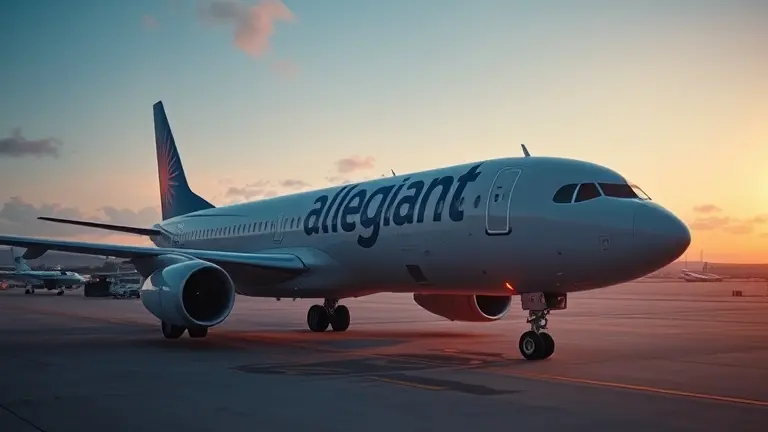
Travelers relying on Allegiant Air this summer may find their itineraries caught in the crosshairs of a volatile aviation market. While the airline celebrated a record-breaking Q1, the narrative has shifted abruptly toward a cautionary outlook for the remainder of the year. With fuel costs surging toward $4.35 per gallon and a high-stakes $1.5 billion merger with Sun Country Airlines looming, Allegiant has announced a 6.5% year-over-year capacity reduction. For the average passenger, this isn’t just a corporate finance headline—it represents a tangible risk of reduced flight frequencies to popular vacation spots, potential route cancellations, and the growing uncertainty of booking reliability.
This corporate tug-of-war between aggressive growth and macroeconomic pressures creates a landscape where the passenger’s schedule feels increasingly fragile. As travelers scramble to adapt to these shifting flight patterns, the need for stability in other areas of life becomes paramount. When you cannot rely on the airlines to maintain their commitments, you need a way to reclaim control over your personal projects and productivity, ensuring that even when travel plans falter, your home life remains anchored in precision and purpose.
Allegiant Air’s Bifurcated Reality: Q1 Records vs. Q2 Volatility

Allegiant Air currently finds itself in a state of financial paradox, characterized by a triumphant start to the 2026 fiscal year and a darkening short-term horizon. In the first quarter of 2026, Allegiant Travel Company reported stellar results, achieving a commendable 14.9% adjusted operating margin. This performance underscored the airline’s efficiency in managing its low-cost model, proving that its unique strategy of connecting small-to-medium-sized cities to vacation destinations remains a robust revenue driver. However, this momentum has hit a sudden wall as the industry transitions into the second quarter, forced to grapple with a harsh macroeconomic environment.
The shift in outlook is primarily attributed to surging energy costs, with fuel prices reaching $4.35 per gallon. This spike has eroded the operational efficiencies that defined Q1, forcing management to issue an earnings guidance range of -$1.00 to $0.00 for Q2. To mitigate these pressures, Allegiant has announced a 6.5% year-over-year capacity reduction. This strategic contraction is not merely a financial adjustment; it represents a fundamental shift in how the airline intends to protect its balance sheet amidst high volatility.
Key factors influencing this transition include:
- Capacity Discipline: The 6.5% reduction targets less profitable routes, potentially leading to the accelerated retirement of older, less fuel-efficient Airbus A320 aircraft.
- Fuel Headwinds: Sustained geopolitical tensions have pushed jet fuel costs to levels that significantly challenge the airline’s ability to maintain its signature low-fare advantage.
- Strategic Pivot: Beyond the immediate financial constraints, leadership is balancing these operational headwinds with the massive $1.5 billion merger proposal with Sun Country Airlines.
For observers, the contrast between Q1’s record-breaking revenue and the current guidance of negative earnings underscores the extreme sensitivity of the ultra-low-cost carrier model to external shocks. As Allegiant navigates this volatility, the primary challenge remains sustaining investor confidence while simultaneously preparing for the potential structural changes associated with its pending merger.
Summer Travel Outlook: How 6.5% Capacity Cuts Impact You

If you are planning a getaway this season, you may notice significant changes to the flight schedules of Allegiant Air. To combat a challenging economic climate marked by rising fuel costs—which have climbed to $4.35 per gallon—the airline has announced a 6.5% year-over-year capacity reduction. For the average traveler, this shift translates to fewer available seats and a potential consolidation of routes. While Allegiant recorded a strong Q1, the decision to trim capacity is a strategic move to preserve profitability, which directly impacts the frequency of flights to popular leisure destinations.
What Reduced Capacity Means for Your Trip
The primary effect of these capacity cuts is a reduction in flight frequency, particularly on non-core, seasonal routes. When an airline reduces its total seat count, the result is often a “tightening” of the schedule, meaning there may be fewer backup options available if your flight is disrupted. Key takeaways for passengers include:
- Higher Probability of Full Flights: With fewer seats circulating, expect higher load factors, making it increasingly difficult to find last-minute empty rows or seat upgrades.
- Reduced Schedule Flexibility: If your flight is canceled, rebooking on the “next available” Allegiant flight may take longer, as there are fewer daily or weekly departures to choose from.
- Potential Route Consolidation: Flights to niche regional airports may be deprioritized in favor of high-demand hubs, potentially requiring you to adjust your travel dates or consider alternative airports.
Tips for Navigating Summer Travel Disruptions
To mitigate the risks associated with a leaner flight schedule, travelers should prioritize booking reliability over pure price sensitivity. We recommend booking the earliest flight of the day whenever possible, as these are statistically less susceptible to cascading delays. Furthermore, monitor your booking via the Allegiant mobile app frequently, as schedule adjustments are likely to be rolled out throughout the summer months. By staying proactive and building a “buffer day” into your travel itinerary, you can better manage the volatility currently affecting the aviation industry while still enjoying your summer vacation.
The $1.5 Billion Merger Tracker: Decoding the Sun Country Vote

The upcoming May 8 shareholder vote represents a pivotal moment for Allegiant Air as it seeks to finalize a transformative $1.5 billion merger with Sun Country Airlines. For retail investors and passengers alike, this deal is more than a balance sheet adjustment; it is a fundamental shift in the landscape of American budget travel. As the industry faces volatile headwinds—specifically the surge in jet fuel prices to $4.35 per gallon—the merger is being positioned by leadership as a necessary consolidation of resources to ensure long-term sustainability. However, the market remains cautious, with analysts weighing the potential for increased market dominance against the operational complexities of integrating two distinct business models.
What the Merger Means for Stakeholders
For the average traveler, the primary concern lies in how this consolidation will affect route availability and loyalty incentives. Evidence suggests that while mergers often promise greater efficiency, they can frequently lead to immediate capacity reductions as the combined entity trims redundant flight paths. If the vote passes, passengers should monitor several key areas:
- Route Stability: With Allegiant already announcing a 6.5% capacity cut for Q2, the merged entity may prioritize high-margin routes, potentially thinning service to smaller, underserved regional airports.
- Loyalty Programs: Investors and frequent flyers are watching closely to see if the two airlines will harmonize their rewards systems. A unified program could offer greater flexibility, but historical data shows that consolidation often leads to the devaluation of existing points.
- Pricing Power: While the merger aims to reduce operational costs, critics argue it may decrease regional competition, potentially exerting upward pressure on ticket prices in secondary markets where the two airlines currently compete directly.
For investors, the vote is a bellwether for the airline’s stability. If approved, the focus will immediately pivot to whether the combined fleet can mitigate the losses forecasted in Allegiant’s Q2 guidance, which projects an EPS between -$1.00 and $0.00. The success of this deal hinges on operational synergy, but in an environment of high fuel costs and economic uncertainty, the path toward a profitable integration remains a high-stakes gamble for all involved parties.
Fuel Costs and Market Pressure: Risks to the Allegiant Roadmap

The current operating environment for Allegiant Air is defined by a precarious tug-of-war between strong demand and mounting macro-economic headwinds. While the company achieved a commendable 14.9% adjusted operating margin in Q1 2026, the arrival of Q2 has introduced significant volatility. The primary catalyst for this shift is the surge in fuel costs, which have climbed to approximately $4.35 per gallon. For a low-cost carrier that relies on thin margins and leisure-focused travel, these energy expenses represent a critical risk to profitability and long-term strategic execution.
Macro-Economic Pressures and Capacity Management
The escalation in fuel prices—exacerbated by ongoing geopolitical tensions and broader market instability—has effectively forced Allegiant’s hand. To preserve cash flow and mitigate the impact of this financial burden, the airline has initiated a 6.5% year-over-year capacity reduction. This strategic contraction is not merely a numerical exercise; it suggests a potential retirement of older, less fuel-efficient Airbus A320 aircraft. By trimming the fleet and reducing the frequency of specific routes, Allegiant is attempting to insulate itself from the worst of the volatility, though this comes at the expense of potential market share.
The Merger Pivot and Market Leverage
These fiscal pressures are also playing a decisive role in the $1.5 billion merger negotiations with Sun Country Airlines. As the May 8 shareholder vote approaches, the volatile fuel environment serves as both a hurdle and a driver for the deal:
- Valuation Sensitivity: High fuel costs lower the immediate earnings guidance (projected at -$1.00 to $0.00 EPS for Q2), which may influence investor sentiment regarding the merger premium.
- Synergy Necessity: The potential combination of Allegiant and Sun Country is viewed by some analysts as a defensive measure to create a more resilient, consolidated entity capable of weathering cyclical energy spikes.
- Operational Flexibility: Investors are closely watching how a merged entity might optimize fleet utilization to combat the current $4.35-per-gallon price floor.
Ultimately, Allegiant’s ability to navigate this period of economic friction will depend on balancing its capacity cuts with the structural advantages that the Sun Country merger aims to provide. Travelers and investors alike should remain cautious as the airline balances the immediate need for fiscal discipline against its growth ambitions.
Reclaim Certainty in an Unpredictable World
The current turbulence surrounding Allegiant Air highlights a simple truth: systemic instability is often outside of our control. Whether it is rising fuel prices forcing capacity cuts or the complex integration of a massive merger, the travel industry is currently defined by volatility rather than reliability. Much like the frustration of a sudden flight cancellation, taking on home projects without a clear, tested framework often leads to the same outcome—wasted time, mounting costs, and mounting stress.
While Allegiant’s 6.5% capacity reduction means you cannot always count on their flight schedule to stay fixed, you can ensure your home projects remain on track with a reliable, proven system. Ted’s Woodworking acts as the ultimate ‘Certainty Buffer,’ providing you with an extensive library of workshop-tested blueprints that eliminate the guesswork, trial-and-error, and expensive mistakes that typically derail DIY efforts. By choosing to build with precision, you are essentially purchasing an insurance policy for your personal productivity, replacing the anxiety of external instability with the deep satisfaction of measurable, high-quality results.
Don’t let market shifts derail your productivity; gain total technical certainty in your next project with our proven blueprint library today.
 Don’t let market shifts derail your productivity; gain total technical certainty in your next project with our proven blueprint library today.Yes, I Want This Now!