
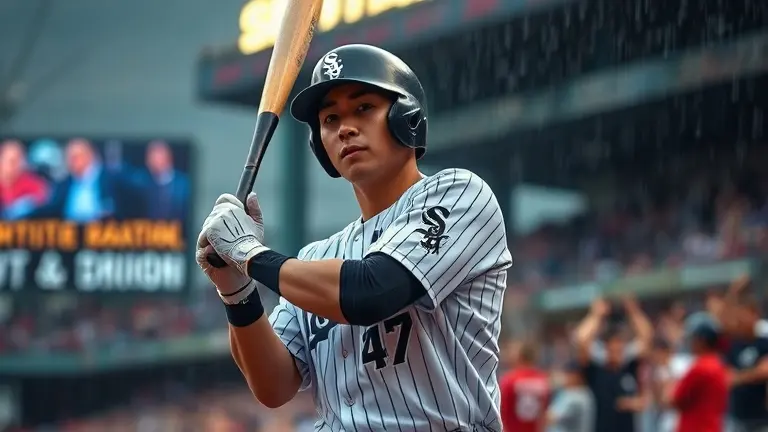
When the Chicago White Sox edged out the Los Angeles Angels in an 8-7 thriller on April 27, 2026, it wasn’t just the dramatic seventh-inning rain delay or the back-and-forth scoring that stole the headlines. The story of the night—and indeed the early season—is the meteoric rise of Munetaka Murakami. His decisive three-run homer served as a thunderous exclamation point on a performance that has sports analysts scrambling to re-evaluate their season projections. While the Los Angeles Angels struggle to stabilize a bullpen that has become the league’s most glaring liability, the Murakami narrative has transcended simple box scores, evolving into a masterclass in elite athletic execution and mental fortitude.
For the sophisticated fan, this series is a case study in contrasts: the tactical volatility of the Angels’ pitching staff versus the surgical precision of Murakami’s swing mechanics. To truly understand why the White Sox are gaining momentum, one must look beyond the stat sheet and into the high-level cognitive processing required to perform under pressure. Just as these athletes rely on split-second mental calibration to dominate the diamond, those who analyze the game at a professional level must also harness a rare clarity of focus to stay ahead of the curve.
Recap: The April 27th Clash and the Seventh-Inning Rally

The Chicago White Sox 8-7 victory over the Los Angeles Angels on April 27, 2026, served as a masterclass in opportunistic hitting and a grim reminder of the Angels’ current relief pitching vulnerabilities. While the game was punctuated by a disruptive rain delay, the tactical shift occurred in the seventh inning. With the contest hanging in the balance, Munetaka Murakami delivered a decisive three-run home run—his 12th of the season—that effectively neutralized the Angels’ narrow lead. This pivotal moment underscored the difference between a high-octane offense capable of late-game surges and a bullpen that currently ranks among the most unreliable in Major League Baseball.
The Impact of Weather and Bullpen Volatility
The mid-game rain delay proved to be a significant variable for both coaching staffs. Analysis suggests that the pause in play disrupted the rhythm of the starting rotations, forcing both managers to lean heavily on their relievers earlier than anticipated. For the Angels, the reliance on middle-relief options during the seventh-inning rally exposed severe depth issues. Key takeaways from the performance include:
- Bullpen Fatigue: The forced transition to the bullpen exacerbated the Angels’ pitching inefficiencies, leading to high-leverage mistakes that Murakami capitalized on with his signature swing mechanics.
- Momentum Shift: The White Sox utilized the delay to recalibrate their approach, focusing on disciplined plate appearances that culminated in the game-winning rally.
- Strategic Disparity: While the Chicago White Sox have demonstrated an ability to generate consistent offensive output, the Angels’ inability to lock down late innings remains the primary obstacle for the franchise in this ongoing angels vs white sox series.
As the series continues, the tactical advantage remains with the White Sox, provided their lineup can maintain the pressure against an Angels squad currently struggling to find stability on the mound.
The Murakami Phenomenon: Decoding His Historic Start

Munetaka Murakami’s offensive surge in the 2026 season has transcended mere statistical anomaly, establishing him as a primary candidate for league MVP. His performance during the angels vs white sox matchup on April 27 served as a microcosm of his elite approach. When Murakami launched his 12th home run of the season—a decisive three-run blast during a seventh-inning rally—he demonstrated a rare ability to stay back on breaking balls while maintaining explosive torque through the zone. Analysts have noted that his pitch recognition is currently among the best in Major League Baseball, allowing him to consistently punish mistake pitches while laying off deceptive off-speed offerings that routinely baffle league peers.
Decoding the Mechanics of a Powerhouse
Murakami’s dominance is built upon a foundation of mechanical efficiency and superior exit velocity metrics. By minimizing wasted movement in his load, he keeps his barrel in the hitting zone longer, which is critical when facing high-velocity pitching. Evidence suggests that his ability to drive the ball to all fields is not a product of luck, but a deliberate tactical approach to handling modern pitching staffs. Key factors in his 2026 trajectory include:
- Elite Exit Velocities: Murakami ranks in the top percentile for average and maximum exit velocity, frequently eclipsing the 110 mph mark.
- Selective Aggression: Unlike many power hitters who struggle with high strikeout rates, Murakami has refined his zone control, forcing pitchers to challenge him in the heart of the plate.
- Situational Awareness: His late-game heroics against the los angeles angels highlight a psychological edge; he thrives under pressure, often waiting for the specific pitch he expects rather than swinging at the first strike offered.
As the chicago white sox continue their push, Murakami’s consistency remains the cornerstone of their lineup. For bettors and fans tracking the white sox game schedule, his swing mechanics indicate a sustainable level of production rather than a short-term hot streak, setting the stage for one of the most prolific power seasons in recent memory.
Angels’ Bullpen Crisis: Structural Flaws and Future Outlook

The recent angels vs white sox series has once again placed the Los Angeles Angels’ relief corps under a microscope, following a demoralizing 8-7 defeat where late-inning fragility proved decisive. While the offense showed signs of life, the bullpen’s inability to protect leads against the Chicago White Sox has become a recurring theme, fueling concerns that the team’s structural deficiencies will prevent them from contending in the American League. Analytical data suggests that the core issue stems from predictable pitch sequencing and a failure to execute in high-leverage situations. When opposing hitters are able to sit on secondary offerings, the lack of a dominant, high-velocity shutdown arm becomes painfully apparent.
Breaking Down the Failure Points
The collapse in the seventh inning against the white sox highlighted several critical weaknesses in the current roster construction:
- Predictable Sequencing: Angels relievers have been heavily reliant on fastballs in counts where breaking balls would traditionally be used to induce swings and misses, making them vulnerable to hitters like Munetaka Murakami.
- High-Leverage Inconsistency: Statistical evidence suggests a significant drop-off in command once the pressure mounts, leading to elevated walk rates that inevitably put games out of reach.
- Lack of Depth: The current reliance on a thin group of middle-relief options forces the coaching staff to overextend starters, leading to a fatigue-driven performance dip across the board.
To remain competitive in the remainder of the white sox game series and the broader season, the front office faces an urgent need for roster adjustments. Unless the organization can acquire or promote high-spin-rate specialists capable of neutralizing power hitters, the Los Angeles Angels will likely continue to hemorrhage games that they are statistically projected to win. Addressing this crisis is no longer a matter of depth; it is a fundamental requirement for any hope of post-season viability.
Series Betting Preview: Trends and Player Prop Opportunities

As the angels vs white sox series continues, bettors are pivoting from the chaotic 8-7 result toward high-intent player prop markets and pitcher-bullpen volatility analysis. The primary narrative for savvy investors remains the Los Angeles Angels’ bullpen, which has statistically struggled to close games under pressure, creating significant value for late-inning “Over” bets on total runs scored. Historical data against the Chicago White Sox indicates that their lineup excels against non-elite relief arms, making the mid-to-late innings a prime target for live betting adjustments.
Key Player Props and Statistical Trends
The current betting landscape is dominated by the Munetaka Murakami phenomenon. With 12 home runs already logged, his “To Hit a Home Run” and “Total Bases” props have seen heavy action. When analyzing the White Sox game outlook, consider the following tactical approach for your betting strategy:
- Murakami Momentum: Monitor the hitter’s exit velocity trends. Evidence suggests he is currently performing at a historic pace, making his “Over” on total bases a high-confidence play against the Angels’ current pitching rotation.
- Bullpen Fatigue: The Angels’ bullpen efficiency has plummeted during high-leverage situations. Look for props involving White Sox middle-order hitters to reach base, as the Angels’ relief corps consistently struggles with walk-to-strikeout ratios.
- Pitcher Matchups: Factor in the rain delay impact from the previous game. Fatigue and disrupted recovery cycles for starting pitchers often lead to shorter outings, increasing the reliance on unstable bullpens and boosting the statistical probability of high-scoring outcomes in the latter half of the series.
When placing wagers, prioritize player-specific streaks over broad team narratives. The Chicago White Sox currently possess the offensive rhythm required to exploit the Los Angeles Angels’ defensive gaps. Sharp bettors should emphasize live, in-game markets once the starting pitchers reach the 75-pitch count threshold, as that is when the statistical variance between the two bullpens becomes most pronounced.
Unlock Your Peak Analytical Performance
The dominance displayed by stars like Munetaka Murakami is rarely just about raw physical talent; it is the result of immense mental sharpness and the ability to process complex variables in real-time. Whether you are dissecting the latest angels vs white sox betting lines or tracking the intricacies of a team’s bullpen regression, the ability to maintain unwavering focus is your most valuable asset. The difference between an average observer and a true expert often comes down to cognitive clarity and the capacity to synthesize data under pressure.
Just as elite athletes require precision to connect with the ball, you need an edge to master the high-stakes world of sports analytics. This is where The Brain Song bridges the gap between passive observation and active, high-level performance. By integrating a proven audio routine designed to sharpen your focus and enhance cognitive processing, you can mirror the mental precision of the pros in your own analytical pursuits. It is more than just a tool; it is your personal performance accelerator for deep-dive analysis.
Ready to gain that competitive advantage and sharpen your analytical edge? We have streamlined the path to mental excellence for the modern sports enthusiast. Stop settling for scattered thoughts and start processing data with the clarity of a champion. Elevate your cognitive potential and unlock the mental capacity you need to master your game today.
 Ready to sharpen your analytical edge? Try The Brain Song’s 12-minute audio routine today to unlock the focus you need to master your game.Yes, I Want This Now!