
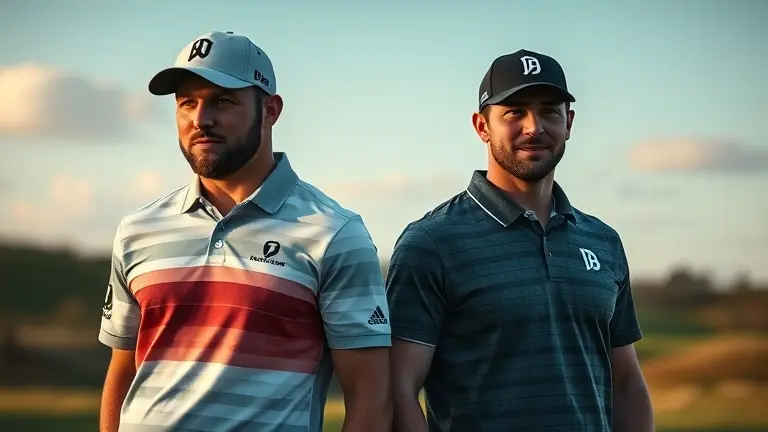
The golfing world was stunned when Shane Lowry and Brooks Koepka, two titans of the sport with vastly different legacies, announced their partnership for the 2026 Zurich Classic. Yet, what promised to be a high-octane display of professional synergy quickly devolved into a sobering case study on the volatility of team dynamics. When the duo missed the cut, the headlines were swift, but the real story went deeper than mere missed putts. Lowry’s candid admission—that he had endured 10 rejections before finalizing a partner—peeled back the curtain on the often-hidden social pressures and the fragile chemistry required for elite-level collaboration.
This failure was not a lack of talent, but a lack of resonance. Much like in any high-stakes environment, the chemistry between Lowry and Koepka lacked the intuitive ‘glue’ that transforms two individual performers into a singular, unstoppable force. By dissecting the anatomy of this PGA partnership, we uncover a broader truth about the nature of human connection: when we fail to understand the underlying psychological triggers that drive our partners, we are left navigating the competitive field alone, regardless of who is standing by our side.
The Unlikely Duo: Behind the Lowry-Koepka Zurich Classic Partnership
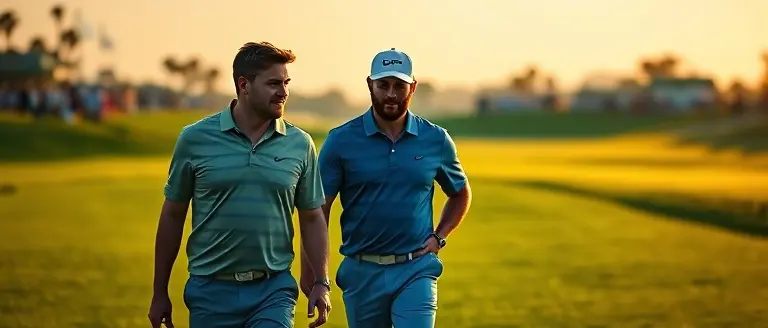
The Shane Lowry Brooks Koepka partnership at the 2026 Zurich Classic of New Orleans stands as one of the most discussed curiosities in recent PGA Tour history. While professional golf is traditionally a solitary pursuit, the team-format event demands a level of synergy that proved elusive for this high-profile pair. Before landing on the five-time major champion, Lowry candidly revealed a grueling recruitment process, admitting he faced roughly 10 rejections from other potential partners. This transparency highlighted the hidden challenges stars face when assembling a team, shifting the narrative from simple competitive sports to the complex social dynamics of professional locker rooms.
Anatomy of a High-Profile Rejection
The formation of this “odd couple” pairing was driven by necessity rather than strategic design, a fact Lowry openly addressed. By the time he successfully courted Koepka, the pressure to solidify a roster spot had already dominated his preparation. The media frenzy was immediate; fans and pundits alike scrutinized whether Koepka’s aggressive, major-championship focus would mesh with Lowry’s tactical, cerebral style. Key factors included:
- The Recruiting Struggle: Lowry’s admission of 10 rejections underscored how difficult it is to align schedules and playing styles in a busy tour calendar.
- Contrasting Philosophies: Observers noted that while both men are elite performers, their approaches to pressure often diverge, leading to speculation about their potential chemistry.
- External Commentary: The partnership drew attention even from those not participating, such as Rory McIlroy, whose lighthearted but public text messages to Lowry added a layer of peer-group intrigue to the unfolding drama.
Ultimately, the duo’s early exit sent shockwaves through the event, serving as a reminder that individual brilliance does not always translate to a team setting. Even among the world’s best, the chemistry required for a successful Zurich Classic campaign remains an unpredictable and often elusive commodity.
Why Individual Golfing Greats Often Stumble in Team Formats
The Shane Lowry Brooks Koepka partnership at the 2026 Zurich Classic serves as a prime case study in why elite professional golfers frequently struggle when forced to abandon their solitary routines. In individual stroke play, a player controls every variable, from the pace of play to the specific recovery strategy after a wayward drive. However, team formats like the Zurich Classic introduce a layer of psychological and strategic friction. When two icons with distinct, ingrained preparation styles combine forces, the “too many cooks” dilemma often emerges. Evidence suggests that even the world’s best players can find it difficult to synchronize their divergent tactical approaches under the intense pressure of a format that relies on mutual reliance rather than self-reliance.
The Friction of Differing Methodologies
Strategic misalignment is the primary culprit when star-studded pairings fail to make the cut. The challenges inherent in these pairings include:
- Routine Disruption: Individual players often follow rigid pre-shot rituals. In alternate-shot formats, the need to adjust to a partner’s pace can disrupt the rhythm of a player accustomed to absolute silence and autonomy.
- Tactical Compromise: Great golfers usually play a “percentage game” tailored to their own strengths. When forced to play for a partner, they may feel compelled to adopt a defensive strategy that doesn’t fit their natural aggressive tendencies or vice versa.
- Performance Anxiety: The burden of responsibility shifts. Missing a putt for oneself is a personal disappointment, but missing one that impacts a teammate’s paycheck and standing often leads to over-correction, resulting in uncharacteristic errors.
While the “odd couple” dynamic—such as the one seen with Lowry and Koepka—often generates immense buzz, the reality is that professional golf is a game of fine margins. When two players cannot seamlessly mesh their differing styles, the strategic cohesion required for team success vanishes. This disconnect highlights why individual greatness does not automatically translate to team-event dominance, leaving many high-profile duos to navigate the harsh reality of early exits despite their combined individual pedigree.
The Zurich Classic Dilemma: Balancing Chemistry and Strategy
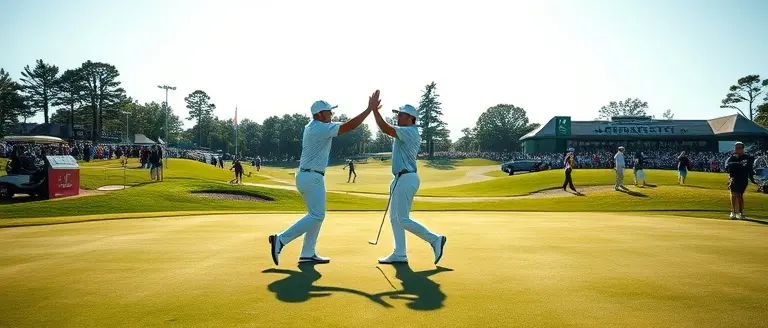
The Zurich Classic of New Orleans remains a fascinating outlier on the PGA Tour schedule, forcing elite athletes to trade individual autonomy for the nuances of a team-based format. While the event offers a refreshing departure from standard stroke-play tournaments, it presents a significant strategic hurdle for top-tier players. Professionals like Shane Lowry and Brooks Koepka spend their entire careers optimizing their internal processes, shot selection, and mental preparation. When forced into a Shane Lowry Brooks Koepka partnership, these individualistic routines must suddenly merge with a partner’s strategy, often leading to friction that individual brilliance cannot easily smooth over.
The Myth of the “Super-Team”
The failure of high-profile pairings often suggests that talent alone is insufficient to guarantee success in team formats. Evidence from the event indicates that organic, long-term camaraderie frequently outweighs pure ball-striking metrics. Strategic alignment in alternate-shot formats requires more than just world-class golf; it necessitates a shared understanding of risk management and course strategy.
- Communication Gaps: High-stakes tournaments expose the differences in how players approach high-pressure shots when a partner’s score is on the line.
- Ad-hoc Pairing Pressure: Lowry’s candid admission of facing 10 rejections highlights the difficulty in finding a compatible partner, often resulting in last-minute “forced” pairings rather than intentional, cohesive teams.
- The Control Factor: Top-ranked professionals often struggle to relinquish influence over the strategic direction of their round, which is an inherent requirement of the team-event structure.
Ultimately, the “odd couple” narrative surrounding the Shane Lowry Brooks Koepka partnership serves as a case study in why star power does not always translate to the leaderboard. Instead of ad-hoc arrangements, the most successful teams in the Zurich Classic are typically those with deep-seated friendships and established history. As the tour continues to experiment with team formats, the data suggests that social dynamics and psychological compatibility remain just as critical as raw physical skill for achieving tournament longevity.
Lessons from the Green: What Future Team Events Can Expect

The high-profile shane lowry brooks koepka partnership serves as a stark case study for the complexities of professional golf team formats. While both players are world-class talents, their failure to make the cut at the 2026 Zurich Classic highlights a recurring trend: individual brilliance does not always translate to collective success. For future team events, this outcome reinforces that chemistry, rhythmic compatibility, and shared strategic philosophies are often more critical than raw scoring average. The “odd couple” dynamic experienced by Lowry and Koepka underscores the inherent difficulty of blending contrasting playing styles under the immense pressure of the PGA Tour circuit.
The Dynamics of PGA Tour Partnerships
The internal politics of professional golf partnerships are nuanced, often dictated by more than just on-course utility. Insights into the shane lowry brooks koepka partnership suggest that finding a teammate is as much about social networking as it is about tactical planning. Lowry’s candid admission regarding his ten prior rejections before landing a partner reveals a competitive, sometimes fragile landscape where scheduling conflicts, personal preferences, and existing friendships dictate who tees it up together.
Key takeaways for future team events include:
- Strategic Compatibility: Players must prioritize partners whose game complements their own weaknesses rather than simply selecting the highest-ranked available professional.
- The “Friendship Factor”: Communication styles and off-course camaraderie significantly influence performance during high-stress alternative-shot formats.
- Event Commitment: As seen with the fallout from the Lowry-Koepka disappointment, the optics of missing a cut after a high-profile pairing can create intense media scrutiny, potentially deterring established stars from experimenting with new teammates in future seasons.
Ultimately, the lesson is clear: team events require a deliberate, long-term approach to pairing. While the spectacle of disparate personalities creates engaging headlines, the successful pairings of the future will likely be those built upon established professional rapport and proven strategic alignment, rather than last-minute arrangements born of necessity.
Mastering the Psychology of Perfect Partnership
The failure of the Shane Lowry and Brooks Koepka pairing at the Zurich Classic serves as a stark reminder that even the world’s most elite performers can struggle when they lack the necessary interpersonal alignment. The frustration Lowry felt—compounded by his search for a compatible teammate—highlights that professional success isn’t just about individual skill; it is fundamentally about understanding the hidden dynamics that drive synergy and trust. When those unspoken instincts are ignored, even the most talented teams are destined to miss the cut.
This same principle holds true in your personal life. Just as elite athletes struggle when they fail to trigger the right level of cohesion and mutual understanding, many people experience deep frustration in their relationships because they haven’t learned how to unlock the hidden instincts that foster genuine commitment. You don’t have to leave the success of your most important connections to chance or guesswork.
By understanding the psychological ‘playbook’ of human motivation, you can decode the hidden signals that prevent relationships from reaching their full potential. His Secret Obsession provides the framework to trigger your partner’s latent drive for devotion, turning a misaligned connection into a rock-solid, high-performing partnership. It is the definitive guide for anyone ready to stop guessing and start creating the deep, lasting bond they deserve.
 Learn the specific ‘Secret Signals’ that turn a lukewarm partnership into a devoted, high-performing connection today.Unlock My Partner’s Devotion Now!