

In the high-stakes arena of professional tennis, the journey from disappointment to dominance is often paved with more psychological struggle than physical exertion. After a heartbreaking injury-related retirement against Novak Djokovic at the Australian Open earlier this year, Lorenzo Musetti found himself at a career crossroads. The narrative of his 2026 season was threatened by the fog of recovery, yet as he steps onto the clay of the 2026 Mutua Madrid Open, the Italian has undergone a profound transformation. His deep run into the 4th round, highlighted by a tactical masterclass against Jiri Lehecka, is not merely a return to form; it is a testament to a refined mental discipline that has allowed him to navigate the pressures of an ATP Masters 1000 event with newfound composure.
Musetti’s resurgence forces us to look beyond his fluid one-handed backhand and tactical variety. His performance in Madrid reveals a player who has learned to synthesize physical recovery with sharp, focused intent. By dismantling the doubt that lingered after his season-start injury, Musetti has redefined his trajectory on the ATP tour. His evolution provides a compelling case study for sports enthusiasts and high-performers alike: how do you clear the ‘mental fog’ of a setback to reclaim your competitive edge at the highest level?
Lorenzo Musetti’s Resurgence: The Road to the 2026 Mutua Madrid Open
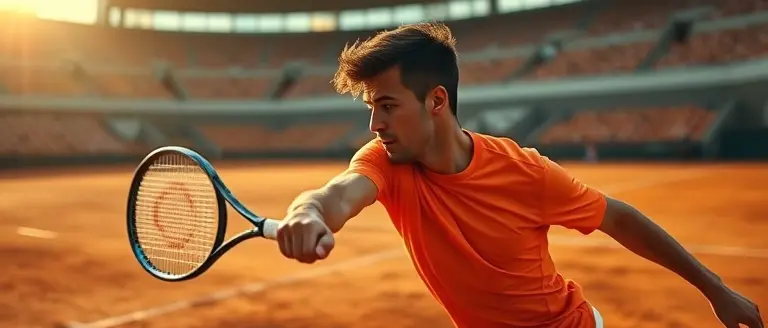
The path to the 2026 Mutua Madrid Open 4th round has been anything but linear for Lorenzo Musetti. Just months ago, the Italian star faced a demoralizing start to his 2026 campaign, highlighted by an injury-enforced retirement during his highly anticipated Australian Open quarterfinal clash against Novak Djokovic. That physical setback cast a shadow of uncertainty over his season, forcing him to undergo a rigorous rehabilitation process to regain his elite-level match fitness. However, the transition to the European clay court season has acted as a vital catalyst for his recovery, allowing the Italian to rebuild his confidence and re-establish his tactical identity on his preferred surface.
Analysts observing his performance in Madrid have noted that the 22-year-old is once again playing with significant freedom. The shift from the high-velocity hard courts back to the slower, red clay of the Caja Mágica has allowed him to deploy his signature one-handed backhand with greater consistency and depth. His journey to this high-stakes match against Jiri Lehecka underscores a profound psychological shift:
- Physical Resilience: Musetti has successfully moved past the lingering effects of the injury that hampered his performance in Melbourne, demonstrating improved movement and endurance in long-form exchanges.
- Tactical Comfort: By leaning into the unique playing conditions in Madrid—where the altitude rewards aggressive shot-making—Musetti has regained the ability to dictate points.
- Mental Fortitude: Overcoming the disappointment of his early-season retirement has forced a maturation in his game, turning a potential career slump into a period of focused tactical evolution.
Evidence suggests that Musetti is playing with “almost back to his best” intensity. His current form serves as a stark reminder of his ceiling as a perennial contender in ATP Masters 1000 events. As he squares off against emerging talent Jiri Lehecka, the narrative is no longer defined by his prior injuries, but by his aggressive trajectory toward the upcoming Grand Slam cycle.
Tactical Pivot: Mastering the Madrid Clay
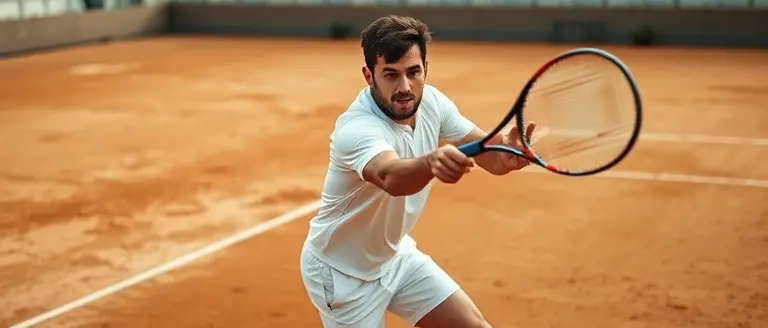
The 2026 Mutua Madrid Open has served as the definitive testing ground for Lorenzo Musetti, showcasing a sophisticated tactical evolution necessitated by the unique conditions of the Caja Mágica. Playing at high altitude, where the ball travels significantly faster through the thin air, Musetti has shifted away from his habitual reliance on heavy topspin, opting instead for a flatter, more penetrating strike zone. This adjustment has been critical in his high-stakes 4th Round clash against Jiri Lehecka. By prioritizing depth over raw RPMs, Musetti is successfully preventing opponents from stepping inside the baseline to dictate play, a tactical maturity that signals a stark departure from the defensive mindset that plagued him during his injury-shortened Australian Open campaign.
Key Tactical Adjustments in Madrid
- Service Placement: Musetti has prioritized wider, sliding serves to open the court, effectively utilizing the altitude to pull opponents off the surface before executing his signature one-handed backhand winners into the open court.
- Rally Patience: Rather than forcing winners early in the exchange, he is now engaging in extended backhand-to-backhand cross-court battles, waiting for the precise moment to transition from a neutral baseline position to the net.
- Defensive Movement: His lateral agility, which appeared compromised during his early season struggles, has returned to elite levels. He is consistently absorbing pace and redirecting heavy groundstrokes with remarkable stability.
The transition from baseline to net has become a cornerstone of his Madrid strategy. Musetti is no longer content to simply grind out points; he is actively closing off the net to shorten points and put pressure on rising talents like Lehecka. This multifaceted approach suggests that Musetti is moving toward a more versatile game model, one that balances the clay-court artistry he is famous for with the clinical, high-percentage tennis required at the Masters 1000 level. His performance indicates that he is not just recovering from physical setbacks, but actively integrating a more robust tactical framework into his professional arsenal.
The Signature One-Handed Backhand: Weaponizing Style
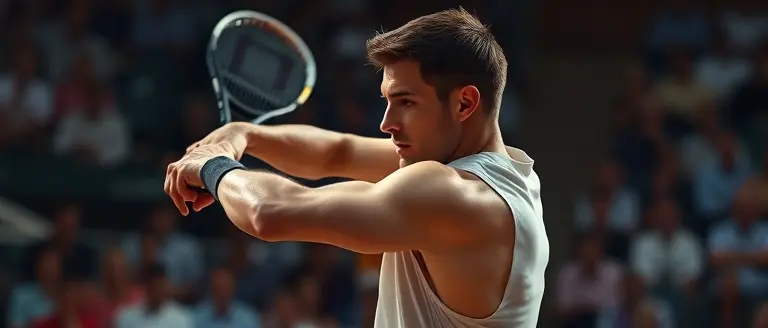
At the heart of Lorenzo Musetti’s tactical resurgence in the 2026 season is his signature one-handed backhand, a shot that blends classical aesthetics with modern, high-torque utility. On the clay courts of the Mutua Madrid Open, this stroke has become his primary instrument for dismantling opponents. Unlike the two-handed backhands favored by the majority of the current ATP tour, Musetti’s one-hander allows for an extraordinary range of motion and creative versatility. By manipulating the angle of his racquet face, he consistently generates heavy topspin that kicks up sharply off the Madrid clay, forcing opponents like Jiri Lehecka into uncomfortable, high-contact points.
Technical Mechanics and Tactical Utility
The technical brilliance of Musetti’s backhand lies in his preparation and shoulder rotation. By staying side-on longer than his contemporaries, he masks his intentions, effectively disguising both his cross-court defensive lobs and his stinging down-the-line winners. This technical foundation provides significant tactical advantages:
- Court Stretching: The ability to pull opponents wide with sharp angles opens up the entire court for his aggressive forehand follow-up.
- Effective Slicing: His backhand slice remains one of the most reliable defensive shots on the tour, allowing him to neutralize power and force errors from aggressive baseliners.
- Net Transitions: The fluid nature of his swing path enables him to seamlessly transition forward, making his net game a lethal extension of his baseline dominance.
Beyond the aesthetic appeal that has fueled massive engagement on social media, Musetti’s backhand is a calculated weapon. As he matures as a player, his capacity to balance “highlight-reel” finesse with high-percentage tennis is proving to be the difference-maker. Evidence suggests that his improved confidence—following his recovery from his Australian Open injury—has allowed him to hit through the ball with greater conviction, turning a stylish shot into a reliable match-winning asset.
Looking Ahead: Trajectory for the Grand Slam Season
The current resurgence of Lorenzo Musetti at the 2026 Mutua Madrid Open serves as a critical indicator for his prospects heading into the clay-court Grand Slam season. After facing a disheartening injury-related retirement during his Australian Open quarterfinal against Novak Djokovic, Musetti’s return to elite form in Madrid proves he has successfully navigated both physical recovery and the mental hurdles that often follow early-season setbacks. By reaching the business end of an ATP Masters 1000 event, the Italian star has validated his ability to compete with high-ranking peers, demonstrating that his tactical adjustments on clay are translating into the consistency needed for a deep run at Roland-Garros.
Strategic Blueprint for Grand Slam Success
To sustain this momentum through the upcoming majors, Musetti must leverage the tactical discipline he has displayed in Madrid. Analysts have noted that his game is evolving, shifting from relying purely on flair to integrating a more robust defensive baseline strategy. Key factors for his success will include:
- Physical Resilience: Maintaining the newfound baseline stamina displayed in Madrid to survive the grueling five-set format required in Grand Slams.
- Backhand Versatility: Utilizing his signature one-handed backhand not just for variety, but as a primary weapon to dictate points against aggressive baseliners like Jiri Lehecka.
- Mental Toughness: Solidifying the psychological growth gained from overcoming the Australian Open disappointment, ensuring he remains composed during high-stakes pressure points in best-of-five matches.
Evidence suggests that Musetti is “almost back to his best,” and his performance in Spain serves as a blueprint for professional maturity. As he stabilizes his position among the ATP’s “next-gen” leadership, the upcoming months will be a litmus test for his ability to convert Masters 1000 form into Grand Slam silverware. If he can maintain this trajectory, Musetti is well-positioned to be a significant threat in Paris and beyond, transitioning from a talented prospect to a legitimate tour contender.
Unlock Your Peak Cognitive Performance
Lorenzo Musetti’s journey in Madrid serves as a powerful reminder that elite athletic success is as much about mental resilience as it is about physical prowess. By mastering his focus and shedding the mental weight of his previous injuries, Musetti has demonstrated that clarity of thought is the true engine behind high-stakes performance. Just as he has had to recalibrate his mind to execute precise shots under pressure, high-achievers in every field must learn to overcome cognitive fatigue to stay at the top of their game.
You don’t need to be a professional athlete to benefit from the same level of mental conditioning. The Brain Song is the perfect companion for those looking to sharpen their focus and achieve the same clarity that propels champions forward. By integrating this neuroscience-based routine, you can effectively combat daily brain fog and ensure your cognitive performance remains as sharp as a pro’s signature forehand. It is the practical bridge between your current potential and the high-performance reality you aspire to reach.
Experience the science of focus and transform your daily output. The transition from scattered thoughts to streamlined, high-level productivity starts with a single, proven commitment to your own cognitive health.
 Discover how to sharpen your own mental game and clear your ‘brain fog’ with The Brain Song’s proven 12-minute daily routine.Yes, I Want This Now!