
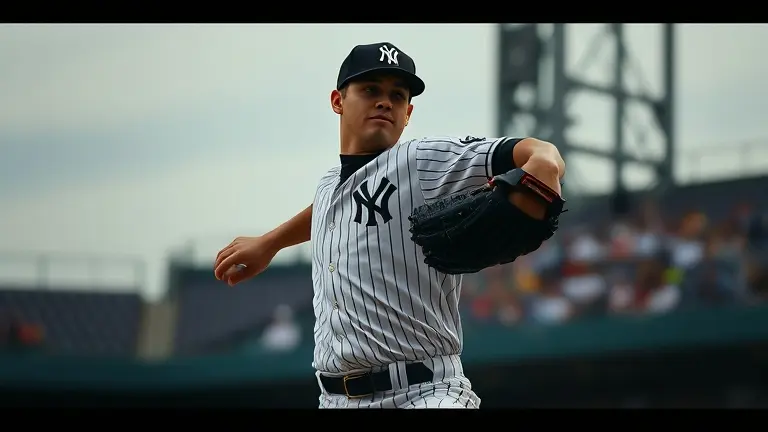
The baseball world is buzzing as the New York Yankees officially announce the promotion of elite pitching prospect Elmer Rodriguez. Set to make his high-stakes major league debut against the Texas Rangers on Wednesday, April 29, 2026, Rodriguez arrives in the Bronx with significant momentum. Boasting a stellar 1.27 ERA through four Triple-A starts this season, he represents the next great hope for a Yankees rotation in need of fresh, dominant energy. However, for fantasy managers and analysts, the excitement is tempered by the hard reality of transition; the gap between Triple-A dominance and surviving an MLB lineup is cavernous.
As we prepare for his Wednesday start, the narrative isn’t just about his raw velocity or movement—it is about processing the intricate data that defines modern scouting. To truly evaluate if Rodriguez is a league-winning addition to your roster, you must look beyond the surface-level hype. This is a game of margins, and those who can synthesize complex pitch-mix analytics faster than their competition will be the ones who dominate their leagues this season.
The Call-Up: Elmer Rodriguez-Cruz Joins the Yankees Rotation

The New York Yankees have officially signaled a shift in their 2026 pitching strategy, confirming the promotion of elite right-handed prospect Elmer Rodriguez-Cruz to the major league roster. As of April 28, 2026, reports from multiple outlets, including the New York Post and MLB.com, have verified that the organization is fast-tracking the young hurler to fill a critical vacancy in the starting rotation. Rodriguez-Cruz is slated to make his highly anticipated MLB debut on Wednesday, April 29, 2026, in a high-stakes matchup against the Texas Rangers. This move represents one of the most significant personnel shifts for the Yankees this season, as the front office looks to capitalize on his momentum during a pivotal stretch of the schedule.
Triple-A Dominance and Statistical Projections
The decision to call up Elmer Rodriguez stems from a dominant start to the 2026 campaign at the Triple-A level. Over four starts, the right-hander has posted a sparkling 1.27 ERA, showcasing refined command and an ability to suppress high-quality contact. His rapid ascent through the farm system has made him a primary target for fantasy baseball managers and scouts alike who have been tracking his transition to the big leagues. His performance metrics suggest that he is more than just a temporary fill-in; rather, he possesses the foundational tools to stabilize the back end of the rotation.
Key takeaways regarding his promotion include:
- Immediate Impact: Rodriguez-Cruz enters the rotation during a vital series against Texas, forcing immediate pressure on the rookie to perform under the bright lights of Yankee Stadium.
- Performance Benchmark: His 1.27 ERA serves as the catalyst for the current buzz, establishing him as the most impactful arm currently emerging from the Yankees’ developmental pipeline.
- Strategic Shift: The organization’s willingness to promote him indicates a shift toward prioritizing high-ceiling prospects to address pitching depth concerns.
As fans and analysts prepare for his Wednesday debut, the primary focus remains on how his secondary offerings will translate against seasoned major league hitters. The transition from Triple-A to the majors is notoriously difficult, but his recent statistical consistency provides a strong indicator of his potential to contribute immediately to the Yankees’ postseason aspirations.
Scouting Report: Pitch Mix and Fantasy Outlook

The Arsenel: Pitch Mix and Velocity
Elmer Rodriguez-Cruz enters the major leagues backed by a four-pitch mix that has consistently baffled Triple-A hitters. His primary weapon is a high-octane fastball that sits comfortably in the 95-97 mph range, featuring late-life movement that makes it difficult to square up. Complementing this heater is a high-spin slider that serves as his primary strikeout pitch, showing sharp, downward break that induces significant chase rates outside the zone. Scouts have also highlighted his developing changeup, which tunnels well off his fastball to neutralize left-handed hitters, and a reliable curveball used to steal strikes early in the count. His command profile, characterized by a refined ability to paint the edges of the plate, has been the cornerstone of his impressive 1.27 ERA this season.
Fantasy Baseball Viability
For fantasy managers, Elmer Rodriguez represents a high-upside pitching prospect who could provide immediate value. While rookie pitchers often experience growing pains when transitioning to the MLB, his ability to generate swings and misses suggests a high ceiling for strikeout production.
- Streaming Potential: Given his current momentum, he is an immediate target for those streaming spots in deeper leagues or those looking for a boost in strikeouts.
- Rotation Stability: If Rodriguez demonstrates early command, he could quickly solidify his role in the Yankees rotation, moving from a temporary call-up to a reliable mid-to-back-end starter.
- Long-Term Outlook: While managers should temper expectations for wins—a metric heavily reliant on run support—his ratios should remain attractive if he maintains his current strike-throwing efficiency.
He is a must-add in dynasty formats and a high-priority waiver wire pickup in redraft leagues. Monitor his pitch count closely in his debut, as the Yankees are expected to manage his workload carefully during his initial transition.
Yankees Pitching Depth: How Rodriguez-Cruz Changes the Rotation

The promotion of Elmer Rodriguez-Cruz represents a significant pivot in the New York Yankees’ 2026 organizational strategy. By fast-tracking a prospect who dominated Triple-A with a stellar 1.27 ERA, the front office is signaling a shift toward aggressive roster management intended to stabilize a rotation currently facing durability concerns. Integrating Rodriguez-Cruz into the five-man rotation provides the coaching staff with necessary tactical flexibility, allowing them to better manage the workloads of veteran starters while evaluating high-upside talent in a high-stakes environment.
Strategic Roster Implications
The arrival of Elmer Rodriguez serves as both an insurance policy and a potential long-term anchor. His inclusion suggests the Yankees are prioritizing internal development over high-cost mid-season acquisitions, betting that his current minor league momentum will translate to the major league level. From a structural perspective, this move impacts the pitching depth in several key ways:
- Rotation Flexibility: By inserting a fresh arm, the Yankees can move toward a six-man rotation during high-intensity stretches, reducing the risk of fatigue-related injuries for the primary starters.
- Bullpen Optimization: The promotion allows the Yankees to shift underperforming depth pieces to low-leverage long-relief roles, strengthening the overall bridge to the closer.
- Performance Benchmarking: Rodriguez-Cruz will act as a litmus test for the Yankees’ current pitching development program. If he succeeds, it validates the organizational changes made to the farm system’s data-driven pitching approach.
This promotion is not merely a stop-gap measure; it is a calculated gamble on elite prospect potential. Evidence suggests that if Rodriguez-Cruz maintains his Triple-A command against MLB-caliber lineups, he will solidify his position as a fixture in the Yankees’ rotation, forcing the front office to reconsider their long-term depth chart and potentially reallocating resources toward other roster needs as the trade deadline approaches.
Post-Debut Performance: Analyzing the First Start

Evaluating the MLB debut of Elmer Rodriguez-Cruz requires moving beyond basic box score statistics to analyze his underlying command and pitch efficiency. Against a disciplined Texas Rangers lineup, the primary indicator of future success will not necessarily be the final win-loss record, but rather his ability to navigate high-leverage situations without inflating his pitch count. Analysts will be monitoring his ability to command the strike zone effectively, as the transition from Triple-A—where he maintained a dominant 1.27 ERA—to the Majors often exposes prospects who rely heavily on chase pitches that big league hitters are trained to lay off.
Key Metrics for Evaluation
To determine if Rodriguez-Cruz is ready for a sustained role in the Yankees rotation, scouts and fantasy managers should focus on three specific performance markers:
- Pitch Count Efficiency: Maintaining an average of fewer than 15-18 pitches per inning is critical. Excessive deep counts often lead to early bullpen reliance, which could signal a need for further refinement in the minor leagues.
- WHIP and Command: A WHIP under 1.30 would be considered a successful outing. Tracking his walk-to-strikeout ratio provides the most accurate evidence of his poise under the bright lights of Yankee Stadium.
- Innings Pitched: Completing at least 5.0 innings while keeping the damage minimal demonstrates that his repertoire can hold up against professional-grade hitters through the batting order’s second turn.
Ultimately, the goal for this initial start is to establish a baseline of “competitive adequacy.” If he can demonstrate that his secondary offerings remain effective when he falls behind in the count, he will prove that his minor league production was not a fluke. A successful outing will be defined by his ability to maintain velocity consistency into the middle frames, proving he possesses the durability necessary to anchor the backend of the Yankees’ pitching staff during a demanding 2026 season.
Mastering the Analytics of the Mound
Elmer Rodriguez brings immense promise to the Yankees, but translating that potential into consistent fantasy production requires a high-level approach to data analysis. Whether you are dissecting his spin rates or projecting his impact on your rotation depth, you are engaging in a high-stakes intellectual pursuit that demands complete cognitive clarity. The difference between a waiver wire bust and a championship-caliber acquisition often comes down to how sharply you interpret the nuances of a scouting report.
Just as the Yankees demand peak mental precision from Rodriguez on the mound, you need a similar cognitive edge to process these complex metrics and make winning roster decisions. This is where The Brain Song becomes an essential tool for the modern, analytical sports investor. By supporting enhanced focus and improved information processing, The Brain Song helps you cut through the noise of superficial sports headlines, allowing you to synthesize pitch-mix data and performance stats with clinical accuracy.
Integrating this cognitive training tool into your routine ensures that you aren’t just reacting to news—you are anticipating it with the mental sharpness required to stay ahead of the curve. Don’t leave your fantasy success to chance; optimize your mental performance before the next pitch is thrown.
 Optimize your analytical edge and sharpen your focus before the next pitch—discover how The Brain Song can improve your scouting precision.Yes, I Want This Now!