
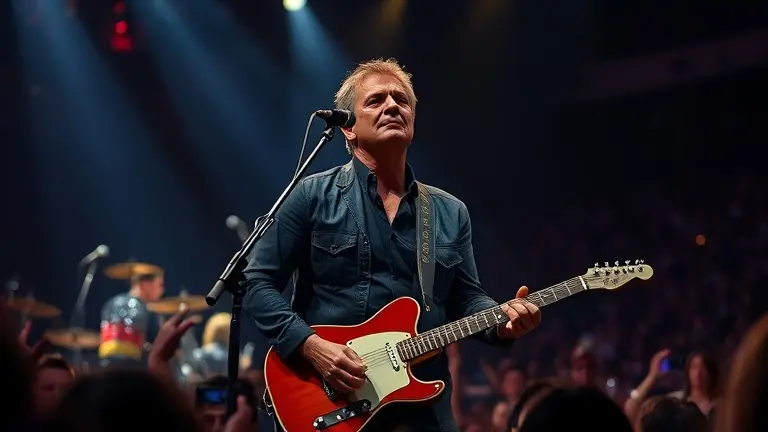
The atmosphere at Austin’s Moody Center on April 26, 2026, was thick with the residue of a nation on edge. Just twenty-four hours earlier, the political temperature had reached a boiling point following the harrowing incident at the White House Correspondents’ Association dinner, where a threat against President Donald Trump sent shockwaves through the country. When Bruce Springsteen—an artist whose career has been defined by his unflinching criticism of the Trump administration—unexpectedly paused his set to lead the crowd in a ‘prayer of thanks’ for the President’s safety, the air in the arena shifted instantly.
This gesture, stripped of the usual partisan rhetoric, has become the definitive case study in the current struggle for political de-escalation. As Springsteen balances his role as a protest icon with the reality of a fragile national climate, his Austin moment highlights the limits of political performance in a time of genuine crisis. In a 2026 landscape defined by extreme polarization, we must ask: is this the softening of a protest tone, or a necessary evolution of the artist’s responsibility in a divided society?
The Austin Pivot: Analyzing Springsteen’s Unprecedented Statement
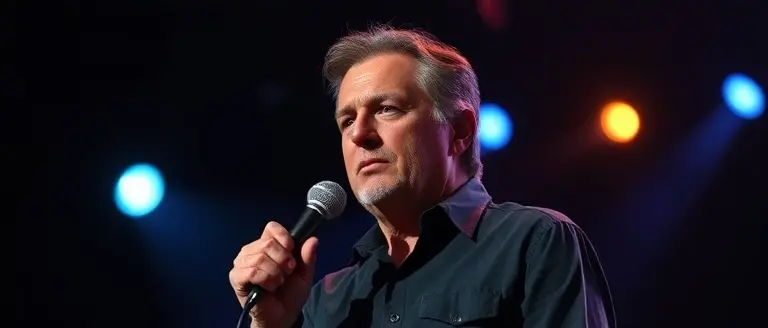
During his highly anticipated performances at the Moody Center in Austin, Texas, on April 26–27, 2026, Bruce Springsteen delivered a moment that sent shockwaves through the music industry and political landscape alike. In the wake of the harrowing April 25 WHCA dinner shooting—an incident involving a direct threat to President Donald Trump—the legendary rocker interrupted his set to address the national trauma. Eschewing the partisan rhetoric that has defined his career, Springsteen offered a “prayer of thanks” for the President’s safety, marking a stark departure from his long-standing, vocal opposition to the Trump administration.
This unscripted interlude at the Austin concert sparked immediate global discourse, as observers struggled to reconcile the gesture with his history of outspoken activism. The reaction was swift and polarized, with media outlets, including Yahoo, noting that the artist found himself “under fire for softening his tone.” For many fans, the pivot represented a rare moment of unity, while others viewed it as an abandonment of his Springsteen political stance. To understand the gravity of this event, one must look at the climate of the era:
- De-escalation vs. Ideology: The Springsteen Austin concert moment occurred amidst a heightened atmosphere of national anxiety following the WHCA incident.
- The Power of Platform: As a titan of American music, Springsteen’s decision to prioritize human safety over political messaging forced a conversation about the role of the modern protest artist.
- Media Scrutiny: The viral nature of the speech highlights the public’s intense hunger for context regarding the ‘why’ behind such a sudden shift.
Ultimately, this pivot serves as a poignant case study on the limits of political rhetoric in performance arts. By choosing to voice a message of peace, Springsteen shifted the narrative from a cycle of protest to one of national de-escalation, even as he navigated the complex fallout from both his base and his critics.
The Weight of the Platform: Celebrity Activism in a Polarized Era

The role of the modern musical icon has shifted dramatically, moving from mere entertainment toward a state of constant, high-stakes political evaluation. For an artist like Bruce Springsteen, whose career has been defined by a deep-seated political stance and a voice for the working class, navigating the current climate is increasingly complex. When faced with national tragedies—such as the recent WHCA dinner shooting—the expectation for a celebrity to provide moral clarity often conflicts with their established partisan identity. Springsteen’s recent Austin concert remarks serve as a critical case study in how public figures must balance personal convictions against the broader necessity of national de-escalation.
The Tension Between Identity and Moral Duty
The outcry following Springsteen’s “prayer of thanks” for President Trump highlights the precarious nature of celebrity activism in 2026. While many fans appreciate the human gesture, others feel it dilutes his legacy of protest. This tension reveals several key realities regarding the intersection of performance arts and political discourse:
- Public Accountability: Audiences now demand total consistency, often conflating a call for peace with a betrayal of political alliances.
- The Burden of Symbolism: Every word spoken on stage by a figure like Springsteen is treated as a manifesto, regardless of the artist’s original intent.
- The Limits of Rhetoric: In an era of extreme polarization, gestures of empathy are increasingly viewed through a binary lens of loyalty rather than humanity.
Ultimately, the reaction to the Springsteen Austin concert demonstrates that we are in a period where the public is testing the limits of how much nuance an artist is permitted to express. By choosing to prioritize the safety of a political opponent over the rigid maintenance of his protest music persona, Springsteen forced a conversation about whether artistic integrity must be synonymous with political consistency. His choice suggests a realization that, in moments of genuine national crisis, the platform of the performer carries a weight that transcends traditional political boundaries, forcing a recalibration of what it means to be a “voice of the people.”
Beyond the Charts: Art, Reconciliation, and National Healing
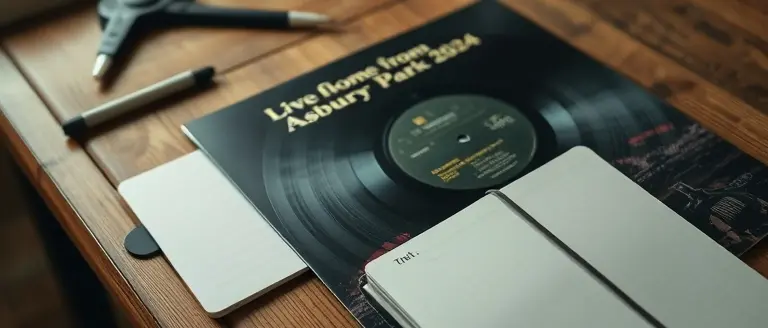
While commercial metrics often serve as the primary barometer for a musician’s relevance, Bruce Springsteen has long occupied a space where cultural impact supersedes chart positions. His latest release, Live from Asbury Park 2024, recently debuted at No. 2 on the U.K.’s Official Americana chart. While some industry analysts might view the failure to reach the top spot as a minor dip in commercial momentum, it highlights a secondary reality: Springsteen’s legacy is no longer defined by sales figures, but by his role as an unofficial arbiter of American values. This transition is particularly evident following his Austin concert remarks, where he departed from his traditional protest-heavy rhetoric to offer a “prayer of thanks” for President Trump’s safety following the WHCA dinner shooting incident.
The Evolution of the Moral Authority
The tension between an artist’s established political identity and the sudden demand for national de-escalation presents a new challenge for legacy performers. By choosing to prioritize human life over partisan alignment, Springsteen has effectively recalibrated the expectations placed on cultural icons. This pivot suggests several key shifts in the landscape of 2026:
- De-escalation as Action: In a polarized society, public figures are increasingly expected to act as stabilizers rather than agitators during moments of national crisis.
- The Limits of Protest Music: Springsteen’s move signifies that even the most vocal critics may perceive the threat of political violence as an existential danger that transcends typical policy disagreements.
- Public Perception Risks: While some outlets report that Springsteen is “under fire for softening tone,” this volatility is a predictable byproduct of a celebrity engaging in high-stakes moral navigation.
Ultimately, whether this moment marks a permanent change in his Springsteen political stance or remains an isolated reaction to an unprecedented act of violence, it serves as a profound case study. The artist, much like the nation, is grappling with how to reconcile deeply held convictions with the urgent necessity of collective healing. By stepping away from the friction of the “protest” label, he has underscored the reality that, in times of tragedy, the role of the performer often shifts from being a voice of dissent to being a mirror for a nation searching for common ground.
The Complexity of Protest: Redefining Artistic Integrity

The recent Bruce Springsteen Austin concert served as a crucible for the shifting dynamics of celebrity activism in 2026. Following the unsettling WHCA dinner shooting incident that targeted the administration, Springsteen’s decision to pause his set for a “prayer of thanks” regarding the safety of President Donald Trump marked a distinct departure from his well-documented history of political opposition. This moment was not merely a reaction to a specific headline; it was an acknowledgment that the climate of political violence in the U.S. has reached a threshold where the maintenance of standard partisan lines feels inadequate, if not dangerous.
Navigating the New Political Landscape
Springsteen’s pivot highlights a core dilemma for legacy artists: how to maintain artistic integrity when the national discourse descends into extremity. By stepping away from the expected confrontational rhetoric, the musician signaled that the preservation of civil society takes precedence over traditional political branding. This gesture suggests a nuanced evolution in how high-profile figures navigate their platforms:
- De-escalation over Division: Prioritizing collective security as a moral imperative that transcends personal political affiliations.
- The Limits of Protest Music: Recognizing that in a landscape defined by volatility, the most radical act may be one of humanistic reconciliation rather than further agitation.
- Audience Grappling: Forcing fans to confront the dissonance between their expectations of an artist’s political stance and the reality of an individual’s moral response to violence.
Evidence suggests that while some critics argue he is “softening his tone,” this moment serves as a case study in the necessity of bridge-building. By choosing a path of de-escalation, Springsteen has challenged the binary nature of modern engagement, suggesting that 2026 requires a different, more cautious framework for public discourse. Whether this marks a permanent shift remains to be seen, but it certainly recalibrates the expectations placed upon icons of American culture.
Finding Clarity in the Noise of Political Polarization
The convergence of Bruce Springsteen’s Austin moment and the broader climate of 2026 highlights a shifting paradigm: even the most staunch voices of protest are grappling with the necessity of national de-escalation. Whether viewed as an act of reconciliation or a strategic retreat, this moment forces us to reconsider the role of the artist in an age where the intensity of our political discourse often overshadows the humanity behind the music.
As we navigate these high-stakes cultural narratives, it is easy to succumb to the cognitive fatigue that defines our modern era. The mental load required to process such intense, often volatile information can cloud your judgment and drain your focus. It is in this state of information overload that we lose the ability to see the ‘big picture’ objectively, leaving us trapped in a cycle of reactivity.
This is where finding a mental reset becomes essential for those who refuse to let the noise of the headlines dictate their cognitive clarity. The Brain Song offers a scientific solution to the mental fog generated by our polarized world, utilizing neuroscience-based auditory stimulation to help you reclaim your focus and approach complex issues with a sharpened, renewed mindset. By integrating this tool into your daily routine, you move beyond the exhaustion of the news cycle and into a space of peak intellectual performance.
 Experience the clarity needed to navigate a complex world; reclaim your mental focus with The Brain Song.Yes, I Want to Regain My Focus Now!