
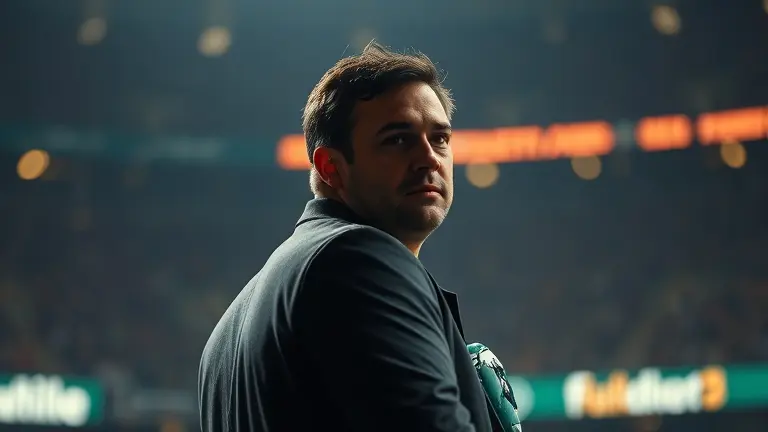
The landscape of the Philadelphia Eagles front office underwent a seismic shift this week as long-tenured executive Alec Halaby announced his departure, effectively ending a remarkable 17-year chapter that saw him rise from an entry-level intern to the role of Assistant General Manager. His exit, coming just one day after the departure of Senior VP Bryce Johnston, has sent shockwaves through the NFL analytical community, signaling a potential transition away from the ‘moneyball’ era that defined the team’s championship identity. Halaby was far more than an administrator; he was the architect of the Eagles’ modern, data-driven approach, serving as Howie Roseman’s most trusted collaborator in turning raw statistics into winning personnel decisions.
As fans and analysts scramble to decipher whether these back-to-back exits signify a planned structural evolution or a sign of deeper internal instability, one thing remains clear: the organization is losing its most potent engine of intellectual rigor. The departure of an executive so deeply ingrained in the team’s DNA forces us to confront how critical high-level, data-processed decision-making is to success in a high-stakes environment. In a business where split-second calculations can define a franchise’s decade, the loss of a sharp, analytical mind like Halaby isn’t just a personnel change—it is a transformation of the team’s entire strategic core.
End of an Era: Alec Halaby Departs the Philadelphia Eagles After 17 Years

The Philadelphia Eagles front office entered a period of significant transition on Tuesday, April 28, 2026, as the organization officially confirmed the departure of Assistant General Manager Alec Halaby. His exit marks the conclusion of a remarkable 17-year tenure, closing a chapter defined by the team’s evolution into one of the most analytically sophisticated operations in the National Football League. Joining the franchise in 2007 as an intern, Halaby climbed the internal ranks through a combination of strategic foresight and data-driven decision-making, ultimately securing the Assistant GM title in 2022.
A Legacy of Analytical Evolution
Halaby’s influence on the Eagles cannot be overstated. Often described as a key architect behind the scenes, he became synonymous with the organization’s “moneyball” approach to roster construction. His work was instrumental in:
- Modernizing Scouting: Integrating advanced metrics to supplement traditional scouting reports, leading to more efficient draft cycles.
- Strategic Personnel Moves: Serving as a primary right-hand man to GM Howie Roseman during several high-stakes roster retools.
- Long-Term Stability: Acting as a stabilizing force during various coaching transitions and championship-era team iterations.
His departure follows the resignation of Senior VP Bryce Johnston just 24 hours earlier, signaling a potential shift in the structural identity of the Eagles’ executive team. While the official stance from the organization suggests that Halaby is stepping away to explore a “new professional chapter,” the rapid succession of these two high-level exits has fueled intense speculation across the league. As the Eagles look to the future, the void left by a cornerstone executive like Halaby creates an immediate challenge for the front office, leaving stakeholders to wonder how the team will adapt its methodology without one of its most prominent analytical minds.
The Architect of Analytics: Halaby’s Impact on the ‘Moneyball’ Era
For nearly two decades, Alec Halaby served as the intellectual engine behind the Philadelphia Eagles’ transformation into one of the NFL’s most consistent front offices. Joining the organization in 2007, Halaby’s rise from intern to Assistant General Manager mirrors the evolution of the league itself—a shift toward leveraging data-driven insights to gain a competitive edge in an increasingly complex salary cap environment. By bridging the gap between traditional scouting and modern quantitative modeling, Halaby helped institutionalize a “Moneyball” philosophy that prioritized value, efficiency, and long-term roster sustainability.
Integrating Data into the War Room
Halaby’s influence was most visible in how the Eagles approached high-stakes decisions during the draft and free agency. Rather than relying solely on subjective scouting evaluations, the front office began utilizing advanced metrics to project player performance, injury risk, and potential market value. This integration allowed the Eagles to:
- Maximize Draft Capital: Employing rigorous models to identify “value” picks in the middle and late rounds, often finding starters where other teams saw depth pieces.
- Cap Management Mastery: Using sophisticated forecasting to navigate the salary cap, ensuring the team remained competitive during championship windows while avoiding long-term “dead money” traps.
- Strategic Positional Allocation: Shifting resource allocation toward high-impact positions, often leading to aggressive moves in free agency or the trade market that aligned with calculated win-probability outcomes.
This analytical rigor became the team’s modern identity. By effectively tempering the instincts of talent evaluators with objective, evidence-based research, Halaby helped architect a front office structure that valued process over reactionary decision-making. As the organization faces the departure of both Halaby and Senior VP Bryce Johnston, the primary question for the Eagles’ future is whether this analytical culture is now deeply embedded in the staff or if the loss of such a foundational architect will force a shift back toward more traditional personnel management strategies.
Back-to-Back Exits: Parsing the Departure of Halaby and Bryce Johnston

The sudden departure of Alec Halaby, just 24 hours after the exit of Senior Vice President Bryce Johnston, has sent ripples through the NFL landscape. Within the disciplined walls of the NovaCare Complex, losing two architects of the team’s modern era in such rapid succession is historically anomalous. While NFL front offices frequently undergo seasonal restructures, the simultaneous departure of two high-ranking officials who held profound influence over the team’s data-driven decision-making has triggered intense speculation regarding the stability of the Eagles’ personnel department.
Analyzing the Internal Power Shift
The synchronization of these exits forces a difficult question: is this a calculated transition or a sign of an organizational pivot? To understand the implications, we must look at the specific roles these men occupied:
- Strategic Continuity: Halaby was widely viewed as the primary engine behind the team’s “moneyball” approach, integrating complex analytics into draft strategy and player evaluation.
- The “Analytics Vacuum”: With both Johnston and Halaby exiting, the team is losing a significant portion of its internal institutional knowledge regarding quantitative methodology.
- Succession Planning: The proximity of the departures suggests that General Manager Howie Roseman—known for his masterful control over roster construction—may be preparing to shift the front office’s philosophical direction.
Evidence suggests that while some observers view this as a potential “brain drain,” it may actually be a proactive restructuring phase intended to refresh the front office’s analytical frameworks. By clearing out long-tenured voices, the Eagles may be aiming to integrate new, perhaps more modern, data models to stay ahead of the curve. However, the loss of two figures so deeply embedded in the team’s winning culture leaves a vacuum that will be difficult to fill. Whether this signals a departure from the specific analytical style that defined the championship-era front office remains the primary concern for the Eagles’ faithful, as the team prepares to navigate an uncertain period of internal transition.
What Comes Next? The Future of the Eagles’ Personnel Department

The departure of Alec Halaby, coupled with the exit of Senior VP Bryce Johnston, signals a period of significant transition for the Philadelphia Eagles. For nearly two decades, Halaby served as the heartbeat of the organization’s analytics-driven strategy, effectively acting as the primary bridge between raw data modeling and personnel acquisition. His absence creates an immediate vacuum in Howie Roseman’s inner circle, raising questions about how the team will integrate quantitative insights into its draft board and roster management moving forward. While the “Eagles way”—a hybrid approach of high-level scouting and calculated risk management—remains firmly entrenched, the loss of two architects of this era suggests a potential shift in tactical execution.
Potential Strategic Shifts and Internal Stability
Whether this marks a fundamental departure from the team’s philosophy or a natural restructuring depends on the front office’s next moves. Historically, the Eagles have groomed talent internally, and the team may look to elevate rising stars within the personnel department to maintain continuity. However, the back-to-back nature of these resignations might also encourage the franchise to seek fresh perspectives from outside the organization to prevent institutional stagnation. Key areas of focus for the front office in the coming months will include:
- Replacing the “Moneyball” Brain Trust: Identifying an executive capable of maintaining the rigorous analytical standards that defined the Halaby era.
- Draft Strategy Calibration: Ensuring that the balance between traditional scouting and data-informed decision-making does not tilt too heavily in either direction during the transition.
- Succession Planning: Evaluating whether to promote from within to preserve cultural DNA or to conduct a wide-scale search for external talent to inject new methodologies.
Ultimately, the stability of the Eagles’ personnel department will be tested during the next major roster turnover periods. While Howie Roseman remains the definitive decision-maker, the daily implementation of the team’s long-term vision now requires a new wave of leadership. The NFL community will be watching closely to see if the Eagles continue to prioritize the data-heavy rigor that defined Alec Halaby’s 17-year tenure, or if the team evolves its identity to meet the changing demands of a data-saturated league.
Sharpening Your Own Analytical Edge
The transition occurring in Philadelphia serves as a powerful reminder that in both professional sports and our own careers, sustained success depends on the ability to maintain a superior analytical edge. Just as Alec Halaby relied on sophisticated cognitive processing to navigate the complex, high-pressure world of NFL personnel management, we too must find ways to sustain our mental clarity amidst the constant noise of modern demands. Whether you are navigating a corporate boardroom or managing personal objectives, the foundation of your performance is the health and efficiency of your brain’s cognitive functions.
This is where The Brain Song becomes an essential tool for those who demand professional-grade performance from themselves. By utilizing a scientifically backed, neuroscience-based auditory routine, this method is designed to optimize focus and improve your capacity for deep, analytical learning—the very skills that allowed Halaby to rise through the ranks. Just as front-office executives rely on rigorous data to gain a competitive advantage, you can now leverage this 12-minute daily audio routine to sharpen your mental clarity and process information with the precision of a top-tier strategist.
Bringing your cognitive performance to its peak is no longer a luxury; it is a necessity for anyone looking to stay ahead in high-stakes environments. By integrating this advanced auditory stimulation into your routine, you are choosing to invest in the same caliber of intellectual sharpness that defines industry leaders. Don’t leave your performance to chance—take control of your mental output and see the difference that neuro-optimization can make in your daily professional workflow.
 Click here to refine your own mental performance with The Brain Song’s 12-minute daily audio routine.Transform My Life Today