
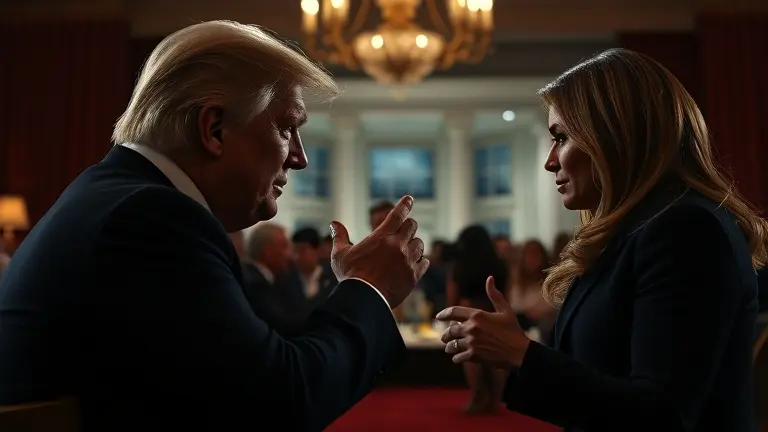
On April 23, 2026, a parody monologue by late-night host Jimmy Kimmel triggered a firestorm that has transcended the typical bounds of celebrity satire. By characterizing First Lady Melania Trump with the provocative phrase “glow like an expectant widow,” Kimmel inadvertently set the stage for a national reckoning when an unspecified shooting incident occurred just 48 hours later. The subsequent fallout—a blistering statement from the First Lady labeling the rhetoric as violent and demanding corporate intervention from ABC—has transformed a routine comedy bit into a volatile litmus test for media responsibility in a hyper-polarized political landscape.
This incident is not merely another chapter in the long-standing melania trump jimmy kimmel friction; it represents a fundamental shift in how the American public views the role of satire. As the debate intensifies over where the line between protected speech and dangerous incitement lies, the industry finds itself at a crossroads. Is it time for networks to enforce stricter editorial boundaries on their late-night hosts, or does this pressure represent a dangerous erosion of the traditional space for political dissent? We examine the anatomy of this controversy and what it signals for the future of media accountability.
The Kimmel-Trump Confrontation: A Timeline of Escalation
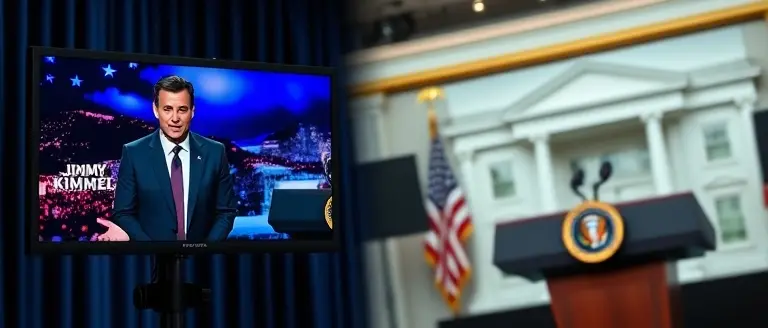
The current standoff between Jimmy Kimmel and the White House originated on April 23, 2026, during a late-night monologue parodying the White House Correspondents’ Dinner. In a segment that quickly drew national attention, kimmel characterized the First Lady, Melania Trump, with the phrase “glow like an expectant widow.” While satirical in intent, the comment was immediately seized upon by critics as a deeply insensitive remark, given the volatile nature of the current political climate. The situation moved from a standard celebrity exchange to a national news event approximately 48 hours later, following an unspecified shooting incident that occurred in proximity to the ongoing discourse.
The escalation reached a boiling point on April 27, 2026, when Melania Trump issued an official, scathing rebuke of the host. In her statement, the First Lady labeled the host a “coward” and characterized his monologue as “hateful and violent rhetoric.” This development has placed immense pressure on ABC, as the First Lady explicitly called for the network to “take a stand” against the host, effectively demanding his termination. Key elements of this timeline include:
Key Milestones in the Controversy
- April 23, 2026: Jimmy Kimmel delivers his monologue, introducing the controversial “expectant widow” framing.
- April 25, 2026: A nearby shooting incident occurs, which proponents of the First Lady argue creates a direct, dangerous link between media rhetoric and real-world violence.
- April 27, 2026: Melania Trump formalizes her stance, accusing Kimmel of contributing to a “political sickness” and demanding corporate accountability.
This confrontation highlights a shift in how political satire is perceived, with melania trump jimmy kimmel interactions now serving as a flashpoint for debates over the responsibilities of network executives. The incident has effectively turned the jimmy kimmel expectant widow comment into a litmus test for media neutrality, as the public and political observers wait to see how ABC navigates these urgent calls for disciplinary action. The intensity of the rebuke suggests that the boundaries between comedic performance and incitement have never been more heavily scrutinized in the US entertainment industry.
Corporate Media Accountability in a Polarized Era

The sharp confrontation between Melania Trump and Jimmy Kimmel has thrust ABC executives into an unenviable position, serving as a modern litmus test for corporate media responsibility. When the First Lady labeled Kimmel’s “expectant widow” remark as “hateful and violent rhetoric,” she moved the discourse beyond the realm of traditional celebrity feuds. This incident highlights a growing expectation that networks must act as arbiters of content, particularly when late-night satire is perceived to intersect with volatile national events. As viewers and political stakeholders demand accountability, ABC faces the challenge of balancing creative freedom against the increasing pressure to mitigate “political sickness” in their programming.
The controversy raises critical questions regarding the shifting boundaries of late-night talk shows in an era of heightened societal tension:
- Institutional Responsibility vs. Free Speech: Networks are currently ill-equipped to codify where protected satirical speech ends and institutional liability begins.
- The Precedent of Termination: Historically, late-night hosts have enjoyed broad latitude, but the current climate suggests that corporate entities may be forced to adopt stricter content guidelines to avoid public relations catastrophes.
- Neutrality in the Crossfire: Media organizations now operate under a microscope, where every monologue by a host like Kimmel is analyzed for potential incitement, placing immense stress on the editorial standards of major networks.
The fallout surrounding Melania Kimmel—a social media moniker characterizing the intense public scrutiny—reflects a broader trend where political figures increasingly utilize their platforms to pressure corporate boards to intervene. Whether this leads to a formal policy change or remains an isolated incident, the conflict signifies a permanent shift in the relationship between late-night entertainment and political accountability. Networks must now decide if their role is merely to provide comedy or to assume a degree of moral oversight in an increasingly polarized US market.
The Evolution of Political Satire: Crossing the Line in 2026
Historically, the late-night host functioned as a modern-day “court jester,” a figure permitted to challenge the powerful through the safety of irony and wit. For decades, political satire remained a cornerstone of American democracy, allowing hosts to deflate the egos of politicians without necessarily triggering existential crises. However, the 2026 climate—marked by heightened societal tension and the volatile fallout between Melania Trump and Jimmy Kimmel—suggests this traditional dynamic has undergone a radical shift. When Kimmel performed his parody monologue regarding the White House Correspondents’ Dinner, his choice to describe the First Lady as an “expectant widow” moved beyond mere lampooning; it touched a nerve in a national environment already sensitized by tragedy.
The Litmus Test for Media Responsibility
The controversy surrounding melania trump jimmy kimmel highlights a growing friction between creative license and public decorum. As political figures increasingly demand institutional accountability, the industry faces several critical questions:
- The Redefinition of Incitement: Where does parody end and harmful rhetoric begin? Critics argue that late-night humor now risks being perceived as “incitement,” particularly when delivered in the immediate aftermath of a public shooting.
- Corporate Mediation: The pressure on ABC to take a stand signifies that platforms are no longer passive distributors of content but active participants in the political discourse.
- The Loss of Nuance: In a polarized climate, the margin for error has diminished. What was once considered harmless banter is now frequently dissected for its potential to deepen existing “political sickness.”
This evolution reflects a transition from satire as entertainment to satire as a high-stakes, high-risk political weapon. As viewers demand more responsibility from networks, the traditional role of the host as a provocateur is being challenged by a societal expectation for empathy, particularly during national crises. Consequently, the case of kimmel underscores a pivotal moment in media history, where the boundary between free expression and professional liability is being rewritten in real-time.
The Litmus Test: Impact on Public Discourse and Media Ethics
The recent public confrontation between Jimmy Kimmel and Melania Trump represents a pivotal moment in the evolution of American media, serving as a high-stakes litmus test for the boundaries of political satire. When the First Lady characterized Kimmel’s “expectant widow” comment as “hateful and violent rhetoric,” she shifted the discourse from traditional celebrity bickering to a fundamental debate over corporate responsibility and incitement. This incident illustrates a broader shift in 2026 where late-night monologues are no longer viewed merely as entertainment, but as active participants in the nation’s volatile political cycle. As social media platforms amplify these exchanges, the lines between personal critique and inflammatory speech continue to blur, placing intense pressure on network executives to mediate content within a hyper-polarized environment.
The Role of Echo Chambers and Network Accountability
The rapid escalation following the late-night segment underscores how modern audience segmentation deepens societal divisions. Because viewers often reside in partisan digital silos, the backlash against Kimmel—and the subsequent support for Melania Trump’s demand for his termination—spreads through echo chambers that prioritize outrage over nuance. This scenario presents several implications for the future of political engagement:
- Corporate Mediation: Networks like ABC are increasingly forced to balance creative autonomy with the liability of perceived “political sickness,” leading to a more cautious approach to satire.
- Defining Incitement: The framing of the “expectant widow” joke highlights a growing societal consensus that linguistic choices carry tangible consequences in the wake of public tragedies or shooting incidents.
- Erosion of Neutrality: As political figures actively target media hosts, the expectation of media neutrality is being replaced by a demand for “accountability,” which may fundamentally alter the landscape of late-night television.
Ultimately, this conflict serves as a case study for the fragility of media ethics in a digital age. Whether the industry moves toward self-censorship or adopts a more rigid standard for on-air commentary remains an open question, but the pressure to de-escalate political rhetoric is clearly becoming a dominant corporate mandate.
Navigating the Cognitive Chaos of Modern Media
The clash between the White House and late-night television serves as a stark reminder that in our current cultural climate, the stakes of public discourse have never been higher. As we analyze the implications of this incident, it becomes clear that the rapid-fire exchange of inflammatory rhetoric serves only to heighten societal anxiety, leaving audiences caught in the crossfire of political theater. In a media environment that feels increasingly designed to keep our nerves frayed and our attention fragmented, finding ways to maintain mental clarity is no longer a luxury, but a necessity.
When the news cycle feels like an unrelenting assault on your equilibrium, the resulting mental fog can make it nearly impossible to process complex events with objectivity. This is where The Brain Song becomes an essential cognitive defense tool. By utilizing neuroscience-based techniques to cut through the information-overload exhaustion, this program allows you to reclaim your focus and build a mental shield against the toxicity of 24/7 outrage. It is the natural solution for anyone looking to navigate these contentious times without losing their sense of center.
Reclaiming your cognitive space is the most effective way to resist the fatigue caused by aggressive media cycles. By sharpening your focus and silencing the noise, you can move through this polarized era with newfound resilience and clarity, ensuring that your mental well-being remains uncompromised by the noise of the public square.
 Reclaim your mental space—discover how to clear the noise and sharpen your focus in just 12 minutes a day.Yes, I Want To Clear My Mind Now!