
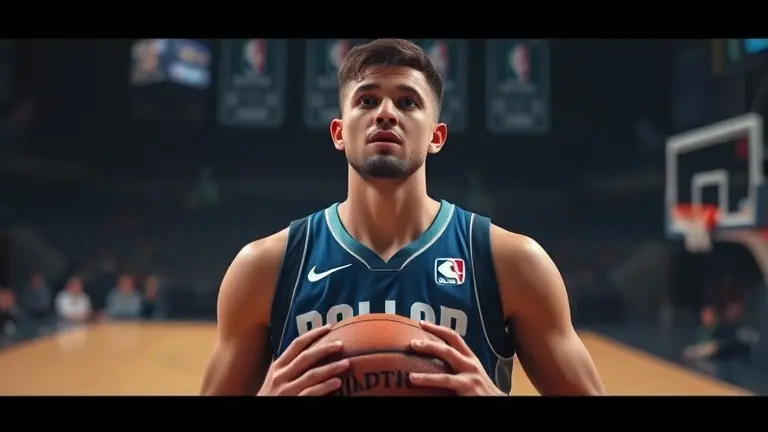
The 2025-26 NBA season has officially crowned its breakout star, with Cooper Flagg of the Dallas Mavericks securing the prestigious Kia NBA Rookie of the Year award. While the announcement ended months of speculation, it ignited a deeper conversation among analysts regarding the razor-thin margin that separated Flagg from his former Duke teammate, Kon Knueppel of the Charlotte Hornets. This wasn’t just a win based on highlight-reel dunks; it was a testament to a rookie class that redefined expectations through high-level decision-making and basketball IQ.
As the 2026 playoffs intensify, the focus shifts from the result to the process. By dissecting the advanced performance metrics and the specific tactical systems that enabled Flagg to edge out Knueppel, we gain a rare glimpse into the elite cognitive demands of professional basketball. Understanding how these athletes process information at game speed is the key to unlocking the true narrative behind this historic ROTY campaign.
Cooper Flagg Crowned 2025-26 Kia NBA Rookie of the Year
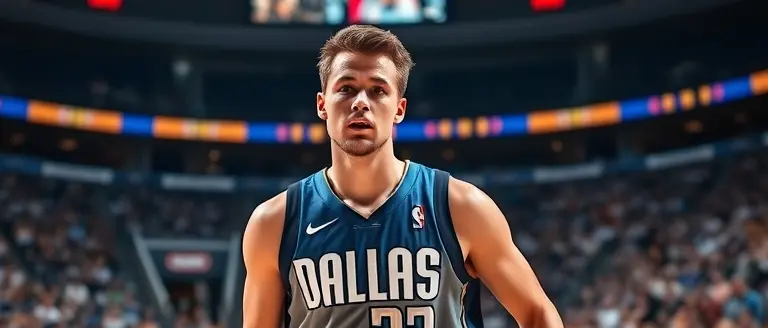
On April 27, 2026, the league officially solidified its future, announcing Cooper Flagg of the Dallas Mavericks as the Kia NBA Rookie of the Year. The formal confirmation put an end to months of intense speculation and social media rumors that had clouded the race, particularly regarding rival candidates like VJ Edgecombe. By securing this prestigious nba roty honor, Flagg validated his phenomenal debut campaign, which saw him average 21.0 points, 6.7 rebounds, and 4.5 assists per game. This recognition serves as a testament to his immediate impact on the Mavericks’ rotation and his ability to thrive under the intense scrutiny of the professional stage.
The 2025-26 nba rookie of the year race was defined by an unprecedented level of competition, most notably the high-stakes narrative between Flagg and his former Duke University teammate, Kon Knueppel of the Charlotte Hornets. Their rivalry, which spanned from the collegiate ranks to the NBA hardwood, created a compelling sub-plot throughout the season. The intensity of this award cycle reached its zenith amidst the backdrop of the 2026 NBA Playoffs, where the spotlight on individual brilliance was amplified by the urgency of postseason play.
Why the 2026 Rookie Race Was Historic
Several factors contributed to this being one of the most hotly contested awards in recent history:
- Elite Talent Pool: The 2025-26 freshman class featured multiple prospects who acted as primary offensive options for their respective franchises, raising the statistical floor for what constituted a “winning” rookie performance.
- Direct Rivalry: The draft-day intrigue surrounding the top picks, specifically the battle between Flagg and Knueppel, sustained media engagement from opening night through the final buzzer of the regular season.
- System Integration: Voters prioritized how effectively these athletes translated their collegiate success into winning basketball within complex professional schemes, favoring Flagg’s versatile two-way utility in Dallas.
Ultimately, official league data confirms that while the field was crowded, Flagg’s consistency and high-level efficiency made him the clear choice for voters. As we look toward the future, the rookie of the year nba trophy serves as both a retrospective on a stellar season and a precursor to what is expected to be a career-long duel between the league’s most promising young stars.
The Analytical Breakdown: Why Flagg Edged Out the Competition

The race for the NBA Rookie of the Year 2026 was arguably the most contested in recent league history, but Cooper Flagg’s emergence as the definitive winner was grounded in a blend of high-volume efficiency and tangible team success. While finalists like Kon Knueppel and VJ Edgecombe put up staggering offensive numbers, voters prioritized Flagg’s two-way dominance and his instrumental role in elevating the Dallas Mavericks’ standing during the regular season. Flagg finished the campaign averaging 21.0 points, 6.7 rebounds, and 4.5 assists, but these surface-level stats fail to capture his true impact on the court.
Beyond the Box Score: Why Voters Chose Flagg
Advanced metrics and “eye-test” factors provided the necessary context to separate Flagg from his peers. Specifically, his defensive versatility—characterized by his ability to guard multiple positions and alter shots in the paint—gave him a significant edge in defensive win shares compared to his offensive-minded rivals. Key factors that solidified his status as the nba roty include:
- Clutch Performance Efficiency: Flagg maintained a higher true shooting percentage in “clutch” moments (the final five minutes of games within a five-point margin), proving his reliability under pressure.
- Systemic Impact: The Dallas Mavericks saw a marked improvement in net rating whenever Flagg was on the floor, validating his importance to the team’s playoff positioning.
- Defensive Versatility: Unlike pure scorers, Flagg functioned as a disruptive force on the perimeter and a rim-protector, providing value that standard box scores often undervalue.
While Knueppel’s scoring prowess at the Charlotte Hornets was undeniable, Flagg’s superior impact on team wins ultimately served as the tie-breaker. By consistently performing in the most high-leverage situations of the 2026 season, Flagg cemented his legacy as a transformative rookie, moving beyond mere statistical production to become a cornerstone player capable of influencing game outcomes at the professional level.
Flagg vs. Knueppel: A Statistical Comparison of the 2026 Titans

The race for the NBA Rookie of the Year 2026 was defined by a historic battle between former Duke University teammates Cooper Flagg and Kon Knueppel. While Flagg ultimately secured the trophy, the statistical gap between the two highlights why this remains one of the most competitive rookie classes in recent memory. Flagg’s transition to the Dallas Mavericks system proved pivotal, as he finished the campaign with impressive averages of 21.0 points, 6.7 rebounds, and 4.5 assists per game. His versatility allowed him to anchor the Mavericks’ offense, providing the efficiency and high-usage capability that primary voters prioritized when casting their ballots for NBA ROTY.
Analytical Breakdown: Performance Metrics
When analyzing the rookie of the year nba race, it is essential to look beyond raw scoring totals. The following metrics illustrate how these two titans impacted their respective franchises:
- Scoring and Efficiency: Flagg maintained a higher overall scoring average, but Knueppel’s advanced efficiency metrics, specifically his effective field goal percentage, kept the race neck-and-neck until the final week of the regular season.
- Win Shares: Evidence suggests that Flagg’s defensive rebounding rate and higher win share accumulation were the decisive factors for voters, as his ability to facilitate play while crashing the glass provided more stability for Dallas.
- Defensive Impact: While both players demonstrated high basketball IQ—a product of their shared time at Duke—Flagg’s defensive versatility and ability to switch across positions significantly bolstered his analytical profile.
The rivalry between Flagg and Knueppel served as a masterclass in modern basketball development. While Knueppel’s impact on the Charlotte Hornets was undeniable, the 2026 NBA Rookie of the Year results suggest that the voters favored Flagg’s all-around consistency and role in the Mavericks’ success. This NBA rookie of the year 2026 comparison underscores that while only one player lifts the trophy, the sheer depth of this rookie class has set a new benchmark for future talent entering the professional stage.
Beyond the Stats: The Impact on the 2026 NBA Postseason
The 2025-26 season will be remembered as a watershed moment for the league, characterized by an influx of talent that bridged the gap between collegiate potential and immediate professional dominance. The confirmation of Cooper Flagg as the NBA Rookie of the Year is not merely a recognition of his 21.0 points and 6.7 rebounds per game; it is a validation of the Dallas Mavericks’ decision to entrust a teenager with the keys to their playoff ambitions. Flagg’s transition from a regular-season sensation to a high-impact playoff performer proves that the modern rookie can act as a cornerstone piece rather than a developing project. By maintaining his composure under the intense pressure of the 2026 NBA Playoffs, Flagg has effectively changed the defensive schemes teams must prepare for when facing Dallas.
Franchise Trajectories and Future Outlook
The impact of this rookie class extends beyond the winner’s circle, fundamentally shifting the long-term outlook for the Dallas Mavericks and the Charlotte Hornets. Evidence suggests that the rivalry between Flagg and runner-up Kon Knueppel has accelerated the rebuilding timelines for both organizations.
- Dallas Mavericks: Flagg’s ability to space the floor and create mismatches has allowed Dallas to diversify their offensive sets, making them a more unpredictable threat in the postseason.
- Charlotte Hornets: Knueppel’s emergence as a perimeter scoring threat has stabilized the Hornets’ roster, providing them with a reliable secondary option that was previously missing.
- League parity: The success of these two stars demonstrates that the nba rookie of the year 2026 race was not just a battle for an individual trophy, but a precursor to a new era of competitive basketball.
As both franchises head into the off-season, the performances of these rookies serve as a blueprint for success. Whether through tactical adjustments in the playoff rotation or increased confidence in young talent, the legacy of this class is already being written in the high-stakes environment of the post-season. This level of maturity, rarely seen in first-year players, ensures that the rookie of the year nba narrative remains central to the league’s growth.
Mastering the Cognitive Game of Elite Basketball
The race for the 2026 NBA Rookie of the Year award serves as a masterclass in how elite performance is driven by more than just raw athleticism. Cooper Flagg’s ability to interpret complex defensive schemes and execute rapid-fire decisions on the court separates the good from the legendary. To truly appreciate the depth of this analytical battle, one must possess a similarly sharp and focused mindset to dissect the shifting metrics that define modern professional basketball.
Just as Cooper Flagg relies on unparalleled mental clarity to navigate the high-speed intensity of an NBA game, you need an edge to process complex data and stay ahead of the curve in your own analytical pursuits. This is where The Brain Song becomes an essential tool for your cognitive arsenal. By optimizing your mental focus and accelerating information processing, it allows you to engage with deep-dive sports statistics and intricate narratives at a professional level, bridging the gap between a casual fan and a master of performance analytics.
Unlock your cognitive potential today and experience the clarity required to master complex information. Whether you are deconstructing the next evolution of the Dallas Mavericks’ system or leveling up your own professional decision-making, the journey to peak performance starts with a sharper mind.
 Unlock your own peak performance and mental clarity to master complex data analysis with The Brain Song.Yes, I Want To Master My Focus Now!