
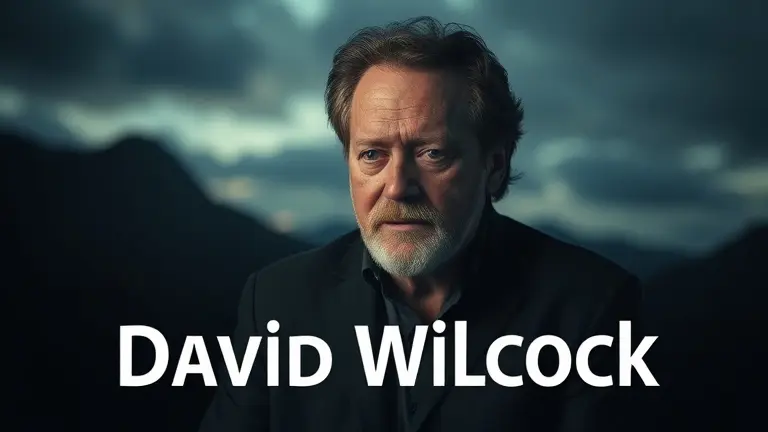
The sudden passing of David Wilcock, the prominent paranormal researcher and Ancient Aliens contributor, on April 20, 2026, at age 53, has sent shockwaves through the communities that followed his decades-long investigation into the unknown. A polarizing yet undeniably influential figure, Wilcock dedicated his life to exploring the frontiers of human history, consciousness, and the UFO phenomenon. His death, confirmed by the Boulder County Sheriff’s Office near his home in Nederland, Colorado, marks the end of a chapter for those who viewed him as a catalyst for disclosure and a challenger of mainstream paradigms.
While news of his struggle with mental health has deeply saddened his audience, his legacy remains anchored in the extensive body of work he left behind. Beyond the sensationalism that often surrounds his field, Wilcock’s career was characterized by an unyielding curiosity and a drive to connect disparate, complex ideas about the nature of our reality. As the paranormal and enthusiast communities grapple with this loss, it is essential to look back at the scope of his contributions with objectivity, honoring his role as a storyteller who dared to question the boundaries of human knowledge.
Understanding the Passing of David Wilcock

The news regarding the death of David Wilcock on April 20, 2026, has had a profound impact on the paranormal and UFO enthusiast communities. Official reports confirm that the 53-year-old author, researcher, and prominent Ancient Aliens contributor passed away near Nederland, Colorado. The Boulder County Sheriff’s Office confirmed the details of the incident, which has since been characterized by a formal family statement as the tragic conclusion of a long-term, private struggle with mental health. By addressing these circumstances with transparency, the family has sought to provide closure while highlighting the importance of mental wellness in the public eye.
While many followers recognize him for his extensive television work and his role as a “disclosure advocate,” it is essential to approach this information with the gravity it deserves. The reports surrounding the david wilcock death confirm that he took his own life, a somber reality that underscores the hidden battles often faced by public figures. In the wake of this news, various online forums have seen a surge of discussions; however, it remains critical to rely on verified documentation rather than speculative theories that attempt to conflate his passing with unrelated events or other figures in the UFO community.
If you or someone you know is struggling with mental health issues or experiencing a crisis, please know that help is available. You are not alone, and there are resources specifically designed to support individuals in need:
- 988 Suicide & Crisis Lifeline: Call or text 988 anytime in the United States and Canada to connect with trained counselors.
- Crisis Text Line: Text “HOME” to 741741 to connect with a Crisis Counselor for free, 24/7 support.
- The Trevor Project: For LGBTQ youth, call 1-866-488-7386 or text START to 678-678.
- National Alliance on Mental Illness (NAMI): Visit nami.org for comprehensive information and local support groups.
Maintaining sensitivity when discussing such events is of the utmost importance. As the community processes the loss of a figure who spent decades documenting the fringe and the unknown, focus should remain on providing respectful memorialization rather than participating in the spread of unverified narratives.
A Look Back at a Polarizing Career

David Wilcock established himself as one of the most recognizable, albeit controversial, figures in the modern paranormal and UFO landscape. Rising to prominence through his prolific work as an author and a recurring expert on the History Channel’s long-running series Ancient Aliens, Wilcock became a central voice for those interested in alternative archaeology and extraterrestrial visitation. His career trajectory was defined by an aggressive push for “disclosure”—the belief that global governments possess definitive proof of non-human intelligence and are actively suppressing this information from the public. While mainstream scientific communities frequently scrutinized his claims, his impact on the alternative media sphere remains undeniable, as he successfully cultivated a massive, dedicated following through various digital platforms, podcasts, and sold-out speaking engagements.
Impact on the Paranormal Community
Wilcock’s work often bridged the gap between fringe science and New Age spirituality, frequently tying ancient aliens theories to broader geopolitical and metaphysical narratives. His ability to synthesize complex, often disparate conspiracy theories into a cohesive, albeit speculative, worldview made him a household name among UFO enthusiasts. Throughout his career, he remained a polarizing figure; supporters hailed him as a courageous whistleblower who challenged institutional secrecy, while critics consistently pointed to a lack of empirical, peer-reviewed evidence for his claims.
Key aspects of his professional influence included:
- Prolific Media Presence: His consistent appearances as a lead contributor on Ancient Aliens introduced his theories to a global mainstream audience, cementing his status as a pillar of the show’s success.
- Disclosure Advocacy: He served as a bridge between historical “ancient astronaut” theories and contemporary UAP (Unidentified Anomalous Phenomena) discourse.
- Community Engagement: Through his websites and public speaking events, he fostered a high level of engagement with his audience, creating a distinct subculture of followers who looked to him as an authority on cosmic matters.
Despite the intensity of the public reaction surrounding reports of his passing, including inquiries regarding the circumstances of david wilcock’s death, his legacy is primarily defined by the reach of his communications. Whether viewed as an educator on hidden truths or a purveyor of misinformation, Wilcock’s ability to influence the conversation surrounding extraterrestrials and government transparency leaves a complex void in the current landscape of alternative media.
If you or someone you know is struggling or in crisis, help is available. You can call or text 988 or chat at 988lifeline.org in the US and Canada, or contact your local emergency services.
Distinguishing Fact from Community Speculation

In the immediate aftermath of David Wilcock’s death, the vacuum created by the sudden loss of such a prominent figure has predictably invited a surge of fringe theories across social media platforms. Within the niche communities of paranormal researchers and UFO enthusiasts, speculative narratives have emerged, attempting to draw causal links between Wilcock’s passing and the deaths of other figures, such as Matthew James Sullivan. These conjectures often frame these events within the context of “disclosure” and institutional secrecy, attempting to find patterns in unrelated tragedies. However, it is essential for the public to distinguish between verifiable facts—provided by the Boulder County Sheriff’s Office and documented by reputable outlets—and unsubstantiated digital folklore.
Journalistic integrity is paramount when covering the life and death of polarizing public figures. Relying on verified reports is not merely a professional standard but a necessity to prevent the spread of harmful misinformation that can complicate the grieving process for the family. Key factors to consider when evaluating current online discussions include:
- Source Credibility: Information regarding the cause and circumstances of death should only be accepted when reported by official channels or established, mainstream news organizations.
- Verification vs. Narrative: Speculative connections between individual deaths in the UFO community are often born from a desire to make sense of sudden tragedy, but they lack empirical evidence and often fail to acknowledge the complex realities of individual mental health struggles.
- Respectful Discourse: Acknowledging David Wilcock’s influence on the Ancient Aliens series and his contributions to the disclosure movement does not require the validation of unproven conspiracy theories.
The tendency to conflate individual biographical outcomes with larger, clandestine agendas can often obscure the actual, human reality of these events. By focusing on the documented facts surrounding his passing on April 20, 2026, we honor the truth while avoiding the pitfalls of digital sensationalism. Observers are encouraged to critically evaluate the source of any “whistleblower” theories, as these often originate from unverified echo chambers that prioritize engagement over factual accuracy. Maintaining a grounded perspective ensures that the focus remains on the legacy of the individual rather than the noise of speculative media.
If you or someone you know is struggling or in crisis, help is available. You can call or text 988 or chat at 988lifeline.org in the US and Canada, or contact your local emergency services.
Resources for Mental Health and Support

The tragic passing of David Wilcock serves as a somber reminder of the silent battles many individuals face regarding mental health. Regardless of one’s public persona or career accomplishments, the complexities of psychological distress remain a significant challenge that requires compassion, open dialogue, and immediate access to professional intervention. In light of the reports surrounding his death, it is essential to emphasize that help is available for anyone struggling with suicidal ideation, overwhelming grief, or chronic mental health conditions. Prioritizing one’s well-being is not a sign of weakness but a vital step toward safety and recovery.
Seeking Professional Assistance
If you or someone you know is currently experiencing a crisis, please recognize that you are not alone. Professional support systems are designed to provide confidential, non-judgmental assistance 24/7. Whether you are dealing with the impact of recent news regarding David Wilcock or managing your own personal struggles, please utilize the following resources:
- 988 Suicide & Crisis Lifeline: Call or text 988 in the United States and Canada. This service connects callers with trained counselors who can provide immediate support for those in distress.
- Crisis Text Line: Text “HOME” to 741741 to connect with a crisis counselor. This is a free, confidential service available 24/7.
- The Trevor Project: For LGBTQ youth needing support, call 1-866-488-7386 or text START to 678-678.
- International Resources: If you are outside the U.S., visit Find A Helpline to locate support services specific to your country.
Reaching out for help is a brave action that can change the trajectory of a difficult moment. If you notice signs of distress in a friend, family member, or colleague—such as sudden changes in behavior or expressions of hopelessness—encourage them to seek qualified medical or therapeutic care immediately. By fostering a culture of empathy and removing the stigma associated with mental health, we can better support those who may be suffering in silence. Remember that professional counselors, clinicians, and support groups are available to help navigate the complexities of life’s challenges.
Expanding Your Own Horizons
As we reflect on the life of David Wilcock, it is clear that his work inspired many to look beyond the surface of everyday life and investigate the vast, often unexplored potential of human consciousness. While his journey has come to an end, the questions he raised about cognitive expansion and the nature of the mind continue to resonate with those who feel a deeper calling toward intellectual and personal discovery.
For many of his followers, the search for truth was never just about external phenomena; it was a quest for internal clarity and enhanced awareness. If you have been inspired by these themes of mental optimization, you may find that the best way to honor that curiosity is by sharpening your own cognitive potential. Transitioning from abstract exploration to tangible mental wellness is a powerful next step for any seeker.
We recommend The Brain Song as a modern, science-based tool designed to help you clear away mental fog and achieve a state of heightened focus. By utilizing auditory stimulation rooted in neuroscience, this program offers a practical way to support your own cognitive health and personal development journey, allowing you to explore the capabilities of your mind with renewed clarity.
 Explore how to sharpen your mental focus and support your cognitive health with this science-backed audio routine.Transform My Mental Clarity Today