
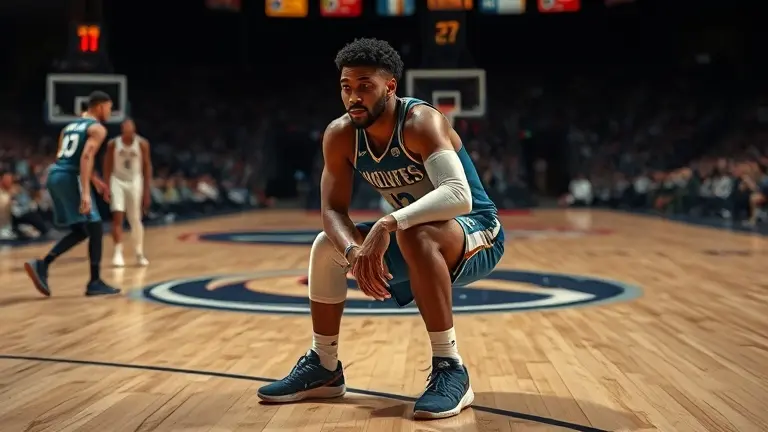
The NBA Playoffs are often defined by moments of brilliance, but the narrative of the 2026 season took a chilling turn during Game 4. As the Minnesota Timberwolves battled for control, a collective hush fell over the arena when both Anthony Edwards and Donte DiVincenzo were forced off the court. Official reports have since confirmed a devastating reality: DiVincenzo has suffered a season-ending torn Achilles, while Edwards faces a challenging recovery from a left knee bone bruise and hyperextension. These injuries don’t just shift the momentum of a series; they fundamentally rewrite the playbook for the remainder of the postseason.
Despite these significant setbacks, the Timberwolves’ emphatic 112-96 victory serves as a testament to the team’s depth and adaptability. With the spotlight now turning toward bench rotation players like Ayo Dosunmu, fans and analysts alike are scrambling to understand how this shorthanded squad can maintain its competitive edge. In this deep dive, we break down the recovery protocols for these critical injuries, analyze the strategic shift in the Timberwolves’ rotation, and examine how the rest of the roster is stepping up when it matters most.
The Timberwolves’ Double Blow: Game 4 Injury Report
The April 25, 2026, matchup between the Minnesota Timberwolves and the Denver Nuggets turned from a standard postseason contest into a defining moment of resilience for the franchise. During the first half of Game 4, the team suffered a devastating setback as both Anthony Edwards and Donte DiVincenzo exited the floor, unable to return. The subsequent medical evaluation confirmed the gravity of the situation: Edwards sustained a left knee injury diagnosed as a bone bruise and hyperextension, while DiVincenzo’s exit was marked by a confirmed, season-ending torn Achilles.
Understanding the Clinical Impact
The medical prognosis for both players presents vastly different recovery trajectories, impacting the Timberwolves’ strategic planning moving forward:
- Anthony Edwards Injury Update: The anthony edwards injury is classified as a significant bone bruise and hyperextension. While this does not require surgery, the inflammation and internal bone trauma necessitate a multi-week recovery period to ensure the structural integrity of the knee before he can return to high-impact basketball.
- The DiVincenzo Diagnosis: Conversely, the donte divincenzo injury is severe and season-ending. An Achilles rupture requires surgical intervention followed by a lengthy rehabilitation protocol that typically spans several months, ruling him out for the remainder of the postseason.
Despite the loss of their two primary scoring threats, the Timberwolves showcased remarkable depth and defensive intensity. The team rallied to secure a dominant 112-96 victory, proving that their system remains resilient even when elite talent is sidelined. As the series progresses, the coaching staff will be forced to lean on rotational players to bridge the production gap left by the absence of anthony edwards and the loss of divincenzo. Moving forward, the team’s ability to maintain this defensive discipline under pressure will be the deciding factor in their series against the Nuggets.
Strategic Adjustments: Navigating the Playoffs Without Edwards
The anthony edwards injury creates a seismic shift in the Minnesota Timberwolves’ strategic architecture during their high-stakes playoff run. With Edwards sidelined due to a left knee bone bruise and hyperextension, the coaching staff faces the immense challenge of replacing his primary scoring gravity and perimeter playmaking. Because Edwards often acts as the focal point of the offense, the team must now pivot toward a more egalitarian system that prioritizes ball movement and off-ball motion to generate efficient looks against the Nuggets’ disciplined defense.
Reconfiguring Offensive and Defensive Schemes
To survive the current series, the Timberwolves must prioritize perimeter spacing and diversified shot creation. The absence of both Edwards and Donte DiVincenzo removes significant floor-spacing threats, forcing the team to rely on increased contributions from their bench depth. Key adjustments include:
- Increased Pick-and-Roll Variations: Without Edwards’ ability to penetrate the paint, the coaching staff will likely rely on high-screen sets to pull rim protectors away from the basket, creating driving lanes for secondary playmakers.
- Defensive Reassignment: The team must now implement a more collective defensive approach to cover the void left by their perimeter stars, potentially shifting to more zone-based looks to mitigate individual defensive liabilities.
- Heightened Role for Reserves: Players like Ayo Dosunmu will be tasked with assuming larger responsibilities, particularly in transition and perimeter containment, to fill the massive production gap.
The timberwolves demonstrated in their Game 4 win that they are capable of cohesive team basketball even when faced with adversity. However, sustaining this level of output without their lead scorers requires a flawless execution of new tactical sets. By emphasizing interior passing and high-percentage perimeter shots, the team hopes to maintain its competitive edge as they navigate the anthony edwards injury update throughout the remainder of this grueling postseason.
The Next Man Up: Bench Depth and Role Players
The unfortunate anthony edwards injury and the season-ending status of donte divincenzo have forced the Minnesota Timberwolves into an immediate, high-stakes tactical pivot. With two of their most significant offensive engines sidelined, the team must now embrace the “next man up” philosophy to remain competitive in their playoff series against the Denver Nuggets. The challenge for head coach Chris Finch is not merely replacing individual statistics, but reconfiguring a rotation that has lost its primary playmaker and a critical perimeter defender.
Expanding Roles and Rotational Adjustments
In this vacuum of production, players such as Ayo Dosunmu are being thrust into elevated roles. Dosunmu, who has shown flashes of reliability off the bench, will now be tasked with increased ball-handling duties and perimeter defensive assignments previously managed by Edwards and DiVincenzo. Analysts expect the Timberwolves to rely on a “committee approach,” where multiple role players split the vacated minutes to sustain defensive intensity and transition efficiency.
Key strategic shifts are expected to include:
- Increased Playmaking Load: Secondary ball-handlers will see a spike in usage rates to compensate for the absence of anthony edwards.
- Defensive Versatility: With divincenzo out, perimeter containment will become a collective effort, forcing wings to shadow Denver’s top scoring threats for longer durations.
- Balanced Scoring: The offense will likely prioritize high-percentage looks and screen-heavy sets to mitigate the loss of elite isolation scoring.
The 112-96 victory in Game 4 served as a blueprint for this new reality, proving that the timberwolves possess the grit to perform under duress. By prioritizing ball movement and collective defensive accountability, the roster aims to maintain their competitive trajectory while navigating the anthony edwards injury update throughout the remainder of the postseason. Success will depend on these secondary options delivering consistent performance under the immense pressure of playoff basketball.
Understanding Sports Recovery: Bone Bruises vs. Achilles Tears

The recent setbacks involving Anthony Edwards and Donte DiVincenzo highlight the stark contrast in recovery timelines between different types of athletic trauma. While both players were forced to exit the game, the medical requirements for a knee hyperextension and bone bruise differ significantly from the complex surgical needs of a ruptured Achilles. Understanding these differences provides clarity on why the Timberwolves face such a challenging path forward during the NBA Playoffs.
Managing the Knee Bone Bruise and Hyperextension
A bone bruise, such as the injury sustained by Anthony Edwards, occurs when the trabecular bone—the inner mesh-like structure—is damaged due to high-impact stress or joint hyperextension. Unlike a ligament tear, which may require immediate structural repair, a bone bruise is primarily treated through a cycle of rest and inflammation management. The recovery protocol typically follows a structured path:
- Offloading: Utilizing crutches or bracing to remove weight from the joint during the acute phase.
- Anti-inflammatory Therapy: Using localized icing and non-steroidal medication to reduce synovial swelling.
- Gradual Loading: Carefully introducing range-of-motion exercises only after pain levels subside, followed by progressive resistance training to regain muscle stability.
The Complexity of an Achilles Rupture
In contrast, Donte DiVincenzo faces a much more rigorous rehabilitation schedule. An Achilles tendon rupture involves a complete or partial tear of the thickest tendon in the human body, which is critical for explosive movements and vertical jumping. Because the tendon lacks a robust blood supply, the healing process is notoriously slow. Medical professionals generally mandate:
- Surgical Intervention: Reattaching the tendon to the calcaneus bone, which is standard for elite athletes to ensure future stability.
- Immobilization: Several weeks in a cast or specialized boot to allow the initial biological union of the tissue.
- Extended Physical Therapy: A multi-month process focusing on neuromuscular retraining, tendon strengthening, and eventually, re-acclimatization to high-impact basketball movements.
While the anthony edwards injury update suggests a return to the court is possible after a multi-week recovery, the season-ending nature of an Achilles tear serves as a stark reminder of the physical volatility inherent in professional basketball. Both players must now navigate these distinct physiological hurdles as the team adjusts its rotation in the wake of the Game 4 incident.
Mastering the Playoff Narrative with Clarity
The Timberwolves face an unprecedented test as they pivot without the offensive spark of Anthony Edwards and the grit of Donte DiVincenzo. While the team’s resilience in Game 4 proved that depth players like Ayo Dosunmu can rise to the challenge, the path forward requires a rigorous understanding of both medical recovery and tactical adjustments. Staying informed throughout these high-stakes playoffs demands not just passion, but a high level of analytical endurance.
Just as the Timberwolves must sharpen their focus to reconfigure their rotation, fans require the same mental clarity to digest these complex roster shifts. Prolonged analysis of injury reports and performance metrics can lead to the very same mental fog that compromises a coach’s decision-making process. This is where Audifort becomes your ultimate analytical edge.
By supporting cognitive clarity and sensory wellness, Audifort helps you maintain the peak mental performance needed to dissect every nuance of the evolving series. Whether you are tracking the recovery protocols of an Achilles tear or analyzing the strategic impact of a bone bruise, this supplement ensures you never miss a beat. Elevate your sports research to a professional level and ensure you remain sharp, alert, and fully engaged with the unfolding playoff drama.
 Optimize your focus to stay ahead of the latest playoff developments and performance breakdowns with Audifort.Yes, I Want My Mental Edge Now!