
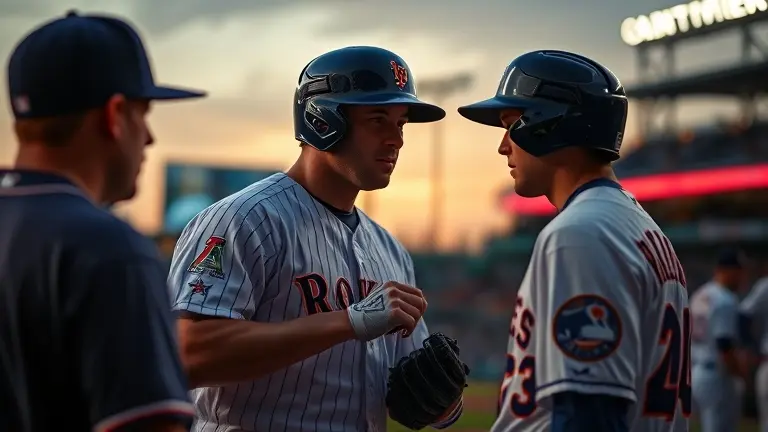
As the Colorado Rockies arrive at Citi Field this April 24, 2026, the surface narrative highlights two teams struggling to find their rhythm in a grueling MLB season. With the Mets sitting at 8-16 and the Rockies trailing closely at 10-16, casual observers might see just another mid-spring series. However, for the analytical fan, this matchup represents a critical inflection point. The integration of Bo Bichette into the Mets’ lineup isn’t merely a roster shuffle; it is a tactical experiment designed to recalibrate team chemistry and stabilize a reeling offense.
Beyond the standard box scores and betting lines, this series demands a deeper dive into the mechanics of roster management and player sustainability. To truly understand the trajectory of these teams, one must move past the headlines and dissect the subtle shifts in lineup efficiency and individual performance metrics. This is no longer just about who wins the next three games—it is about identifying which team’s tactical evolution has the intellectual depth to survive the long, punishing summer ahead.
Rockies vs. Mets: April 2026 Series Overview and Stakes

The Rockies vs. Mets series at Citi Field, commencing April 24, 2026, serves as a critical junction for two clubs currently navigating difficult early-season waters. Entering the three-game set, the New York Mets hold a challenging 8-16 record, while the Colorado Rockies arrive with a 10-16 standing. Both organizations are struggling to gain traction within their respective divisions, making this head-to-head matchup a vital opportunity to reset momentum and address significant deficiencies in offensive production and bullpen stability. For the Mets, the series is underscored by the urgent need to snap a discouraging 12-game losing streak that has cast a shadow over their clubhouse chemistry.
Strategic Implications and Division Trajectories
The stakes extend beyond a simple box score as both teams evaluate long-term sustainability. The Mets are under intense scrutiny to justify their recent roster adjustments, most notably the high-profile integration of Bo Bichette. Analysts are closely monitoring whether Bichette’s tactical presence in the lineup can serve as a catalyst for breaking the team’s prolonged slump. Meanwhile, the Rockies look to leverage this series to bolster their confidence against a struggling National League opponent. Key factors determining the outcome of this series include:
- Lineup Management: Whether Mets leadership can successfully optimize their batting order around new acquisitions to overcome early-season stagnation.
- Pitching Depth: Both bullpens face immense pressure to limit high-leverage scoring opportunities, a persistent issue for both rosters throughout April.
- Psychological Recovery: The ability for the Mets to move past the weight of their losing streak and play with the consistency required for a competitive 2026 campaign.
With the series opener scheduled for a 7:10 p.m. start, evidence suggests that the team capable of dictating tempo early will possess a significant advantage in the race to climb out of the basement of the standings. This series is not merely about accumulating wins; it is a fundamental test of each team’s structural integrity and coaching staff’s ability to implement effective mid-game adjustments under mounting pressure.
The Bo Bichette Factor: Tactical Impact on the Mets Lineup

The arrival of Bo Bichette in Flushing has fundamentally altered the offensive DNA of the New York Mets as they face off against the Rockies. Struggling with a historically difficult start to the 2026 season, the Mets front office identified a glaring need for contact-oriented stability at the top of the order. Bichette’s integration is not merely about stat accumulation; it represents a tactical shift in how the Mets approach plate discipline and situational hitting. By providing a reliable threat in the middle infield, he allows the lineup to transition from a feast-or-famine power approach to a more sustainable, high-frequency run production model.
Strategic Adjustments and Offensive Synergy
The impact of this acquisition is measurable through the team’s shift in on-base percentage and defensive coverage. While the team faced a daunting 12-game losing streak, Bichette’s presence has provided the following tactical advantages:
- Lineup Flexibility: Bichette allows the manager to slot him into the two-hole, effectively shielding lower-order hitters from high-leverage late-game situations by keeping the base-path congestion consistent.
- Aggressive Baserunning: His willingness to take the extra base puts immense pressure on opposing catchers, often forcing defensive lapses from younger clubs like the Colorado Rockies.
- Stabilizing Influence: Evidence suggests that Bichette’s professional approach during high-pressure counts has had a “calming” effect on the younger core, reducing the tendency to chase pitches outside the zone.
Whether this move serves as the catalyst for a mid-season turnaround remains the primary narrative for fans tracking the Rockies vs Mets series. If Bichette continues to command the strike zone with his signature line-drive approach, the Mets may finally overcome their early-season slump. The long-term sustainability of this roster improvement hinges on Bichette maintaining his health and continuing to function as the primary engine for offensive momentum as the team seeks to climb back into the National League hunt.
Data-Driven Performance: Contrast vs. Historical Benchmarks

Analyzing the early 2026 performance of the Colorado Rockies and the New York Mets requires looking beyond standard win-loss records to uncover the underlying tactical trends. When evaluating the rockies vs mets matchup through the lens of historical benchmarks, the disparity in key performance indicators reveals a complex narrative. The Mets, currently grappling with a challenging start, are showing OPS (On-base Plus Slugging) figures that deviate significantly from their three-year seasonal averages. While the addition of Bo Bichette was designed to catalyze the offense, his integration phase has coincided with a dip in situational hitting efficiency. Evidence suggests that the Mets’ inability to capitalize on runners in scoring position is a systemic issue rather than mere statistical noise, as their current wRC+ remains well below the baseline required for postseason contention.
Evaluating Statistical Anomalies and Team Trajectories
For the Rockies, the data presents a different set of challenges. Their pitching staff, specifically in terms of ERA and FIP (Fielding Independent Pitching), is currently performing near their historical norms, yet the team lacks the consistent run support to convert quality starts into victories. To determine if these trends are temporary slumps or predictive of a long-term decline, we can examine several critical metrics:
- Situational Hitting: Both teams are currently bottom-tier in high-leverage batting average, suggesting a league-wide trend of elite relief pitching stifling early-season lineups.
- Bullpen Reliability: The Mets’ high-leverage ERA has seen a marked increase compared to the 2024-2025 seasons, indicating that late-inning management will be the primary pivot point for their recovery.
- Rotation Stability: Michael Lorenzen and the rest of the starting rotation are generating ground-ball rates that align with historical career averages, implying that their peripheral stats are sustainable despite the win-loss record.
Ultimately, these early-season metrics underscore that while the rockies and mets are underperforming, their statistical profiles indicate varying paths to recovery. If the Mets can stabilize their OPS through better lineup optimization around Bichette, their trajectory could mirror past turnarounds; however, if the current downward trend in situational hitting persists, the organization may be forced to reconsider its roster composition before the trade deadline.
Roster Sustainability and Long-Term Outlook for 2026

As the Colorado Rockies and New York Mets navigate the challenging landscape of the 2026 MLB season, roster sustainability has become the primary metric for long-term success. For the Mets, the integration of Bo Bichette represents more than a tactical lineup shift; it is a calculated gamble on offensive consistency designed to stabilize a team currently struggling to find its rhythm. Management’s ability to balance the heavy workload of veteran anchors against the high-energy output of mid-season call-ups will ultimately determine whether these squads can climb out of their early-season slumps. Evidence suggests that teams failing to effectively rotate their bullpens during the grueling summer heat often face late-season collapses, making injury management and load monitoring essential for both organizations.
Strategic Management and Developmental Pathways
To sustain momentum, front offices must prioritize depth over immediate star power. The current trajectory for both clubs relies heavily on several key factors that fans should monitor as the summer progresses:
- Injury Mitigation: Both teams must maintain rigorous health protocols for high-usage pitchers like Michael Lorenzen to avoid the repetitive stress injuries that plague deep-rotation strategies.
- Pipeline Utilization: Expect an increase in mid-season call-ups from AAA affiliates as teams look to inject fresh, cost-effective talent into struggling bullpens or slumping middle-infield positions.
- Tactical Flexibility: Managers are increasingly utilizing specialized platoon splits, which requires roster versatility to survive the tactical grind of August and September.
Looking ahead, the rockies – mets dynamic illustrates the broader struggle of mid-market and large-market teams alike to build a sustainable competitive advantage. If the Mets can successfully integrate new roster additions into their existing core, their win-loss probability may see a significant late-season uptick. Conversely, the Rockies must lean into their developmental strengths, ensuring that their roster composition is not just built for a hot streak, but for the endurance required to play 162 games at a high level.
Mastering the Intelligence Behind the Diamond
Ultimately, the upcoming Rockies vs. Mets series is a test of strategic resilience. Predicting the outcome requires more than watching the highlights; it demands an ability to synthesize complex performance data, understand the impact of roster fluidity, and anticipate how mid-season adjustments translate into wins on the scoreboard. When you look beyond the surface, you see that the teams winning in the long run are those that best manage their intellectual capital and tactical execution.
Much like a Mets manager needs a sharp mind to shuffle the lineup for a winning edge, a fan needs peak cognitive clarity to extract true meaning from these complex player statistics. Deep-dive analysis can be mentally taxing, often leading to the fatigue that keeps casual viewers from mastering the nuances of the sport. This is where The Brain Song becomes an essential tool for the serious fan. By enhancing your mental focus and learning capacity, it allows you to process advanced metrics with precision, transforming your game-day experience from passive observation into a sophisticated intellectual exercise.
Whether you are tracking Bo Bichette’s impact or analyzing bullpen usage, you deserve an analytical edge that distinguishes you from the crowd. Aligning your mental performance with your passion for the game is the logical next step for any dedicated analyst who refuses to settle for simple narratives. Elevate your perspective and master the game beneath the game.
 Optimize your analytical edge and sharpen your game-day focus with The Brain Song—try the 12-minute auditory routine today.Sharpen My Analytical Mind Now!