
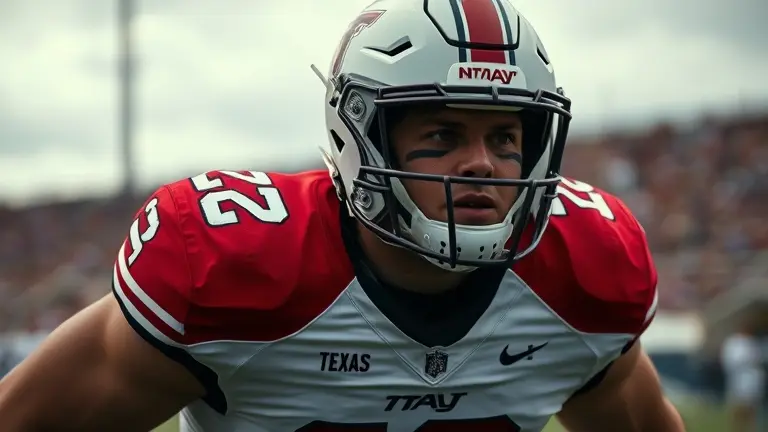
As the NFL Draft looms on the horizon, the conversation surrounding the Dallas Cowboys has shifted from simple roster needs to the critical necessity of defensive stabilization. While Dak Prescott continues to provide elite offensive stability, the window for a championship run demands a complementary force on the other side of the ball. Enter Jacob Rodriguez, the Texas Tech linebacker whose explosive potential and tactical awareness have positioned him as a pivotal prospect for teams looking to fortify their core. Analysts are no longer just looking at draft boards; they are dissecting how a high-impact defensive playmaker like Rodriguez could alleviate the immense pressure on Prescott, allowing the Cowboys’ offense to flourish without the constant burden of carrying a porous defense.
Understanding the impact of a linebacker like Rodriguez requires more than a passing interest in mock drafts; it demands a deep-dive analysis of roster-building philosophy and the synergy between defensive disruption and offensive efficiency. As fans and scouts scramble to decipher the complex web of team needs, one thing is clear: the difference between a championship season and a ‘what-if’ campaign often hinges on these high-stakes, analytical evaluations. Navigating this sea of statistics and scouting reports requires a level of focus that goes beyond the casual spectator, urging us to refine our own cognitive tools to match the intensity of the draft-day decision-making process.
The Jacob Rodriguez Factor: Why NFL Draft Analysts Are Connecting Texas Tech’s Star to the Cowboys
As the 2026 NFL Draft approaches, few names have generated as much late-cycle buzz as Texas Tech linebacker Jacob Rodriguez. Draft analysts have increasingly pointed to Rodriguez as a high-impact solution for teams seeking immediate defensive stability. The surge in interest is not merely about his physical measurable stats; it is about his high-level diagnostic skills and ability to anchor a defense in high-pressure scenarios. For a team like the Dallas Cowboys, the narrative surrounding Rodriguez has shifted from a “best player available” scenario to a strategic necessity. By investing in a versatile, elite-level defender, the front office can effectively alleviate the immense pressure placed on their offensive nucleus, specifically franchise quarterback Dak Prescott.
Strategic Alignment: Supporting a Franchise Cornerstone
The logic behind linking Rodriguez to the Cowboys centers on the concept of maximizing a championship window. When an organization commits significant financial resources to an elite signal-caller like Prescott, the surrounding roster must be engineered to prevent “shootout dependency.” Drafting a cornerstone piece like Rodriguez provides several key advantages:
- Defensive Reliability: Rodriguez possesses the sideline-to-sideline range needed to neutralize modern passing attacks, reducing the margin for error for the offense.
- Cap Management & Longevity: Adding a high-impact rookie linebacker on a cost-controlled contract allows the Cowboys to maintain depth without sacrificing offensive firepower.
- Complementary Football: By forcing more three-and-outs and turnovers, a player of Rodriguez’s caliber shortens the field for Prescott, enabling a more balanced and sustainable offensive strategy.
Evidence suggests that modern NFL contention is built on the interplay between elite quarterback play and a disciplined, playmaking defense. While the 2026 NFL Draft cycle has been volatile, the consensus remains that Rodriguez is a plug-and-play asset. For Dallas, this draft represents a crossroads: continue the status quo or provide the necessary defensive infrastructure to ensure the Prescott-led era reaches its full potential.
Roster-Building for a Franchise QB: Maximizing the Championship Window

In the modern NFL, managing a salary cap centered around a franchise quarterback like Dak Prescott requires a surgical approach to roster construction. When a significant portion of a team’s payroll is committed to elite offensive production, the front office must identify cost-effective, high-impact talent to maintain a competitive defense. This is where prospects like Texas Tech linebacker Jacob Rodriguez become essential pieces of the puzzle. By drafting a player on a rookie-scale contract who is capable of immediate, high-level contribution, teams can surround a veteran signal-caller with the defensive stability required for deep postseason runs.
The Strategic Value of Defensive Insurance
Investing in a versatile linebacker during the 2026 NFL Draft offers more than just depth; it provides critical “defensive insurance.” For teams relying on high-scoring offenses, a defensive anchor who can read plays, stop the run, and contribute in coverage alleviates the immense pressure placed on the quarterback to perform flawlessly in every single possession.
Key advantages of this draft-focused strategy include:
- Cap Flexibility: Securing a starter-ready player in the middle rounds allows the organization to allocate resources toward maintaining offensive weapons for Dak Prescott.
- Positional Versatility: A player like Jacob Rodriguez offers the schematic flexibility needed to combat diverse offensive looks, reducing the reliance on high-priced veteran free agents.
- Championship Window Extension: By integrating young, hungry talent into the core, teams prevent the “talent drain” that often occurs when veteran contracts expire, ensuring the window of contention remains open.
Evidence suggests that championship-caliber teams are those that master the balance between premium offensive investment and defensive efficiency. Drafting Jacob Rodriguez represents a commitment to this modern blueprint, signaling a shift toward sustainable excellence rather than short-term roster patches. By anchoring the defense with a disciplined, high-IQ prospect, the team provides the necessary structural support to let a franchise quarterback lead with confidence.
Scouting Jacob Rodriguez: Traits That Translate to Pro-Level Defensive Schemes

As the 2026 NFL Draft approaches, scouts and front offices are zeroing in on Texas Tech linebacker Jacob Rodriguez as a potential cornerstone for modern defensive schemes. Rodriguez’s evaluation isn’t just about raw physical stature; it is about his high-level processing speed and “football IQ,” which allow him to diagnose offensive formations before the snap. His ability to operate as a true middle-of-the-field anchor provides a stabilizing force that is essential for teams looking to alleviate the burden on high-paid franchise stars like Dak Prescott. By effectively neutralizing underneath routes and plugging gaps in the run game, Rodriguez allows defensive coordinators to remain aggressive without sacrificing coverage integrity.
Elite Defensive Traits and Versatility
Rodriguez excels in three core areas that transition seamlessly into the professional game, making him a high-impact asset for clubs needing immediate defensive production:
- Formation Recognition: He demonstrates an uncanny ability to read keys and offensive shifts, positioning himself in the optimal lane to disrupt play designs.
- Elite Closing Speed: Rodriguez possesses the sideline-to-sideline lateral agility required to mitigate modern spread offenses, turning potential chunk plays into minimal gains.
- Coverage Versatility: Unlike traditional run-stuffers, he shows comfort dropping into zone coverage and matching up with tight ends, providing the tactical flexibility required by elite NFL defensive playbooks.
For a team like the Dallas Cowboys, incorporating a prospect with Rodriguez’s profile is a strategic necessity. By investing in a high-caliber linebacker capable of controlling the defensive second level, a team can maximize its championship window. When the middle of the field is secure, offensive leaders like Dak Prescott are afforded better field position and higher possession frequency. Evidence suggests that Rodriguez’s blend of discipline and closing speed makes him the “plug-and-play” prospect that teams require to round out a championship-caliber roster.
The Draft Eve Outlook: Strategic Shifts for Dallas and Beyond
As the 2026 NFL Draft approaches, the atmosphere in war rooms across the league is thick with the pressure of balancing immediate roster gaps with long-term championship viability. For teams like the Dallas Cowboys, the draft-eve outlook is defined by a singular, strategic objective: protecting the “championship window” led by franchise quarterback Dak Prescott. While offensive stability remains a prerequisite for success, the current draft cycle suggests a pivot toward a defensive resurgence. Central to this shift is Jacob Rodriguez, the standout Texas Tech linebacker whose versatility and high-impact playmaking ability have made him a primary target for teams looking to anchor their defensive core.
Building a Balanced Contender
The selection of a high-caliber linebacker like Rodriguez offers more than just talent; it provides a structural solution for teams heavily invested in elite offensive leadership. When a team allocates significant cap space to a quarterback like Prescott, the reliance on mid-round and rookie defensive contributors becomes critical. By securing a prospect with the physical profile and “on-field intelligence” that Rodriguez brings to the gridiron, front offices can effectively:
- Mitigate Defensive Pressure: A reliable inside linebacker acts as a force multiplier, allowing the secondary to play more aggressively while providing the necessary support to stop the run.
- Extend the Competitive Window: By drafting high-value defensive assets on rookie contracts, teams can maintain a balanced roster that complements expensive veteran talent, preventing the salary cap constraints that often hollow out contending teams.
- Ensure Strategic Flexibility: The presence of a versatile playmaker enables defensive coordinators to implement complex schemes, keeping opponents off-balance and reducing the burden on the offensive unit to score on every possession.
Evidence suggests that for the Cowboys and similar franchises, the Jacob Rodriguez draft narrative is not merely about positional need; it is about institutional philosophy. Integrating a foundational piece in the middle of the field allows the offense to play with more confidence, knowing the team has the defensive tenacity required to close out tight games in January. As draft night looms, the focus remains on whether teams will prioritize these high-impact defensive stabilizers to fully unlock the potential of their current roster stars.
Mastering the Analytical Edge in Pro-Level Scouting
The pursuit of a championship requires more than talent; it demands a synergy between an elite quarterback like Dak Prescott and a disciplined, high-impact defense anchored by prospects like Jacob Rodriguez. By prioritizing defensive resilience in the draft, teams aren’t just filling holes in their roster—they are crafting a championship identity. This level of strategic foresight is exactly what differentiates a mediocre front office from a legendary one, and understanding these nuances is essential for any fan truly invested in the future of the game.
Just as the Cowboys must maintain razor-sharp focus to build a roster capable of reaching the Super Bowl, you need complete mental clarity to parse through the overwhelming noise of mock drafts, performance analytics, and team-specific rumors. To stay ahead of the curve, you need to elevate your cognitive game to ensure every insight you gain is as precise as a scout’s evaluation on draft day.
This is where The Brain Song becomes an indispensable tool in your analytical arsenal. By enhancing your focus and cognitive resilience, it provides the mental edge required to synthesize complex data and anticipate roster shifts before they happen. Don’t just watch the draft—master the strategy behind the selection with the same clarity and intensity as a professional general manager.
 Unlock your full analytical potential and master your draft-day strategy with the same focus as a front-office scout.Sharpen My Analytical Edge Today!