
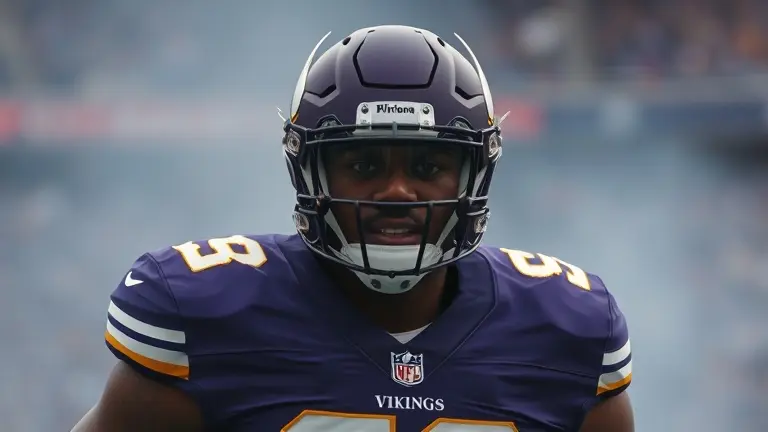
The Minnesota Vikings’ decision to select Caleb Banks with the 18th overall pick in the 2026 NFL Draft sent shockwaves through the league, instantly polarizing the fanbase. While some analysts, including Mel Kiper Jr., were quick to label the move a “big-time reach” citing the defensive lineman’s recent foot surgery and inconsistent collegiate production, the Vikings’ front office sees something the skeptics might be missing. This isn’t just a gamble on raw talent; it is a calculated bet on a specific physical profile that fits the demanding, aggressive structure of Brian Flores’ 3-4 defensive scheme.
For fans and analysts alike, the question of whether Banks will justify his draft position has moved from the realm of speculation into a critical technical evaluation. As the team prepares for training camp, the narrative surrounding the “high-risk, high-reward” pick is being rewritten by those looking closer at his fit within Minnesota’s defensive front. To truly understand why the Vikings believe they found their anchor, we must peel back the layers of his injury recovery, analyze his physical ceiling, and examine the tactical necessity that drove this controversial draft strategy.
The Caleb Banks Selection: Analyzing the Vikings’ 2026 Draft Controversy
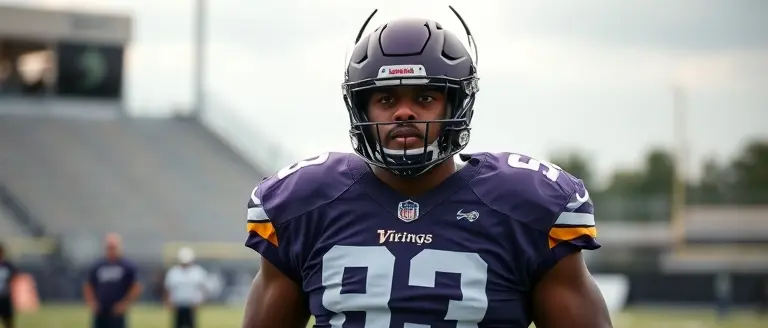
When the Minnesota Vikings stepped to the podium on April 23, 2026, with the 18th overall pick, few experts anticipated the selection of Florida defensive lineman Caleb Banks. The move immediately ignited a firestorm of debate across the league, highlighting a stark divide between the front office’s long-term vision and the analytical consensus regarding Caleb Banks NFL draft stock. While the Vikings prioritized his rare physical profile—standing at a massive 6’6″ and 327 lbs—the decision to draft a prospect coming off a recent broken foot surgery left many analysts stunned. High-profile draft experts, including Mel Kiper Jr., were quick to label the selection a “big-time reach,” citing a lack of sustained collegiate production as a primary concern.
The controversy surrounding the pick stems from a classic “high-risk, high-reward” dilemma that now defines the Vikings draft strategy. To understand why Minnesota invested such significant capital in a player with limited tape, one must examine the specific defensive philosophy implemented by coordinator Brian Flores. The team is clearly looking for a space-eater capable of anchoring a 3-4 front, and Banks offers the raw, disruptive potential that fits that aggressive scheme. However, the immediate pressure on the organization is palpable, as fans and critics alike grapple with the following concerns:
- Injury Timeline: Uncertainty remains regarding the severity of his foot injury and how it will impact his participation during the critical early stages of training camp.
- Production Disparity: The gap between his undeniable physical traits and his actual on-field stats at Florida remains the central pillar of the “reach” argument.
- Draft Capital: At 18th overall, the Vikings bypassed more established prospects, placing the success of this draft class squarely on the developmental trajectory of Banks.
Ultimately, the MN Vikings are betting that they can cultivate a raw talent that other teams were wary of touching. Whether this selection becomes a cornerstone of their defense or a cautionary tale of prioritizing traits over production will likely hinge on his health and his ability to acclimate to the professional speed of the NFL game.
Deep Dive: Scheme Fit and the ‘Brian Flores’ Effect
The selection of Caleb Banks with the 18th overall pick in the 2026 NFL Draft signaled a clear directive from the Minnesota front office: they are prioritizing raw, physical dominance to anchor the interior. At 6’6″ and 327 lbs, Banks possesses a rare combination of size and length that fits perfectly into the aggressive, multi-front concepts employed by Brian Flores. In Flores’ system, which often demands that defensive linemen take on double teams to free up blitzing linebackers, Banks’ massive frame provides a structural anchor that the mn vikings defensive line previously lacked. His exceptional arm length is particularly vital, as it allows him to lock out blockers at the point of attack, effectively controlling the line of scrimmage while maintaining gap integrity.
Strategic Deployment in the 3-4 Front
While critics have labeled the pick a “reach” due to limited collegiate production, the Vikings’ coaching staff views Banks as a projectable commodity with a high ceiling. In the Flores defensive scheme, Banks is expected to see snaps as a primary run-stuffer in base sets, but his explosive “get-off” suggests he may also be utilized as a situational interior rusher on passing downs. His ability to penetrate the pocket despite his size makes him a versatile asset against traditional 3-4 interior alignments. Key traits the Vikings are banking on include:
- Leverage and Reach: His 6’6” frame disrupts passing lanes and makes it difficult for offensive guards to get hands inside his chest.
- Aggressive Penetration: Despite his size, Banks shows a surprising burst, enabling him to cross the face of blockers to disrupt run plays in the backfield.
- Scheme Versatility: By playing anywhere from a 0-tech to a 3-tech, Banks allows Flores to shift alignments without substituting, keeping opposing offenses guessing.
Ultimately, the Vikings’ draft strategy focuses on correcting the defensive shortcomings of previous seasons. By securing a player with Banks’ physical profile, the organization is betting that expert coaching can refine his raw technique, turning a controversial pick into a cornerstone of the defensive front for years to come.
Caleb Banks Injury Recovery: A Medical Perspective

The selection of Caleb Banks with the 18th overall pick in the 2026 NFL Draft has been heavily scrutinized due to the defensive lineman’s recent surgery for a broken foot. While the injury caused concern among the MN Vikings faithful, medical experts suggest that the recovery timeline for such procedures—typically involving the insertion of hardware to stabilize the metatarsal—is generally well-understood in modern sports medicine. For a player of Banks’ stature (6’6″, 327 lbs), the primary concern is not just the healing of the bone, but the restoration of explosive lower-body power required to compete in the trenches.
Comparative Recovery Timelines and Expectations
Historical data regarding vikings draft picks and other elite linemen who have suffered similar foot injuries indicate a standard recovery window of three to five months. By comparing Banks to previous NFL defensive linemen who underwent similar procedures, evidence suggests the following outlook:
- Initial Phase (Months 1-2): Focus on non-weight-bearing immobilization and soft tissue healing to ensure proper structural alignment.
- Rehabilitation Phase (Months 3-4): Transition to weight-bearing exercises and localized strength training to rebuild the intrinsic muscles of the foot.
- Return to Play (Month 5+): Gradual introduction to football-specific drills, ensuring the athlete can withstand the high-impact lateral movements inherent in Brian Flores’ defensive scheme.
The Vikings medical staff has expressed optimism regarding his availability for the start of the regular season. While Banks may be restricted during the initial phases of training camp, the organization’s aggressive draft strategy implies they have factored a gradual ramp-up period into their plan. Provided there are no setbacks in the consolidation of the bone graft or fixation, Banks is expected to be a functional contributor by the time the team enters its primary competitive stretch, allowing him to leverage his significant physical traits to bolster the defensive front.
Evaluating the Vikings’ 2026 Draft Strategy

The selection of Caleb Banks with the 18th overall pick in the 2026 NFL Draft represents a definitive pivot in Minnesota’s front office philosophy. By prioritizing a “high-risk, high-reward” prospect despite lingering concerns over his broken foot surgery, the MN Vikings have signaled a long-term commitment to reshaping their defensive identity rather than pursuing a “win-now” plug-and-play solution. While critics like Mel Kiper Jr. have labeled the move a reach, the organization’s aggressive pursuit of elite physical traits—specifically Banks’ massive 6’6″, 327-pound frame—suggests they are betting on the long-term ceiling of an interior disruptor capable of anchoring a modern 3-4 front.
Balancing Immediate Needs vs. Long-Term Potential
Comparing this selection to historical draft trends reveals that the Vikings are prioritizing “traits over production,” a strategy often reserved for prospects with rare athletic upside. The team is clearly looking to replicate the success stories of defensive linemen who required a developmental window before realizing their potential. The strategy involves several key factors:
- Scheme Compatibility: Defensive coordinator Brian Flores requires linemen who can occupy double teams to free up blitzing linebackers; Banks’ size makes him an ideal candidate for this role.
- Injury Management: The Vikings draft picks profile includes a comprehensive medical plan; internal reports suggest the front office is comfortable with his injury recovery timeline, viewing it as a short-term hurdle rather than a chronic issue.
- Roster Construction: By drafting Banks, the team is building a defensive core designed to pressure mobile quarterbacks, prioritizing a multi-year project that aims to peak in sync with the team’s championship window.
Ultimately, the Caleb Banks NFL draft selection is less about immediate 2026 impact and more about structural longevity. Whether this gamble pays off depends on how quickly Banks integrates into the professional strength and conditioning program and adapts to the high-intensity demands of the NFC North.
Mastering the Vikings’ Defensive Blueprint
The selection of Caleb Banks with the 18th pick represents a defining moment for the Minnesota Vikings’ 2026 trajectory. While critics focus on the injury reports and collegiate production numbers, the analytical reality lies in his rare physical profile—6’6\”, 327 lbs—and his potential to anchor Brian Flores’ complex 3-4 front. Understanding whether this becomes a draft-day steal or a missed opportunity requires moving beyond the noise and diving deep into the technical scheme requirements that demand high-level cognitive engagement.
Just as a defensive coordinator must maintain absolute clarity to decipher offensive shifts, the modern fan needs a sharp, focused mind to digest the dense technical data, medical projections, and tactical nuances of an NFL season. Staying ahead of the curve in sports analysis is as much about mental performance as it is about the statistics themselves.
This is where The Brain Song becomes an essential tool for the hardcore observer. By utilizing science-based sound patterns designed to enhance cognitive focus and clear away mental fog, you can better process complex scouting breakdowns and internalize the intricacies of the Vikings’ defensive strategy. It is the ultimate asset for those who refuse to settle for surface-level headlines.
 Click here to experience how neuroscience-based sound patterns can sharpen your focus for the upcoming NFL season.Sharpen My Focus Now!