
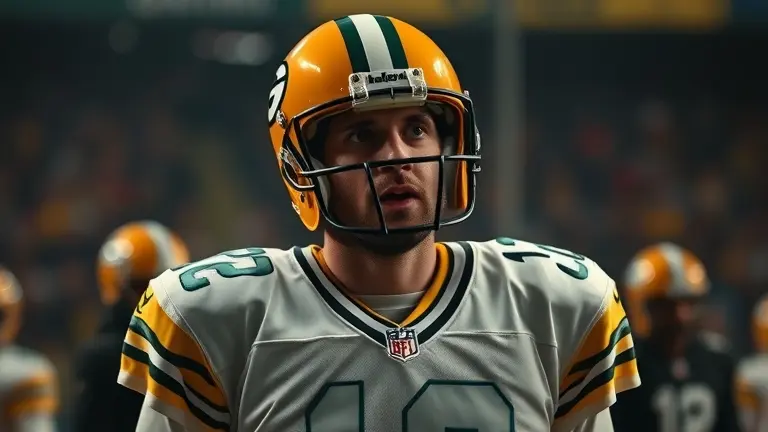
As the clock ticks toward the 2026 NFL Draft, the Pittsburgh Steelers find themselves in a state of high-stakes limbo that has captured the attention of the entire league. The silence surrounding Aaron Rodgers—specifically, his refusal to clarify his status for a 22nd NFL season—has left the franchise’s front office in a complex strategic holding pattern. While national insiders like Ian Rapoport and Tom Pelissero confirm that no final word is expected before the draft, the lack of news is, in itself, a significant hurdle. The organization is forced to prepare for two entirely different realities: one where a future Hall of Famer returns to lead the offense, and another that requires an immediate, aggressive pivot to a new era.
This scenario goes beyond typical roster management; it is a masterclass in risk assessment and contingency planning. For the Steelers, every draft pick and salary cap maneuver made this spring is a calculated move against an unknown variable. Much like building a complex structure from the ground up, the team must ensure their internal blueprints are versatile enough to handle structural shifts without collapsing. In this deep dive, we move past the media speculation to analyze how the Steelers are using data-driven scenario planning to mitigate the fallout of the Rodgers dilemma and what these tactical adjustments signal for the team’s long-term competitive window.
,slug:
The Rodgers Dilemma: Why Pittsburgh is in a State of 2026 Draft Uncertainty
As the 2026 NFL Draft approaches, the Pittsburgh Steelers find themselves in an unprecedented state of strategic paralysis. The core of this issue is the continued “radio silence” from Aaron Rodgers, who has yet to signal his intentions regarding a 22nd NFL season. With the veteran quarterback currently under contract, the franchise is effectively operating in a vacuum, unable to commit fully to a long-term future or a final championship push. This lack of communication has placed immense pressure on general manager Omar Khan and the coaching staff, as they are forced to construct a draft board that must account for two vastly different roster realities simultaneously.
Prominent NFL insiders, including Ian Rapoport and Tom Pelissero, have reinforced the severity of the situation, noting that there is no expectation of a firm decision before the draft begins. This creates a high-stakes guessing game for the front office. Without clarity on the Steelers quarterback situation, the team’s draft strategy remains clouded by several critical unknowns:
- Contingency Planning: The front office must decide whether to target a high-upside rookie signal-caller in the early rounds or bolster the offensive line to protect Rodgers if he chooses to return.
- Asset Allocation: Financial flexibility and draft capital are currently tethered to the Aaron Rodgers retirement rumors, preventing the team from aggressively pursuing other roster needs.
- The “Lame Duck” Risk: By waiting for word from Rodgers, the team risks missing out on trade opportunities or veteran acquisitions that could solidify the depth chart should he ultimately choose to hang up his cleats.
Ultimately, the uncertainty surrounding aaron rodgers news has transformed the draft room from a place of calculated assessment into a theater of speculation. Whether the Steelers choose to force a decision or play the waiting game, the fallout from this silence will undoubtedly shape the competitive trajectory of the franchise for the entire 2026 season.
Steelers Draft Strategy: The Rodgers Contingency Plan

As the 2026 NFL Draft approaches, the Pittsburgh Steelers find themselves in a precarious position. With Aaron Rodgers news effectively stalled by the quarterback’s continued “radio silence,” General Manager Omar Khan is forced to operate under the shadow of extreme uncertainty. The team’s draft board is reportedly bifurcated, balancing a “win-now” roster built for a veteran leader against a long-term reconstruction plan necessitated by a potential Aaron Rodgers retirement. Evidence suggests the front office is utilizing a “dual-track” strategy to ensure the franchise remains competitive regardless of who occupies the pocket in September.
Navigating the Quarterback Crossroads
The Steelers’ internal contingency plan involves three distinct paths to mitigate the risk of Rodgers’ absence:
- Drafting a Developmental Prospect: Analysts believe Pittsburgh may target a high-upside signal-caller in the early rounds to serve as an immediate backup and future successor. This hedges against the uncertainty of Rodgers’ status while providing a cost-controlled asset for the future.
- Veteran Free Agent Pursuit: Should Rodgers announce his retirement during or shortly after the draft, the Steelers are expected to pivot toward bridge-gap veterans available in the post-draft market. This strategy prioritizes stability over high-ceiling potential.
- Internal Depth Optimization: The team continues to evaluate the development of their current roster, though internal sentiment suggests management prefers an outside acquisition if the starting role becomes vacant.
The risk-reward ratio remains the primary focus for the organization. Relying on Rodgers implies an aggressive draft approach, targeting immediate-impact players to capitalize on his final years. However, if the Steelers commit to this path without a firm commitment, they risk wasting valuable draft capital on a team that may suddenly lack a definitive leader. By balancing these scenarios, Pittsburgh aims to avoid the “draft limbo” that has hindered other franchises facing similar veteran departures, ensuring that the Steelers quarterback situation does not derail their broader championship aspirations.
Evaluating Potential 2026 QB Replacements

The persistent Aaron Rodgers news cycle has forced the Pittsburgh Steelers front office to engage in rigorous contingency planning. With no definitive word on his retirement, general manager Omar Khan must prepare for a future that potentially lacks a Hall of Fame anchor. If Rodgers decides to walk away, the Steelers face a binary choice: trade up for a high-ceiling prospect in the 2026 NFL Draft or pivot to a bridge veteran capable of managing a playoff-ready roster.
Strategic Options for the Post-Rodgers Era
The current Steelers quarterback situation demands a tactical balance between immediate competitiveness and long-term stability. Analysis of the current market suggests three primary avenues for the franchise:
- Drafting for the Future: The 2026 draft class features several mobile, pro-ready prospects who fit the modern AFC North offensive schematic. Selecting a high-round rookie allows the Steelers to benefit from a cost-controlled contract, providing the financial flexibility needed to retain defensive stars.
- The Veteran Stop-Gap: Should the team choose to compete immediately, the free-agent market offers experienced signal-callers who understand the complexities of the Steelers’ system. While these players lack the elite upside associated with Aaron Rodgers retirement rumors, they offer the consistency required to navigate a 17-game schedule.
- Internal Competition: The team may opt for a dual-path strategy, pairing a mid-round draft pick with a veteran backup to foster competition throughout training camp. This “best-man-wins” approach mitigates the risk of a single high-profile failure.
Ultimately, the Steelers must evaluate how each candidate aligns with their high-intensity coaching philosophy. Whether through a high-stakes draft maneuver or a calculated veteran acquisition, the goal remains clear: maintaining the standard of excellence despite the uncertainty surrounding the organization’s current leader.
Reading the Tea Leaves: Decoding Rodgers’ Retirement Rumors

The current Aaron Rodgers news cycle is defined by an eerie silence, leaving the Pittsburgh Steelers in a state of high-stakes limbo as the 2026 NFL Draft approaches. For observers trying to decipher whether this veteran signal-caller intends to return for a 22nd season or quietly walk away, the “why” behind this hesitation is rooted in a blend of physical preservation and psychological recalibration. Historical patterns suggest that Rodgers often processes major career decisions in isolation, eschewing standard media timelines in favor of self-reflection. When considering the trajectory of his tenure, analysts look at three primary indicators:
Critical Indicators of a Pending Decision
- Physical Durability Metrics: Following the rigors of the 2025 season, the recovery timeline for a quarterback of his age is significantly extended. If his body has not responded to off-season conditioning as expected, his silence may be an admission of physical limitation.
- The “Legacy vs. Need” Conflict: Rodgers has consistently prioritized environments where he feels he can win immediately. With the Steelers quarterback situation in flux, he is likely weighing whether the team’s current roster construction provides a viable path to another Lombardi Trophy or if the transition to a younger, rebuilding core is better suited for a new face.
- Communication Precedents: Unlike younger stars who utilize social media to shape narratives, Rodgers’ preference for “radio silence” is a tactical choice. By not committing to a path, he maintains maximum leverage over his current contract while forcing the front office to remain engaged in win-now draft strategies.
Understanding this behavior allows fans and analysts to move past the frustration of the unknown. The lack of a definitive announcement should not be viewed as indecision, but rather as an active, calculated process. Whether he pursues a return or embraces Aaron Rodgers retirement, his choice will inevitably dictate the immediate future of the franchise’s draft board and their long-term salary cap flexibility. Until an official word is provided, the organization remains forced to balance aggressive scouting for a potential successor with the faint, persistent hope of one last run with a future Hall of Famer.
The Blueprint for Your Own Success
As the Pittsburgh Steelers navigate the high-stakes uncertainty of the 2026 NFL season, the lesson is clear: success in any arena hinges on having a reliable, battle-tested plan. Whether you are a general manager trying to secure a franchise’s future or a homeowner looking to master a new craft, winging it is a recipe for disaster. The margin for error is razor-thin, and relying on guesswork often leads to wasted resources and missed opportunities.
Just as the Steelers must rely on a flawless blueprint to navigate this uncertain off-season, you need the right tools to build your own vision with total technical certainty. This is where Ted’s Woodworking becomes the ultimate contingency planning tool for your life. Much like an NFL front office mitigating risk through strategic foresight, you can eliminate the frustration of trial-and-error by utilizing a comprehensive library of 16,000 professional, workshop-tested plans. Don’t leave your projects to chance—ensure every cut, joint, and finish is executed with professional precision.
Stop relying on incomplete blueprints for your future—click here to access the ultimate collection of precision plans and build your projects with the same tactical rigor as an NFL front office. You deserve to see your creative vision come to life without the costly headaches of amateur mistakes.
 Stop relying on incomplete blueprints for your future—click here to access the ultimate collection of precision plans and build your projects with the same tactical rigor as an NFL front office.Transform My Projects Today!