
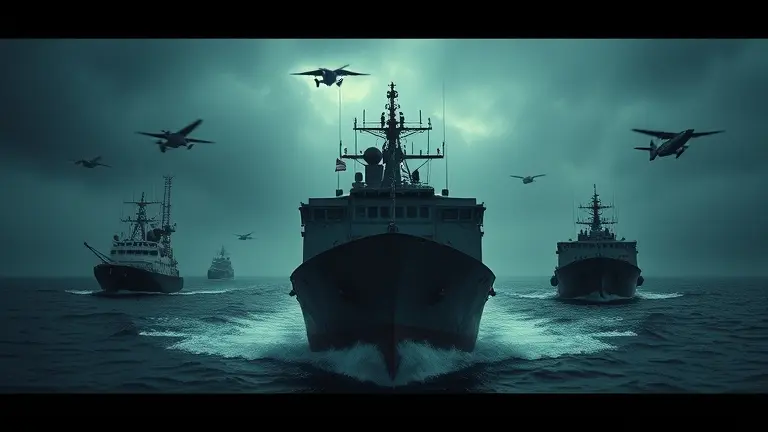
The current state of the global energy market is held hostage by the fragile ceasefire in the Strait of Hormuz, where the interplay between a US-led naval blockade and retaliatory Iranian seizures has created an unprecedented geopolitical impasse. As we navigate the complex developments of April 2026, the situation has evolved far beyond standard territorial disputes. It has become a high-stakes standoff that threatens the stability of global supply chains and energy prices, with diplomatic progress currently stalled by a fundamental lack of consensus on the path forward.
Iran US war news today is dominated by these technical and strategic deadlocks, yet much of the mainstream coverage remains locked in reactive, hour-by-hour cycles. To truly understand the gravity of this confrontation, we must look past the headlines and examine the structural risks posed by this ‘blockade vs. seizure’ dynamic. For professionals tracking these events, the challenge is not just analyzing the geopolitical data—it is maintaining the mental acuity required to interpret such volatile information without succumbing to the exhaustion that inevitably follows relentless exposure to global crisis.
State of the Conflict: The Fragile Ceasefire and the Strait of Hormuz Standoff

As of April 23, 2026, the ongoing iran us war news cycle remains centered on a precarious stalemate in the Middle East. Following the outbreak of hostilities on February 28, 2026, the region has been defined by a tense, “fragile” ceasefire, currently entering its 55th day. While full-scale kinetic engagement has been temporarily paused by the Trump administration, the conflict has shifted into a high-stakes war of attrition characterized by economic warfare and maritime disruption. The strategic bottleneck of the Strait of Hormuz has emerged as the primary theater for these hostilities, with the US enforcing a naval blockade of key Iranian ports, while Tehran continues to authorize the retaliatory seizure of commercial vessels.
The deadlock in diplomatic channels—specifically the stalled Islamabad peace talks—has left global markets in a state of high anxiety. Recent reports, including iran news today, indicate that incidents of maritime interference persist, most notably as recently as April 22, 2026, when IRGC naval units redirected transit vessels. This persistent volatility has created significant consequences for the international energy sector:
- Supply Chain Disruptions: The blockade has curtailed the flow of crude oil, leading to significant surges in global energy prices and heightened market instability.
- Financial Impact: Major asset classes have reacted sharply, with Bitcoin retreating from the $80,000 threshold and the US dollar climbing to multi-week highs as investors seek safe-haven assets.
- Diplomatic Stasis: The US remains firm on its demand for a “unified proposal” from Iranian leadership, while Tehran points to the ongoing blockade as a fundamental breach of sovereignty that prevents meaningful progress.
Because this situation remains fluid, the current status quo—a mix of official ceasefires and tactical maritime defiance—threatens to destabilize the global energy supply further. Analysts warn that without a clear diplomatic breakthrough, the “fragile” status could easily revert to active conflict, necessitating close monitoring of both regional maritime movements and international economic indices.
The Logistics of the Naval Blockade: Choke Points and Global Transit

The current iran us war news highlights a critical maritime stalemate centered on the Strait of Hormuz, one of the world’s most significant energy chokepoints. Through which approximately 20-30% of global oil consumption passes, the strait serves as the primary artery for Gulf energy exports. The US-led naval blockade has effectively neutralized major Iranian ports by enforcing strict maritime interdiction zones, forcing commercial vessels to navigate highly congested corridors. This strategic maneuvering is designed to throttle Iran’s economic capacity, yet it has inadvertently created a volatile environment where standard shipping logistics are constantly disrupted by the threat of detention.
Geopolitical Pressures and Retaliatory Seizures
Tehran’s response to the ongoing blockade has been the systematic disruption of international shipping through the targeted seizure of commercial vessels. By redirecting tankers near the Strait of Hormuz, the IRGC Navy utilizes geography as a tool of asymmetric warfare to impose costs on the international community. The logistics of this confrontation are complex, as maritime insurers continue to hike premiums, and shipping firms are forced to calculate the “war risk” for every voyage. Key logistical impacts include:
- Port Stagnation: The blockade has caused a significant backlog at Iranian ports, limiting the outflow of petrochemicals and essential goods.
- Vessel Diversion: Commercial carriers are increasingly avoiding the Persian Gulf, leading to longer transit times and intensified demand for alternative routes.
- Escalating Insurance Costs: The fragility of the ceasefire, now on its 55th day, means that premiums for vessels entering the region remain at historic highs, directly contributing to global inflation and energy price volatility.
As iran news today confirms, these retaliatory measures are not merely tactical; they are designed to signal that any US attempt to enforce a total economic squeeze will result in regional maritime instability. The current deadlock remains a defining challenge for global trade, as the world waits to see if diplomatic channels can resolve the underlying breach of commitments cited by both sides.
Economic Repercussions: Energy Security and Market Volatility

The ongoing iran us war news cycle has fundamentally altered the landscape of global energy security, creating a persistent risk premium that traders and investors are struggling to quantify. As of April 2026, the Strait of Hormuz—the world’s most critical oil chokepoint—remains the epicenter of economic instability. The US-enforced naval blockade, coupled with Iranian retaliatory vessel seizures, has effectively paralyzed routine shipping lanes. This disruption forces tankers to navigate through higher-risk corridors, resulting in a surge in maritime insurance premiums and logistical bottlenecks that ripple directly into consumer energy prices.
Market Drivers and Volatility
The current “fragile” ceasefire, now in its 55th day, has failed to soothe investor anxiety, as reflected by the heightened sensitivity in commodity markets. Iran news today indicates that supply chain integrity remains the primary concern for global trade. Several key factors are driving this market unpredictability:
- Risk-Off Sentiment: The uncertainty surrounding the blockade has triggered a flight to safety, contributing to the US dollar reaching 1.5-week highs while riskier assets, such as Bitcoin, have retreated from their $80k peaks.
- Energy Supply Constraints: With the Strait of Hormuz effectively operating at restricted capacity, the global oil supply remains vulnerable to sudden shocks, keeping prices elevated and volatile.
- Insurance Premiums: The increased risk of military engagement has caused war-risk insurance premiums for commercial vessels to climb, raising the “landed cost” of oil regardless of the barrel price.
Evidence suggests that until diplomatic talks move beyond the current deadlock—specifically addressing the US demand for a “unified proposal” and Iran’s grievances regarding the blockade—market volatility will likely persist. Traders are currently pricing in a long-term “geopolitical fatigue,” where intermittent shipping incidents, such as those reported on April 22, continue to serve as catalyst events for sudden price spikes. The inability of international mediators to stabilize this maritime chokepoint suggests that global markets must brace for a sustained period of high energy costs and operational uncertainty throughout the second quarter of 2026.
Diplomatic Deadlocks: The Islamabad Peace Talks Stalled

The Islamabad peace talks, intended to provide a pathway out of the ongoing conflict, have effectively reached a state of suspended animation as of late April 2026. Despite the ongoing fragile ceasefire extended by the Trump administration, the core issues fueling iran us war news remain unaddressed. At the heart of this diplomatic paralysis is a fundamental disagreement regarding the sequence and conditions of de-escalation. The United States insists upon a comprehensive, “unified proposal” from Tehran—one that addresses both regional security architectures and the immediate cessation of maritime hostilities. Conversely, Iranian negotiators have consistently signaled that meaningful dialogue is impossible while the US-enforced naval blockade remains in effect, characterizing the current maritime posture as a direct violation of international law and previous diplomatic commitments.
Key Obstacles to De-escalation
The impasse is reinforced by a cycle of mutual distrust and tactical maneuvering. Analysts observing the iran news today highlight several specific barriers preventing a breakthrough:
- The Blockade-Seizure Loop: Iran views its retaliatory seizure of commercial vessels in the Strait of Hormuz as a necessary response to the economic strangulation caused by the blockade of its ports.
- Verification Mechanisms: A core friction point involves the definition of “breach of commitments.” Tehran demands explicit guarantees regarding the lifting of naval restrictions, while the U.S. remains hesitant to relinquish strategic pressure without verifiable evidence of a pivot in Iranian military posturing.
- Negotiation Sovereignty: The U.S. demand for a “unified proposal” is perceived by Iran as an attempt to force internal concessions, further complicating the internal political calculus in Tehran.
As the region endures its 55th day of the ceasefire, the lack of progress in Islamabad leaves global energy markets in a state of high anxiety. The stalemate ensures that the threat of renewed kinetic engagement remains latent, keeping oil prices volatile and international shipping routes under constant, high-stakes surveillance. Without a bridge between these two rigid positions, the current “suspended hostility” is likely to persist, further destabilizing the fragile geopolitical balance in the Middle East.
Maintaining Cognitive Clarity in an Era of Global Crisis
The stalemate in the Strait of Hormuz is more than a geopolitical challenge; it is a fundamental shift in the global economic landscape that demands constant vigilance. As the US-led blockade and Iranian vessel seizures continue to drive energy volatility, the intellectual burden on those tracking these developments is immense. Staying informed is a duty, but the resulting cognitive fatigue—the constant processing of high-stakes, high-anxiety data—is a silent threat to your own professional performance and decision-making capacity.
While mastering the intricacies of maritime law and supply chain risks is vital, safeguarding your mental acuity is equally critical. You cannot afford to let the ‘fog’ of global instability compromise your clarity or your ability to act decisively when it matters most. This is why managing your internal state is as essential as monitoring the headlines.
The Brain Song is engineered specifically for this purpose, acting as a cognitive defense tool for the modern professional. By mitigating the physiological stress of consuming non-stop, volatile global news, it allows you to maintain peak mental focus and sharpen your analytical edge, even in the most turbulent times. Don’t let the weight of the world dull your potential; take control of your cognitive health today.
 Optimize your cognitive performance for the ongoing crisis: Try the 12-minute daily routine to sharpen your focus.Transform My Mental Clarity Today!