
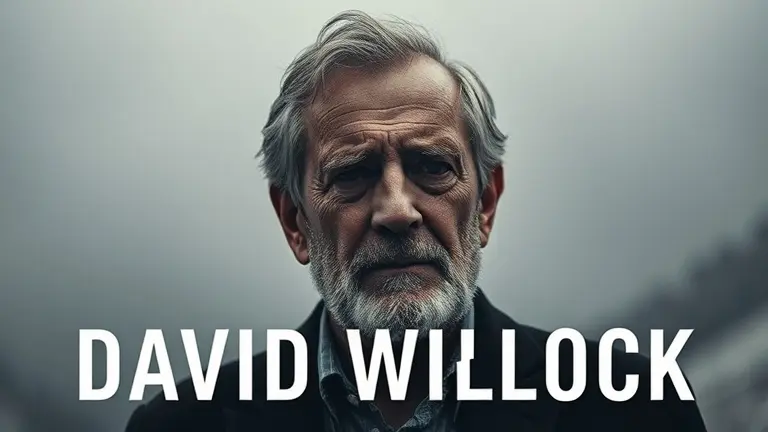
The passing of renowned paranormal researcher David Wilcock at the age of 53 has sent shockwaves through the ufology and alternative history communities. Following official reports from the Boulder County Coroner’s Office, it has been confirmed that Wilcock died by suicide on April 20, 2026, near Nederland, Colorado. This tragic news, which initially surfaced following social media discourse and statements from public officials, has left followers grappling with the loss of a man who spent decades exploring the fringes of human consciousness and ancient mysteries. While his work often invited intense debate, his influence on the discourse surrounding the unknown remains undeniable.
In the wake of this event, the digital landscape has been flooded with speculation and conspiracy theories. However, moving past the noise is essential for both honoring his contributions and addressing the reality of his struggle. By prioritizing verified facts over sensationalist rumors, we can reflect on the heavy psychological toll often shouldered by those who dedicate their lives to public truth-seeking, highlighting an urgent need for compassion and proactive mental health awareness in an era of constant, high-pressure online scrutiny.
Official Statement Regarding the Passing of David Wilcock

The passing of David Wilcock, a prominent author and researcher in the fields of ufology and consciousness studies, has been confirmed by official authorities. On April 20, 2026, the Boulder County Coroner’s Office reported that Wilcock, age 53, died by suicide near Nederland, Colorado. The tragic news, which has deeply affected followers within the paranormal and alternative research communities, surfaced following a public social media post by U.S. Representative Anna Paulina Luna. This announcement served as a primary catalyst for widespread public inquiry, leading to coverage from major news organizations, including People and the NY Post.
Verified Facts and Official Findings
To maintain accuracy during this period of mourning, it is essential to distinguish between substantiated findings and unsubstantiated online discourse. The following points summarize the current understanding based on official reporting:
- Official Confirmation: The Boulder County Coroner’s Office has verified the identity of the deceased and the cause of death.
- Time and Location: The incident occurred on April 20, 2026, in the vicinity of Nederland, Colorado.
- Public Awareness: While initial reports were fueled by social media activity, including the post by Representative Anna Paulina Luna, mainstream outlets have since verified the core facts to prevent the spread of misinformation regarding david wilcock death.
The sudden loss of a figure like david wilcock—often referred to by some as david wilcox in common misspellings—has invited significant public debate. While some internet forums continue to speculate about the motivations or potential external factors behind the tragedy, there is currently no evidence to support claims of foul play or conspiracy. It is vital for the community to rely on official statements rather than unverified theories. During this difficult time, the focus remains on the professional contributions he made to his field and the importance of recognizing the mental health challenges that can impact individuals regardless of their public profile.
A Look Back: Contributions to Ufology and Consciousness Studies

For over two decades, David Wilcock maintained a highly visible, albeit polarizing, presence within the alternative media landscape. Rising to prominence through his extensive exploration of ufology, ancient history, and the intersection of science and spirituality, Wilcock built a devoted following that stretched across global digital platforms. His work often sought to bridge the gap between academic anomalies and fringe theories, focusing heavily on themes of human evolution, the existence of extraterrestrial intelligence, and the mechanics of consciousness. By presenting complex, speculative topics in an accessible format, he became a central figure for those dissatisfied with mainstream historical and scientific narratives, often framing his research as an uncovering of “hidden truths.”
Key Areas of Influence
Wilcock’s professional output was prolific, characterized by long-form video presentations, frequent media appearances, and several published works that sought to synthesize disparate esoteric concepts into a cohesive worldview. His impact on the paranormal community was driven by several recurring subjects:
- Ancient Civilizations: He frequently argued for the existence of advanced, pre-historical global cultures, a theme that resonated deeply with readers interested in speculative archaeology.
- UFO Disclosure: Wilcock was a vocal advocate for the “Full Disclosure” movement, consistently pushing for the government to release classified data regarding unidentified aerial phenomena.
- Consciousness Studies: Through his writing, he attempted to quantify spiritual experiences, often referencing concepts related to energetic fields and the nature of human potential.
While some observers occasionally confused his name with fellow researchers—sometimes leading to online inquiries regarding a David Wilcox or variations of his public persona—there is no mistaking the singular impact he had on his specific niche. Despite the intense public discourse currently surrounding the news that David Wilcock is dead, his legacy remains anchored in the massive body of multimedia content he produced. Whether viewed as an educator in fringe philosophy or an entertainer of esoteric concepts, Wilcock played a significant role in bringing topics once relegated to the shadows into the mainstream digital conversation. His ability to maintain a consistent narrative over many years solidified his status as a recognizable, if debated, voice in the pursuit of anomalous phenomena.
Navigating Public Discourse and Avoiding Misinformation

In the wake of the confirmed passing of David Wilcock, the digital landscape has been flooded with a mixture of genuine mourning and rampant, often harmful, conjecture. When a public figure known for exploring controversial topics dies, it is common for niche communities to seek explanations that align with the themes of the individual’s work. However, the official reports from the Boulder County Coroner’s Office are clear: the death of the 53-year-old author has been classified as a suicide. Despite these verified findings, speculative narratives regarding potential external motives, such as the influence of “cyber stalkers” or clandestine pressures, continue to circulate on social media platforms. It is imperative for followers and the public alike to distinguish between grounded reality and unsubstantiated hearsay.
Why Factual Accuracy Matters
The impulse to bridge the gap between unexpected news and personal belief systems is a well-documented psychological phenomenon, yet it carries significant ethical weight. Misinformation can cause unnecessary distress to families and distract from the critical, often overlooked conversation surrounding mental health. To navigate this period of mourning responsibly, consider the following principles:
- Prioritize Official Sources: Rely exclusively on statements from authorities like the Boulder County Coroner’s Office and verified news outlets such as People or the NY Post rather than anonymous forum posts.
- Practice Digital Discernment: Treat claims regarding “insider information” or conspiratorial links to other public figures, such as Wynn Free, with extreme skepticism if they lack direct evidence.
- Avoid Sensationalism: When discussing the loss of david wilcox (a common misspelling often conflated in search trends) or David Wilcock, maintain a compassionate focus on the human element rather than fueling speculative theories.
By centering the conversation on the verified facts of the david wilcock death, the community can pay a more respectful tribute to his legacy as a researcher and writer. Addressing the reality of david wilcock dead without succumbing to baseless narratives honors his work while ensuring that vital discussions about the pressures of public life and mental health remain the priority.
The Importance of Mental Health Awareness

The sudden passing of David Wilcock has sent shockwaves through the paranormal and ufology communities, leaving many followers grappling with profound grief and disbelief. While initial reactions have been marked by speculation regarding the circumstances of his death, the official findings from the Boulder County Coroner’s Office provide a somber, definitive reality. Beyond the headlines detailing that David Wilcock is dead, this tragedy serves as a poignant reminder that even public figures who appear to lead vibrant, intellectually demanding lives are not immune to the silent, often invisible struggles of mental health.
Navigating the pressure of a high-profile career as an author and researcher can lead to extreme isolation, especially when one is subjected to the scrutiny of the internet. The discourse following his death highlights a critical need for increased compassion and mental health awareness within niche online communities. It is essential to recognize the signs of psychological distress and prioritize emotional well-being over the pursuit of content or speculative narratives.
Prioritizing Support and Wellness
If you or someone you know is struggling with mental health or experiencing thoughts of suicide, please remember that professional help is available and effective. The burden of heavy topics, such as those often explored by figures like David Wilcock, can sometimes weigh heavily on both creators and their audience. Consider these vital resources for support:
- 988 Suicide & Crisis Lifeline: Call or text 988 anytime in the U.S. and Canada for 24/7 confidential support.
- Crisis Text Line: Text HOME to 741741 to connect with a crisis counselor.
- Professional Counseling: Reach out to licensed therapists or local mental health clinics to address burnout, anxiety, or depression.
The conversation surrounding David Wilcox (often confused in search trends with Wilcock) and the wider community must shift from conjecture to support. By fostering a culture that encourages open dialogue about mental health, we honor his legacy not through conspiracy, but through the vital work of looking after one another.
Navigating the Noise: Prioritizing Your Mental Clarity
As we process the loss of such a prominent figure, it serves as a stark reminder of the immense pressures associated with deep-dive research and the weight of maintaining a public-facing role in contentious digital spaces. For many who follow this type of intense, complex content, the barrage of information can easily lead to a state of persistent ‘brain fog,’ making it difficult to maintain emotional stability and cognitive sharpness in our own lives.
In light of the mental strain often associated with deep-dive research and the emotional weight of this news, many of our readers are looking for ways to clear the ‘mental fog’ and prioritize their own cognitive well-being. This is where a grounded approach to self-care becomes essential. By incorporating neuroscience-based tools into your daily routine, you can effectively decompress from the chaotic noise of online discourse and reclaim your mental focus.
The Brain Song offers a non-invasive, practical solution designed to support cognitive health and restore mental clarity through specialized auditory stimulation. Choosing to prioritize your own well-being is not an abandonment of your interests, but a necessary step to ensure you remain sharp, balanced, and capable of navigating complex information with a clear mind. It is a proactive step toward maintaining your equilibrium in an increasingly taxing digital age.
 Take a moment to center your focus and support your cognitive clarity; learn how The Brain Song can help you regain mental equilibrium.Transform My Mental Clarity Today