

The S&P 500 index has recently carved its path into history, shattering the 6,350-point barrier and signaling a period of unprecedented market optimism. As we move deeper into 2026, this record-breaking ascent is defined by a unique and complex interplay: the convergence of aggressive 13–19% projected earnings growth fueled by an AI-hardware supercycle, and the persistent, nagging shadow of geopolitical volatility. For many investors, this environment feels like a high-stakes balancing act, where the euphoria of new highs meets the sobering reality of a fragile global peace.
However, beneath the daily chatter of price swings and headlines about the U.S.–Iran conflict lies a deeper challenge. The ‘wait-and-see’ mood currently gripping Wall Street is not just about asset allocation—it is a test of psychological endurance. In an era where market signals are fired at lightning speed, your most valuable asset isn’t just your portfolio; it is the cognitive clarity you bring to every buy-or-sell decision.
Successfully navigating these all-time highs requires more than technical indicators and fundamental analysis; it requires a mental edge. As volatility fluctuates, your ability to remain calm and decisive amidst the noise will be the primary determinant of your long-term success. This article explores how to bridge the gap between technical record-highs and the necessary mindset required to thrive in this turbulent 2026 financial landscape.
Navigating the 6,350 Milestone: Earnings Momentum vs. Geopolitical Friction
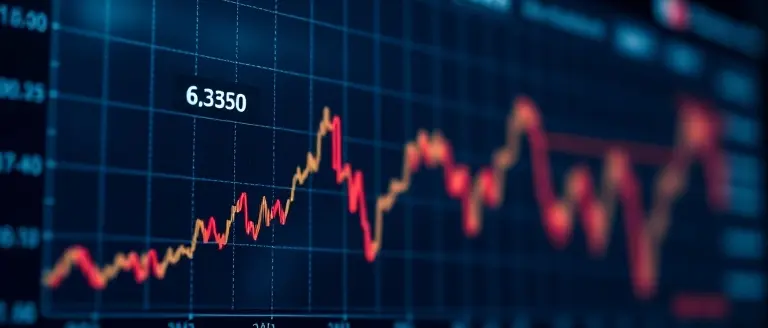
As the S&P 500 index eclipses the 6,350 mark, investors are finding themselves at a critical junction where technical strength clashes with macro-political instability. While the index remains anchored by a bullish technical backdrop—trading consistently above its 50-day and 100-day exponential moving averages—the recent transition from record-breaking optimism to cautious profit-taking highlights a market in flux. The current 13–19% earnings growth projection for Q1 2026 serves as a powerful fundamental tailwind, yet this narrative is increasingly challenged by external friction, specifically the fragility of the regional ceasefire in the U.S.–Iran conflict.
The Earnings Catalyst vs. The Geopolitical Risk Premium
The market’s primary engine remains the robust performance of corporate America. Projections for mid-to-high double-digit earnings growth represent a significant acceleration compared to pre-AI boom cycles, underscoring the efficiency gains realized through widespread technological integration. However, the recent market digestion of AI-centric hardware developments—notably regarding Google and Marvell—has created a tactical divergence. While these developments promise long-term expansion, they have triggered short-term volatility as investors recalibrate their risk exposure.
Key factors currently influencing the S&P 500 price action include:
- Earnings Resilience: Investors are looking for concrete margin expansion to justify the 6,350+ valuation, separating firms with real pricing power from those struggling with capital expenditures.
- Geopolitical Volatility: The uncertainty surrounding the durability of the U.S.–Iran ceasefire has introduced a “geopolitical risk premium,” where any resurgence in tensions threatens to derail the index’s upward momentum.
- Sector-Specific Rotation: Market participants are actively reallocating capital as they digest chip-sector news, weighing the long-term benefits of AI hardware investment against immediate macro threats.
For the disciplined investor, this “wait-and-see” environment demands a nuanced approach. The current pullback is not necessarily a signal of a structural trend reversal; rather, it reflects a market struggling to reconcile historical momentum with an unpredictable global landscape. Whether the S&P 500 maintains its ascent will depend heavily on whether upcoming earnings reports can convincingly silence the lingering fears surrounding geopolitical instability and potential supply chain disruptions.
The 2026 Portfolio Strategy: High-Beta vs. Low-Volatility

As the S&P 500 index navigates the complexities of the mid-April 2026 landscape, investors are facing a divergence between aggressive growth and defensive preservation. With the index recently breaching the 6,350 mark, the current “wait-and-see” environment highlights a critical tension: the momentum of an AI-driven supercycle versus the sobering reality of geopolitical risk. High-beta assets, particularly those leveraged toward the AI hardware supply chain (including recent developments with Google and Marvell), have fueled the index’s climb. However, these sectors are now susceptible to heightened sensitivity following profit-taking triggered by news of a potential regional ceasefire’s fragility and shifting tech sentiment.
Balancing Aggressive Growth with Defensive Hedges
To navigate this volatility, a tactical rebalancing strategy is essential. Investors should consider the following framework to align their portfolios with the current macro-political climate:
- High-Beta Tech Exposure: Maintain core holdings in firms driving the projected 13–19% earnings growth, but consider hedging against sudden swings. The recent news regarding AI chip production cycles suggests that while long-term demand remains structural, short-term valuation resets are increasingly likely.
- Low-Volatility Defensive Positioning: Rotate capital into sectors that historically exhibit a negative correlation to geopolitical turbulence. Utilities, healthcare, and consumer staples can provide a necessary buffer when the S&P 500 index faces downward pressure from macro-headlines, such as developments in the U.S.-Iran conflict.
- Dynamic Rebalancing: Do not rely on static allocations. In this environment, use “buy-the-dip” opportunities for high-beta tech only when the index demonstrates support above its 50-day and 100-day Exponential Moving Averages (EMAs). If support levels break, shift the weight toward defensive sectors to preserve gains earned during the Q1 rally.
The goal is to capitalize on the robust earnings fundamentals that support the current bull-run technical backdrop while insulating the portfolio from the binary outcomes of geopolitical shocks. By treating the current pullback as a test of market resilience rather than a definitive trend reversal, sophisticated investors can maintain exposure to long-term tech innovation without succumbing to the panic induced by daily price swings.
Visualizing Correlation: Geopolitical News Cycles and Market Response
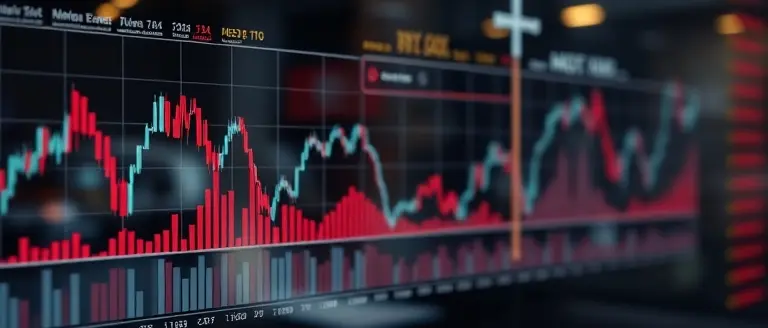
The current behavior of the S&P 500 index reveals a distinct pattern: when geopolitical tensions between the U.S. and Iran escalate, the market frequently experiences a “risk-off” reflex, leading to immediate but often short-lived volatility. While the index recently pushed past the 6,350 threshold, the subsequent pullback suggests that investors are pricing in a geopolitical risk premium rather than a structural weakness in corporate health. Historically, markets tend to overreact to headline-driven news, creating a decoupling between price action and underlying Q1 earnings growth expectations, which currently project a robust 13–19% increase. When analyzing this data, it is crucial to recognize that the recent dip is likely a technical correction rooted in sentiment adjustment rather than a fundamental trend reversal.
Distinguishing Panic from Strategy
Navigating a market at all-time highs requires distinguishing between impulsive reactions and data-driven positioning. To determine whether the current environment offers a “buy-the-dip” opportunity or mandates a defensive posture, consider the following technical indicators:
- Bull-Run Backdrop: The index remains technically sound, holding above its 50-day and 100-day Exponential Moving Averages (EMAs), which indicates that the long-term trend remains positive despite recent profit-taking.
- Earnings Catalyst vs. Geopolitical Noise: While news regarding regional ceasefires and tech sector shifts drives intraday moves, the true performance driver for 2026 will be the actualization of AI-hardware revenue from firms like Google and Marvell.
- Volatility Management: Strategic investors should look for divergence; if the S&P 500 holds key support levels during news-cycle spikes, it often signals that institutional “smart money” is utilizing the volatility to accumulate rather than distribute.
Ultimately, the divergence between the current high-valuation environment and persistent geopolitical uncertainty creates a unique window for investors. Those who prioritize the macro-political risk as a temporary hurdle to the broader, earnings-fueled momentum may find the current pullback a strategic entry point, provided they manage their exposure to the high-beta sectors most sensitive to supply-chain disruptions.
Decoding the Tech Sector: AI Chip Developments and Market Sentiment

The S&P 500 index has become increasingly tethered to the specialized hardware cycle, making recent announcements from Google and Marvell Technology pivotal indicators for broader market health. As investors process the latest AI chip breakthroughs, these developments act as a bellwether for the index’s heavy tech-weighting. The current market narrative suggests that while the 6,350+ record-highs were built on anticipation of massive AI infrastructure spend, the recent cooling trend reflects a recalibration of how quickly these chips will translate into realized earnings growth.
Assessing the Hardware-to-Earnings Pipeline
When giants like Google and Marvell pivot their strategies, it ripples across the entire supply chain, forcing a reassessment of valuation multiples. Because the technology sector now occupies a dominant share of the S&P 500, any shift in AI sentiment effectively functions as a market-wide volatility engine. Key drivers currently impacting investor sentiment include:
- Supply Chain Velocity: Market participants are scrutinizing whether AI chip lead times are shortening or if capacity constraints remain a bottleneck for corporate ROI.
- CapEx Commitment: Institutional investors are analyzing the sustainability of massive capital expenditures, questioning if 13-19% projected earnings growth can be sustained if AI-driven revenue lags behind current hardware investment.
- Valuation Compression: Recent profit-taking in tech indicates that traders are no longer pricing in “AI hype” blindly, but are instead demanding concrete evidence of efficiency gains in the underlying hardware.
The durability of this tech-led valuation remains the primary point of contention in the current “wait-and-see” environment. While technical indicators—such as the index maintaining a position above its 50-day and 100-day EMAs—suggest a robust bull-run technical backdrop, the sensitivity to semiconductor developments reveals a fragile equilibrium. Investors should monitor whether these tech fluctuations are mere tactical pullbacks or a structural pivot away from growth-heavy indices in favor of more defensive, geopolitically insulated sectors. Ultimately, the integration of specialized AI hardware into the enterprise ecosystem remains the ultimate litmus test for the continued performance of the S&P 500 throughout the remainder of 2026.
Sharpen Your Competitive Edge in Turbulent Markets
The volatility we are witnessing as the S&P 500 index navigates these record-highs is more than just price action—it is a signal that the market is recalibrating for a new phase of growth. While the temptation to react to every geopolitical headline or tech sector rumor is high, the most successful investors will be those who can maintain their focus, regulate their reactions, and filter out the emotional noise that often leads to costly, impulsive decisions.
In this high-stakes ‘wait-and-see’ environment, the greatest risk to your portfolio is not the market itself, but the ‘mental fog’ that clouds your judgement during volatile trading sessions. To truly thrive, you need more than just data; you need cognitive infrastructure. This is where The Brain Song becomes an essential asset for the sophisticated investor, providing a non-invasive, high-tech solution designed to optimize your brainwave health, enhance your focus, and ensure the peak psychological performance necessary to act with precision when others are reacting in panic.
By integrating The Brain Song into your daily routine, you are doing more than managing stress; you are upgrading your mental hardware to handle the rigors of 2026’s complex financial landscape. It is the ultimate tool for those who refuse to be sidelined by uncertainty and demand a consistent, sharp edge in their decision-making process. Prepare yourself to stay ahead of the next market cycle with the mental clarity you deserve.

Optimize your trading mindset and clear the mental fog to stay ahead of the next market cycle with The Brain Song.
Transform My Decision-Making Today!