
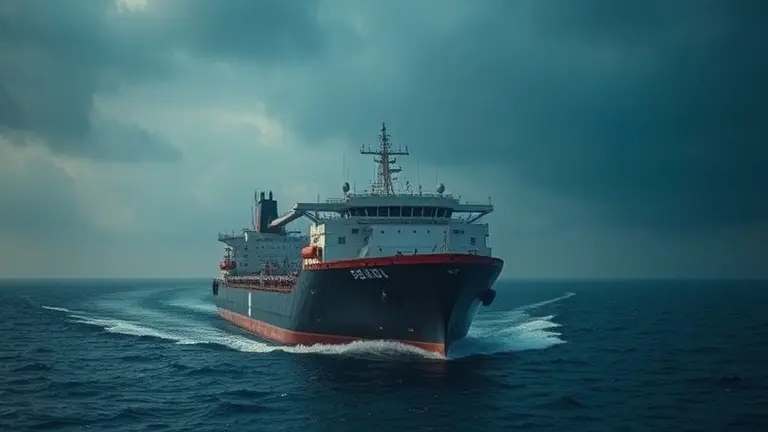
The Persian Gulf is currently the stage for an escalating maritime standoff that threatens to upend global energy security. As of April 19, 2026, the Strait of Hormuz news is dominated by reports of a total closure mandated by Iran, marking a sharp reversal of the fragile peace established by the recent ceasefire. This development follows a period of mounting friction, now officially categorized as part of the broader, high-stakes military and political movement dubbed Operation Epic Fury.
The immediate catalyst for this aggressive pivot is Tehran’s stated retaliation against a U.S.-led blockade of Iranian ports, a move that has effectively placed the vital chokepoint under the direct, militant oversight of the Iranian Revolutionary Guard Corps (IRGC). With gunboats firing on commercial traffic and regional tensions reaching a fever pitch, the implications for international supply chains—and the upcoming diplomatic talks in Pakistan—could not be more severe.
For logistics firms, energy analysts, and stakeholders monitoring the volatility, the situation requires more than just headline-tracking; it demands a deep-dive analysis into the strategic realities of the region. As global markets brace for the impact of this disruption, understanding the interplay between tactical maritime maneuvers and pending diplomatic pressure is essential for navigating what may become an extended period of international uncertainty.
The Strait of Hormuz Crisis: Escalation and Strategic Blockade

The geopolitical landscape of the Persian Gulf shifted dramatically on April 19, 2026, as Iran announced the total closure of the Strait of Hormuz, effectively terminating the brief stability afforded by the recent ceasefire agreement. This aggressive maneuver, framed as a direct retaliation against a U.S.-led blockade of Iranian ports, marks a volatile expansion of the ongoing regional conflict known as Operation Epic Fury. The Islamic Revolutionary Guard Corps (IRGC) has asserted “full IRGC control” over the vital chokepoint, a move that has sent shockwaves through global energy markets and forced maritime insurers to reassess risk profiles for all vessels operating in the region.
Tactical Escalation and Maritime Disruption
The situation rapidly deteriorated following reports that IRGC gunboats engaged and fired upon at least one commercial tanker near Oman. According to recent intelligence, at least two major vessels were forced to abort their transit and retreat from the area, signaling a high-stakes effort by Tehran to exert economic pressure. Despite these warnings, data from India TV News suggests the blockade is not yet absolute; 10 Indian-flagged vessels have successfully navigated the strait since April 18, indicating a complex, selective enforcement of the transit ban.
Strategic Implications and Diplomatic Pressure
The timing of this closure is critical, serving as a tactical lever ahead of high-stakes diplomatic negotiations scheduled to take place in Pakistan. President Donald Trump has issued stern public warnings against these actions, characterizing the blockade as a form of “blackmail.” Key developments to monitor include:
- Escalating Rhetoric: The IRGC maintains that the strait will remain closed indefinitely until the U.S. lifts restrictions on Iranian port access.
- Economic Volatility: The variance between market spot prices and futures is widening as traders account for the risk of a prolonged supply chain rupture.
- Operation Epic Fury: This disruption highlights the integration of maritime security with the broader, ongoing military and diplomatic maneuvers defining the current regional crisis.
As the ceasefire expiration nears, the interplay between these maritime skirmishes and the upcoming talks in Pakistan will be the primary determinant of whether this regional friction spirals into a broader international confrontation.
Visualizing the Disruption: Maritime Traffic and Tanker Logistics
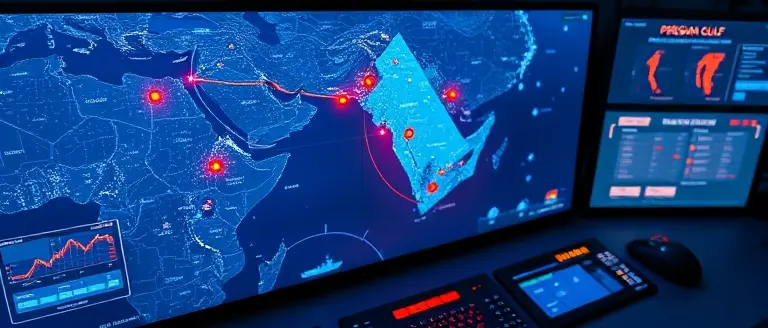
The current Strait of Hormuz news highlights a rapidly evolving logistical crisis, as maritime traffic tracking data indicates a significant shift in tanker behavior across the Persian Gulf. Following the latest closure, satellite and AIS (Automatic Identification System) tracking show a burgeoning “waiting zone” in the Gulf of Oman, where numerous vessels have opted to drop anchor rather than risk traversing the bottleneck. Evidence suggests that the operational reach of the IRGC has effectively created a de facto exclusion zone, with reports confirming that at least two tankers were forced to reverse course after being fired upon. This tactical aggression has fundamentally altered shipping routes, forcing logistics firms to weigh the high costs of extended transit times against the extreme danger of navigating the strait.
Impact on Energy Supply Chains
The physical blockade is not merely a regional diplomatic friction point but a critical bottleneck for the global energy supply. While data from April 19, 2026, confirms that at least 10 Indian-flagged vessels managed to navigate the waterway, these crossings represent an anomaly in an otherwise restricted environment. The volatility is clear:
- Vessel Diversions: Commercial carriers are increasingly rerouting around the Arabian Peninsula, extending delivery timelines by up to two weeks.
- Stalled Logistics: Large crude carriers are currently accumulating in the Gulf of Oman, signaling an emerging supply chain backlog.
- Safety Protocols: Maritime insurance providers have significantly heightened risk premiums, classifying the entire region under “Operation Epic Fury” as a high-threat zone.
As markets respond to this instability, the discrepancy between oil spot prices and futures continues to widen. Logistics firms are now prioritizing real-time risk assessment, as the IRGC’s declaration of “full control” turns standard maritime passage into a high-stakes geopolitical gamble. With U.S.-Iran diplomatic talks pending in Pakistan, the shipping industry remains in a defensive posture, awaiting clarity on whether the strait will reopen or if the blockade will catalyze a permanent shift in regional trade corridors.
IRGC Strategy: Beyond the Tactical Firing

The recent escalation in the Strait of Hormuz represents far more than a collection of isolated skirmishes; it is a calculated projection of power by the Iranian Revolutionary Guard Corps (IRGC). By declaring the waterway under “full IRGC control,” Tehran is moving to transform a tactical choke-point into a high-leverage diplomatic tool. This maneuver is intrinsically linked to the broader Operation Epic Fury, signaling a shift from defensive posturing to an aggressive strategy aimed at neutralizing U.S. naval influence. The IRGC’s firing upon tankers—while garnering immediate strait of hormuz news headlines—is primarily intended to force the international community to acknowledge Iran’s capacity to dictate the terms of regional trade.
Strategic Objectives of the Maritime Blockade
The IRGC’s current strategy utilizes the waterway to achieve three specific political and military objectives:
- Countering U.S. Economic Pressure: By citing the U.S. blockade of Iranian ports as the justification for closing the strait, the IRGC is framing their actions as a reciprocal necessity, effectively attempting to legitimize their behavior on the global stage.
- Forcing Diplomatic Concessions: The disruption of oil transit creates immediate volatility in global markets, pressuring stakeholders to prioritize the upcoming negotiations in Pakistan as the only path to restoring energy security.
- Testing Regional Alliances: By selectively permitting some vessels—such as the recent transit of Indian-flagged ships—while harassing others, the IRGC is actively mapping which nations are willing to defy U.S.-led maritime security protocols.
Ultimately, this strategy serves as a high-stakes bargaining chip ahead of critical diplomatic talks. While the threat to global oil supplies is significant, the IRGC’s focus remains on breaking the stalemate created by Operation Epic Fury. Analysts suggest that as long as the U.S. maintains its current naval posture, the IRGC will likely continue to manipulate maritime transit to signal that no regional settlement is possible without addressing Iran’s economic grievances. This indicates that the volatility seen in the strait will persist as a deliberate component of their negotiation framework.
The Pakistan Summit: Diplomatic Stakes and Market Stability

The upcoming diplomatic summit in Pakistan represents a critical junction in the ongoing Strait of Hormuz news cycle. With the IRGC declaring full control over this vital maritime chokepoint, the meeting serves as a final opportunity to prevent a full-scale regional rupture linked to Operation Epic Fury. President Donald Trump’s administration has adopted a hardline stance, publicly labeling Tehran’s actions as “blackmail” and signaling that the U.S. will not negotiate under the threat of a naval blockade. This rhetoric underscores a high-stakes standoff: the U.S. remains committed to maintaining the flow of global energy, while Iran insists the strait will remain closed until the current blockade of Iranian ports is lifted.
Balancing Geopolitical Leverage and Economic Volatility
The outcome of these negotiations will dictate the trajectory of global energy markets for the remainder of the quarter. Investors are currently monitoring the variance between market spot prices and futures, as the uncertainty surrounding the Strait of Hormuz creates significant hedging premiums. Market analysts suggest that a failure to reach an agreement in Pakistan could trigger:
- Severe Price Spikes: Immediate and sustained increases in crude oil prices as shipping insurance premiums for the Persian Gulf skyrocket.
- Strategic Rerouting: Forced shifts in global tanker logistics, moving away from the Gulf and placing immense pressure on alternative transit hubs.
- Escalated Military Posturing: A heightened risk of naval skirmishes, particularly if the IRGC continues to fire on vessels or block additional commercial traffic.
The summit functions as a pressure valve for a situation that has reached a boiling point following recent reports of tankers being turned back near Oman. While 10 Indian-flagged vessels successfully traversed the area as of April 19, this should not be interpreted as a return to normalcy. Instead, maritime experts warn that the window for a peaceful resolution is rapidly closing as the ceasefire deadline approaches. Whether the Pakistan dialogue results in a path toward de-escalation or a total breakdown, the world remains braced for the resulting impact on regional stability and global economic security.
“,introducao:
The situation in the Strait of Hormuz is more than a fleeting geopolitical crisis; it is a profound lesson in the volatility of high-stakes environments. As maritime logistics firms grapple with the unpredictability of IRGC maneuverings and the shifting sands of diplomatic negotiations, it becomes clear that relying on vague or outdated strategies is no longer an option. The modern landscape demands a shift from reactive guesswork to proactive, precision-engineered planning. When the environment is defined by uncertainty, the only way to safeguard your success is by mastering the technical blueprints that remove all doubt and error.
This is where your professional approach to complex projects must evolve. Just as top-tier maritime operators are turning to rigorous, evidence-based route mapping to navigate the Persian Gulf, you need a system of proven, workshop-tested blueprints to eliminate costly mistakes in your own work. Ted’s Woodworking offers the ultimate toolkit for technical certainty—providing you with the precise, expert-vetted plans required to execute any project with absolute accuracy. Don’t leave your goals to chance; choose the structural reliability that separates successful professionals from those who rely on trial and error.

Download the complete library of precision-tested plans and stop relying on guesswork—secure your project’s success with technical certainty today.