
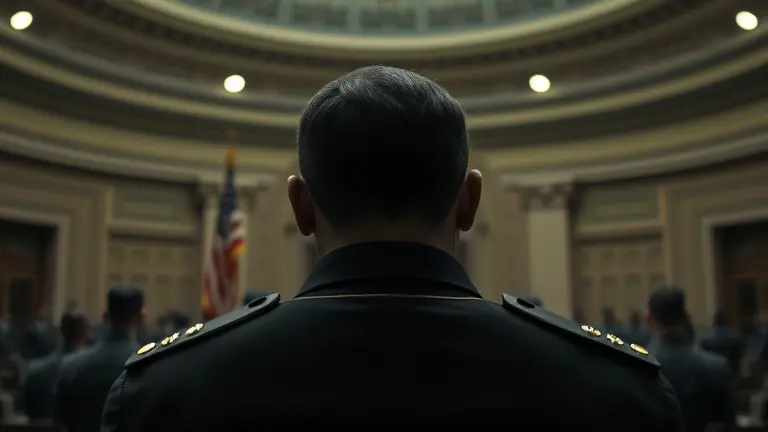
In an era where information travels at the speed of light, the line between historical fact and popular media culture is increasingly thin. Recently, the phrase Ezekiel 25:17 became the epicenter of a viral controversy involving US Secretary of Defense Pete Hegseth. During an official Pentagon prayer service, Hegseth delivered a powerful invocation that struck a chord—not because of its religious origin, but because of its striking similarity to one of the most famous monologues in cinematic history: the Pulp Fiction bible verse delivered by Samuel L. Jackson.
This incident sparked a firestorm of online debate, prompting military experts, pundits, and the public to question how a central figure in national defense could conflate ancient scripture with a violent crime drama script. While many focus on the political implications, the core issue is a deeper, more subtle problem: the erosion of cognitive focus and the ability to distinguish between pop-culture fiction and factual reality in high-pressure public environments.
In this analysis, we peel back the layers of the Pete Hegseth Pulp Fiction prayer controversy. By breaking down the true biblical origin of the verse against the Hollywood embellishment, we aim to provide the clarity needed to navigate an information landscape where distinguishing truth from narrative is more essential—and more difficult—than ever before.
The Pentagon Prayer: Understanding the Ezekiel 25:17 Controversy
The controversy surrounding Ezekiel 25:17 erupted on April 15, 2026, following a prayer service held at the Pentagon. During this official ceremony, US Secretary of Defense Pete Hegseth delivered an invocation that quickly drew scrutiny for its unmistakable resemblance to the famous “Jules Winnfield” monologue from Quentin Tarantino’s 1994 film, Pulp Fiction. While Hegseth presented the words as a spiritual reflection, social media users and military analysts immediately noted that the phrasing was a near-verbatim adaptation of the violent cinematic script rather than the actual biblical passage found in the Book of Ezekiel.
The Intersection of Film and Faith
The incident ignited an intense online debate regarding the appropriateness of sourcing liturgical content from pop culture. The confusion stems from the fact that the Pulp Fiction bible verse—a stylized, aggressive construct written for Samuel L. Jackson’s character—has become so iconic that it has effectively superseded the original scripture in popular consciousness. When Hegseth recited the monologue, he appeared to lean into the aggressive rhetoric of the film’s adaptation, which led to widespread ridicule and criticism from those who viewed the use of violent crime-film dialogue within a formal military setting as a significant lapse in professional judgment.
Key observations regarding the fallout include:
- The Source Discrepancy: While Hegseth attributed the words to the Bible, the text used was the Hollywood embellishment, not the original KJV or NIV translations of Ezekiel 25:17.
- Public Perception: Major media outlets, including The Guardian and Reuters, highlighted the incident as a failure of vetting or historical awareness, while viral video comparisons on platforms like YouTube served to amplify the public embarrassment.
- Institutional Concern: The Pentagon has faced mounting pressure to clarify why the Pete Hegseth pulp fiction prayer was permitted during an official event, raising questions about the intersection of political rhetoric and modern media literacy.
This convergence of a high-profile political figure and a misunderstood pop-culture artifact underscores a growing trend where viral media becomes conflated with historical fact. As discussions persist on platforms like Reddit, the event remains a case study in the dangers of relying on cultural scripts rather than verifiable primary sources in public office.
Biblical Versus Cinematic: The True Origin of Ezekiel 25:17

The recent controversy surrounding Pete Hegseth and his invocation of Ezekiel 25:17 during a Pentagon prayer service highlights a persistent cultural confusion between ancient scripture and modern pop culture. To understand the gravity of the public reaction, one must first look at the stark divergence between the actual biblical record and the creative liberties taken by Quentin Tarantino in his 1994 masterpiece, Pulp Fiction.
The Biblical Original vs. The Hollywood Monologue
In the King James Version (KJV) of the Bible, Ezekiel 25:17 is a concise warning of divine judgment. It reads: “And I will execute great vengeance upon them with furious rebukes; and they shall know that I am the Lord, when I shall lay my vengeance upon them.” The context of this verse is a prophecy directed at the Philistines, serving as an expression of divine justice rather than a personal threat.
In contrast, the Pulp Fiction bible verse—delivered by the character Jules Winnfield—is a dramatic, cinematic fabrication. It weaves the original KJV text with segments from Ezekiel 25:15 and a fictionalized, highly stylized narrative: “The path of the righteous man is beset on all sides by the inequities of the selfish and the tyranny of evil men… And I will strike down upon thee with great vengeance and furious anger those who attempt to poison and destroy my brothers.”
Why the Confusion Persists
The conflation of these two texts, which became a focal point for critics of the Hegseth Pulp Fiction prayer incident, stems from the monologue’s sheer power in pop culture. The film’s version is rhythmic, menacing, and inherently violent, designed for dramatic impact. While the biblical verse focuses on the recognition of God’s sovereignty, the movie script focuses on the retribution of the speaker.
- Biblical Intent: A theological promise of historical justice for ancient nations.
- Cinematic Intent: A stylized, intimidating monologue designed to establish character dominance and cinematic tension.
- The Discrepancy: The movie version is approximately four times longer than the original scripture and introduces concepts of “tyranny” and “evil men” not found in the source text.
By presenting the cinematic monologue as a prayer, the incident serves as a modern cautionary tale regarding the importance of source verification—even in the highest halls of government. Distinguishing between historical scripture and iconic film dialogue is essential to maintaining the integrity of both religious discourse and public record.
The Evolution of a Pop-Culture Icon

The monologue delivered by Jules Winnfield in the 1994 film Pulp Fiction stands as one of the most recognizable sequences in cinema history. Written by Quentin Tarantino and performed with visceral intensity by Samuel L. Jackson, the speech serves as a masterclass in tension, blending pseudo-religious gravitas with the gritty reality of a crime thriller. While many viewers are aware the scene references Ezekiel 25:17, the version heard on screen is a creative fabrication rather than a direct scriptural quote. This Hollywood embellishment proved so effective that it effectively supplanted the original biblical text in the collective consciousness, leading to the cultural conflation recently highlighted by the Pete Hegseth Pulp Fiction prayer controversy.
The Mechanics of an Iconic Misattribution
The power of the Pulp Fiction Bible verse lies in its cadence and rhythmic delivery, which transforms a standard act of violence into a theatrical performance of “divine” retribution. Its transition from a fictional crime drama into a real-world cultural touchstone demonstrates the dominance of modern media over historical literacy. Several factors contributed to this evolution:
- Linguistic Impact: The monologue’s structured, sermon-like tone mirrors the rhetorical style of American revivalist preaching, making it feel oddly familiar even to those with limited biblical knowledge.
- Pop-Culture Saturation: Decades of memes, parodies, and pop-culture references have cemented the fictional passage as the “true” version of the verse, causing a persistent disconnect between scripture and script.
- Rhetorical Conflation: As seen in recent political rhetoric, public figures may occasionally lean into the dramatic intensity of the film’s version—unintentionally or otherwise—to project strength or righteous indignation.
Ultimately, the confusion surrounding Ezekiel 25:17 serves as a case study in how fictional narratives can bypass the public’s institutional memory. When a piece of media becomes sufficiently iconic, it shifts from being a mere line in a movie to an accepted shorthand for authority and judgment, regardless of its original, non-biblical source.
Why Misattribution Happens: Contextual Confusion in Public Discourse

The viral incident involving Pete Hegseth and his recitation of a prayer during a Pentagon ceremony highlights a growing phenomenon in the information age: the conflation of pop-culture scripts with historical or religious texts. When individuals cite Ezekiel 25:17, they are often not referencing the actual biblical scripture, but rather the iconic, stylized monologue from the 1994 film Pulp Fiction. This misattribution is rarely malicious; instead, it is a byproduct of how cultural artifacts permeate our collective consciousness. Because the Pulp Fiction bible verse delivered by Samuel L. Jackson’s character, Jules Winnfield, is so narratively potent and frequently reshared across digital platforms, it often eclipses the shorter, more obscure original text in the public imagination.
The Psychology of Cultural Displacement
This phenomenon mirrors a “Mandela Effect” of sorts, where the vividness of a fictional portrayal overrides the actual source material. When public figures integrate these motifs into formal rhetoric, it suggests a reliance on “cultural shorthand”—using phrases that sound authoritative or biblical without conducting primary source verification. Several factors contribute to this confusion:
- Heuristic Processing: Speakers often rely on memorized fragments that feel “scripturally resonant” to convey intensity or gravity.
- Viral Saturation: Short-form video platforms and social media memes prioritize the dramatic delivery of the movie quote, effectively rewriting the cultural definition of the verse.
- Memory Blurring: In high-stress or performative environments, the brain may retrieve the most emotionally charged version of a quote—in this case, the Pulp Fiction dialogue—rather than the precise, less-dramatic original biblical text.
Ultimately, the scrutiny following the Pete Hegseth pulp fiction prayer controversy serves as a stark reminder of the risks associated with performative rhetoric. In an era where every word is recorded and instantly fact-checked by global audiences, the failure to distinguish between cinema and scripture invites intense public ridicule, as it creates an immediate disconnect between the gravity of the setting and the source of the spoken words. Distinguishing between genuine religious tradition and Hollywood-embellished fiction has never been more critical for those operating in the public eye.
Sharpen Your Discernment in a Noisy World
The controversy surrounding the misuse of Ezekiel 25:17 serves as a poignant reminder of how easily our mental clarity can be compromised by the constant saturation of pop-culture narratives. When we rely on “cultural shorthand” rather than verified facts, we risk not only public embarrassment but also a fundamental blurring of truth and fiction. Maintaining the ability to critically analyze the information we ingest is a vital skill in modern life.
Just as we must clearly distinguish between ancient, authentic scripture and stylized Hollywood monologues, we must also ensure our own cognitive health remains sharp to filter through the noise of daily life. Mental fog and cognitive fatigue are the silent enemies of good judgment. If you find your focus waning under the pressure of today’s complex information environment, it may be time to optimize your mental performance.
The Brain Song is designed for the analytical mind that demands clarity and precision. By incorporating a daily, 12-minute auditory routine into your schedule, you can reduce mental fog and enhance your ability to discern fact from fiction. Don’t let your judgment become clouded by misinformation; invest in your cognitive sharpness today and stay ahead of the curve.
 Sharpen your focus and clear the mental fog—click here to start your 12-minute daily brain-enhancing audio routine.Unlock My Results