
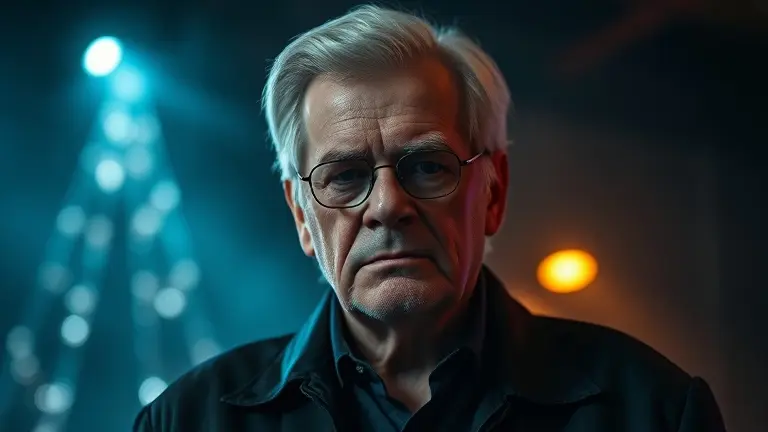
In the vast landscape of 21st-century literature, few figures command as much digital and cultural gravity as Stephen King. Far from the typical cycle of seasonal hype, King has cemented a unique position where his literary output, his cinematic adaptations, and his unfiltered social media presence form an inseparable, living ecosystem. For the modern enthusiast, navigating this “King universe” requires more than casual reading; it demands a deep, analytical engagement with the evolving themes that define his work and the political commentary that colors his public persona.
As interest in his complex legacy continues to grow, we find ourselves moving past the surface-level headlines of daily news updates. Instead, the true value lies in exploring the sophisticated architecture of his novels and the broader sociological impact of his voice in the United States. To fully appreciate the nuance of his storytelling and the weight of his contemporary critiques, we must adopt a more focused, intentional approach to our reading habits.
This article serves as a deep-dive investigation into how Stephen King has reinvented himself as a permanent fixture of the digital zeitgeist. We will peel back the layers of his evolving narrative style and examine the deliberate mechanics behind his influence, providing the context necessary to understand why his voice remains the most piercing in American culture today.
The Modern Stephen King: Beyond the Headlines

In the contemporary landscape of American literature and media, Stephen King has transcended his traditional role as a bestselling horror novelist to become a persistent cultural institution. While many authors fade from the public consciousness between major releases, King maintains a high-engagement baseline that defies standard publishing cycles. This enduring relevance is not merely the result of his prolific output or the endless cycle of Hollywood adaptations, but rather his transformation into a central node within the digital public square. By leveraging platforms like X (formerly Twitter), King has successfully bridged the gap between his identity as a legendary storyteller and his persona as a vocal, often polarizing, commentator on the United States socio-political climate.
The Digital Symbiosis of Author and Icon
Public interest in King remains robust because he offers a unique, dual-track experience for his audience. Fans interact with his legacy on two distinct levels:
- Literary Continuity: Readers actively track his output for signs of narrative evolution, constantly questioning when the next masterwork will arrive or which of his classics will receive a high-budget reimagining.
- Cultural Commentary: His digital presence provides a real-time window into his worldview. Unlike authors who remain detached, King’s direct engagement with political discourse ensures he is perpetually part of the modern news cycle.
This hybrid status creates a constant, self-sustaining feedback loop. When King shares his views, he draws in observers of American political discourse; when he drops subtle hints about future projects, he satisfies his core literary base. Consequently, the absence of a \”breaking news\” event—such as a major scandal or a sudden retirement—does not diminish his relevance. Instead, it highlights the stability of his brand. King has moved beyond the status of a mere creative individual to become a constant, reliable presence in the American consciousness, proving that an author’s voice can be as influential as their prose in the digital age.
The Evolution of Horror: King’s Novels in the 2020s

In the 2020s, Stephen King has demonstrated a profound shift in his literary architecture, moving away from the visceral, supernatural terrors that defined his early career toward a more nuanced exploration of the human condition under extreme duress. While his foundational works often relied on monsters, ghosts, and cosmic entities to externalize fear, his recent output reflects a pivot toward the terrifying potential of human frailty, societal breakdown, and the encroaching nature of modern isolation. This evolution suggests that for King, the most haunting threats are no longer found in haunted hotels or cursed graveyards, but within the polarized social fabric of the United States.
Shifting Themes and the Modern Condition
The post-2020 landscape has clearly acted as a catalyst for this thematic transition. As an author, King has increasingly prioritized psychological tension over jump-scares, forcing readers to confront the moral ambiguity of contemporary society. His recent prose demonstrates a matured perspective on horror, characterized by:
- Socially-conscious realism: Integrating political discourse and systemic issues directly into the plot to mirror the anxieties of the digital age.
- Grounded psychology: Focusing on the slow erosion of empathy and the breakdown of community during periods of widespread civil unrest.
- The banality of evil: Portraying antagonists whose motives are driven by recognizable, mundane ideological extremism rather than supernatural malice.
By anchoring his narratives in recognizable American environments, King bridges the gap between traditional fiction and cultural commentary. This change does not abandon the craft of suspense; rather, it elevates it. The horror is now derived from the vulnerability of our collective reality, where the \”monster\” is a symptom of societal division. As King continues to evolve, his body of work stands as a testament to his ability to adapt to a changing world, proving that true dread is often a reflection of the society we inhabit rather than anything hiding in the dark.
The Sociological Impact of King’s Digital Presence

In the modern digital landscape, Stephen King has transcended his role as a master of horror fiction to become a prominent, if polarizing, voice in American civic discourse. His activity on X (formerly Twitter) serves as a unique case study in how literary celebrity intersects with real-time political commentary. Unlike traditional authors who maintain a curated distance, King utilizes his platform for direct engagement, often blurring the lines between his fictional brand of \”small-town dread\” and the systemic anxieties of the contemporary United States. By actively participating in debates regarding policy, ethics, and national leadership, King has solidified a digital persona that acts as a lightning rod for broader societal divisions, effectively turning his feed into a barometer for the American pulse.
The Dynamics of Authorial Influence
King’s influence stems from a rare intersection of longevity and accessibility. By engaging with followers daily, he fosters a parasocial relationship that traditional media outlets cannot replicate. This constant stream of commentary provides fans with a sense of continuity that extends beyond his book releases, though it simultaneously subjects him to intense scrutiny. Several key factors contribute to this phenomenon:
- Democratic Engagement: King bypasses traditional gatekeepers, allowing him to shape public perception of current events without editorial mediation.
- The \”King Universe\” Extension: His political rhetoric often mirrors the themes found in his bibliography, casting real-world political adversaries in the same moral binary often found in his novels.
- Polarization as Engagement: His unapologetic, partisan stance ensures his content remains highly visible, contributing to the algorithmic favorability of his posts.
The sociological implication is clear: the modern author is no longer merely a creator of narratives but a participant in the creation of the national zeitgeist. Whether this direct involvement bolsters his literary legacy or complicates his standing among a broader readership remains a subject of ongoing debate. Regardless, Stephen King remains a primary architect of digital discourse, proving that the pen—or in this case, the tweet—remains a powerful tool for civic mobilization in the 21st century.
Navigating the Legacy: Adaptation Trends and Fan Engagement

The enduring cultural footprint of Stephen King is intrinsically linked to the relentless cycle of film and television adaptations that breathe new life into his expansive bibliography. While many literary figures fade from the public consciousness, King’s work remains a cornerstone of modern entertainment because his stories are perpetually reimagined for contemporary audiences. These adaptations serve as a bridge between generations, introducing younger viewers to his classic narratives while offering long-term fans fresh, high-budget perspectives on beloved source material. This constant stream of media projects acts as a feedback loop; as each new trailer or announcement trends on platforms like X, it reignites interest in the original novels, cementing his status as a permanent fixture in global pop culture.
The Synergy Between Branding and Adaptation
The strategy behind these projects is far from accidental. Evidence suggests that King’s deliberate and highly visible brand management—characterized by his vocal presence on social media—complements the marketing of these adaptations. By maintaining a direct, often polarizing, line of communication with his audience, King ensures his personal brand remains as relevant as his creative output. This approach allows him to influence the narrative surrounding his work, effectively keeping his name at the forefront of the entertainment industry.
Key factors that maintain this high level of engagement include:
- Multigenerational Reach: Streaming platforms have democratized access to King’s library, allowing his 20th-century horror classics to find massive, new audiences alongside his 2020s novels.
- Curated Exclusivity: By selectively engaging with adaptation news and public discourse, King fosters a sense of authenticity that prevents his work from feeling like a mere commodity.
- The \”King Universe\” Effect: Fans are no longer just consuming individual stories; they are actively participating in the meta-analysis of his interconnected universe, spurred by recurring themes and \”Easter eggs\” found in modern adaptations.
This synergy ensures that even in periods without a massive, singular breakthrough event, the \”King machine\” operates at a baseline of high efficiency, turning every adaptation cycle into an opportunity to reinforce his legacy as a titan of American literature.
\”,introducao:
Engaging with the intricate layers of Stephen King’s prose—from his early supernatural explorations to the biting political critique of his 2020s novels—is a pursuit that rewards the dedicated reader. To truly dissect the evolution of his themes or to understand the sociological ripple effects of his digital persona, one must move beyond passive consumption. This level of intellectual engagement requires not just passion, but a sharpened ability to focus amidst the noise of the modern information age.
As you prepare to dive deeper into the King universe, it is essential to equip yourself with the cognitive tools necessary to sustain that focus. The Brain Song utilizes specialized neuroscience-based auditory stimulation designed to sharpen your mental clarity and dissolve the cognitive fog that often accompanies dense, analytical reading. By incorporating this into your routine, you transform a standard reading session into an optimized experience of profound intellectual exploration.
Prepare your mind for the deep dive: Start your 12-minute auditory focus session with The Brain Song before exploring King’s complex universe.

Prepare your mind for the deep dive: Start your 12-minute auditory focus session with The Brain Song before exploring King’s complex universe.