
As of April 13, 2026, Intel Corporation (INTC) remains a central pillar of global semiconductor discourse. Navigating the current economic landscape requires investors to look beyond day-to-day volatility and focus on the company’s structural transformation. At the heart of this shift is the ‘IDM 2.0’ strategy, a comprehensive blueprint aimed at reclaiming manufacturing leadership while simultaneously opening the company’s fabrication doors to the world via the ‘Foundry-as-a-Service’ model.
For the retail investor, the narrative surrounding Intel has often been obscured by the noise of competitive pressures—most notably from ARM-based architectures and the rapid ascent of NVIDIA in the AI hardware stack. However, there is a strategic imperative at play that transcends quarterly earnings: the pursuit of domestic chip sovereignty. As global geopolitical risks grow, Intel’s heavy investment in U.S.-based manufacturing capacity represents a potential long-term moat that is increasingly critical to the U.S. investor demographic.
This article bridges the technical complexities of semiconductor manufacturing with actionable investor insights. We will examine how Intel’s pivot is not merely a reaction to current market conditions, but a deliberate move to reshape the industry’s value chain. By understanding the milestones that define the ‘Foundry-as-a-Service’ model, investors can better distinguish between temporary margin pressures and the foundational strength of a company building the infrastructure of tomorrow’s AI-driven economy.
Intel (INTC) at a Crossroads: The IDM 2.0 Strategic Pivot

As of April 2026, Intel Corporation (INTC) stands at a pivotal juncture, aggressively executing its IDM 2.0 strategy to reclaim its position as the world’s premier semiconductor manufacturer. This strategic shift represents more than just a business model change; it is a fundamental restructuring of how the company designs, manufactures, and sells silicon. By separating its product design groups from its Intel Foundry manufacturing arm, the firm aims to achieve the operational discipline of a third-party foundry while maintaining the innovation edge of a traditional integrated device manufacturer. Investors are currently weighing the heavy capital expenditure required for this transformation against the long-term potential of domestic chip sovereignty and reduced reliance on East Asian supply chains.
Navigating Competitive Pressures and Structural Shifts
The current market sentiment remains cautious, reflecting the tension between short-term margin compression and the massive investment in “five-nodes-in-four-years” manufacturing goals. INTC faces significant headwinds from the rapid proliferation of ARM-based architectures, which have successfully penetrated both the enterprise data center and the premium consumer laptop markets. To combat this, Intel is prioritizing the following milestones:
- Foundry Utilization: Increasing capacity utilization rates within Intel Foundry to improve gross margins as the company pivots to a “Foundry-as-a-Service” model.
- AI Hardware Stack: Improving competitive standing against NVIDIA by optimizing silicon for power-efficient AI inference and training, essential for maintaining relevance in the current AI-driven hardware ecosystem.
- Government Incentives: Monitoring the deployment of CHIPS Act funding to ensure timely completion of domestic Fab expansions, which serves as a critical hedge against global geopolitical volatility.
Ultimately, Intel’s success hinges on whether it can effectively execute its roadmap while managing the transition costs that have weighed on earnings reports. While retail investors may feel the volatility of quarterly results, the institutional interest in INTC remains focused on whether the company can successfully become a reliable, high-volume contract manufacturer that rivals TSMC on both performance and reliability in the years to come.
Unpacking the ‘Foundry-as-a-Service’ (FaaS) Model

The shift toward the Foundry-as-a-Service (FaaS) model represents the most significant structural pivot in Intel Corporation’s (INTC) history. Historically, Intel operated as an Integrated Device Manufacturer (IDM), where its manufacturing plants existed solely to produce its own proprietary chip designs. While this vertical integration once provided an unassailable lead in process technology, the rise of the “fabless” ecosystem—dominated by competitors like NVIDIA and AMD—exposed the limitations of a closed-loop system. By transitioning to a contract manufacturing business, Intel is now opening its sophisticated global fabrication network to external clients, effectively placing it in direct competition with industry giants like TSMC. This move is designed to maximize capital efficiency by ensuring that its massive investments in EUV lithography and advanced node scaling are utilized at higher capacity levels, regardless of Intel’s own internal product design cycles.
Why FaaS is Essential for AI Dominance
The rapid evolution of the AI hardware stack has created a scarcity of leading-edge production capacity. For Intel, the FaaS model is a strategic hedge against the volatility of the consumer PC market. By offering its manufacturing prowess to external entities, Intel captures a larger share of the global semiconductor value chain beyond its own branded processors. Investors monitoring INTC should consider the following competitive advantages of this transformation:
- Diversified Revenue Streams: Moving away from reliance on internal product sales reduces cyclical exposure to PC demand fluctuations.
- Geopolitical Resilience: As the U.S. government prioritizes domestic chip sovereignty via CHIPS Act funding, Intel’s massive, state-side foundry footprint becomes a critical asset that offshore competitors cannot replicate with the same level of policy alignment.
- Capacity Optimization: A contract-based model forces Intel to maintain world-class manufacturing standards to satisfy external customer service-level agreements, which in turn benefits the reliability and yield of Intel’s own data center and AI chips.
Ultimately, the success of the FaaS strategy depends on Intel’s ability to prove its foundry margins can withstand the high cost of capacity expansion. While short-term capital expenditure remains a point of skepticism for retail traders, the long-term potential for Intel to become the primary domestic provider for secure, AI-focused silicon is a key pillar of its valuation thesis heading into the second half of 2026.
The Semiconductor Value Chain: Visualizing Intel’s Role
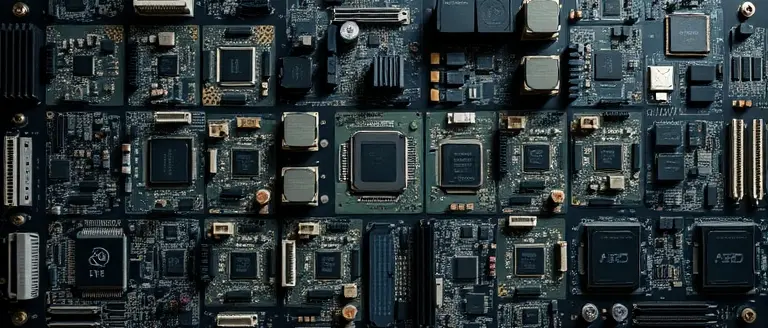
To understand the current investment thesis for INTC, investors must move beyond simple ticker-price analysis and view the company as a multifaceted engine within the global semiconductor value chain. The industry is broadly segmented into three critical layers: design/IP (where firms like NVIDIA and ARM innovate), fabrication (the physical manufacturing of silicon), and advanced packaging (the final assembly of complex chiplets). Historically, Intel Corporation operated as an Integrated Device Manufacturer (IDM), handling everything in-house. However, the pivot to the IDM 2.0 strategy effectively transitions Intel into a dual-threat entity: a design house and a merchant foundry competing directly with TSMC for the world’s most advanced silicon production.
Decoding the Competitive Landscape
While NVIDIA dominates the design layer by leveraging external fabrication partners, Intel is attempting to capture value across the entire stack. This integration provides a distinct strategic advantage in a market increasingly sensitive to geopolitical supply chain risks. By domesticating its manufacturing footprint through massive U.S. government-backed expansions, Intel is positioning itself not just as a chip vendor, but as a sovereign infrastructure provider.
Key milestones that define Intel’s role in this ecosystem include:
- Front-End Fabrication: Utilizing EUV lithography to produce leading-edge process nodes that rival the efficiency of global competitors.
- Foundry-as-a-Service (FaaS): Opening its gates to third-party designers, allowing Intel to monetize its manufacturing assets even when its own internal product lines face cyclical pressure.
- Advanced Packaging: Integrating disparate chiplets into a single high-performance package, an area where Intel holds significant intellectual property to combat the limitations of traditional monolithic design.
For the retail investor, the primary differentiator remains Intel’s commitment to domestic chip sovereignty. Unlike competitors who rely on concentrated manufacturing nodes in the Asia-Pacific region, Intel is betting that the long-term cost of domestic fabrication will be offset by the security and reliability premium requested by enterprise and government clients. As you track INTC, monitor the transition of its foundry division from a cost center to a profit center; this shift is the primary indicator of whether the company can successfully reclaim its historical manufacturing leadership.
Q2 and Q3 2026: Key Milestones for the Turnaround

For investors evaluating INTC, the window between Q2 and Q3 2026 represents a critical inflection point in the company’s “IDM 2.0” strategy. While market sentiment often fluctuates based on short-term quarterly volatility, the underlying value of Intel resides in its long-term manufacturing roadmap. Investors should move beyond simple price action and prioritize monitoring specific operational KPIs that signal the success of the Intel Foundry model. The transition from a captive internal manufacturer to a competitive “Foundry-as-a-Service” provider depends heavily on achieving yield parity with global competitors and successfully scaling production on new, advanced nodes.
Critical Indicators for Operational Success
To validate Intel’s turnaround, analysts and shareholders should specifically watch for the following milestones throughout the remainder of 2026:
- Yield Improvements on Advanced Nodes: Evidence of stabilized production yields is essential. High defect rates during initial ramps are expected, but consistent improvement in yield metrics will directly correlate to margin expansion and cost competitiveness against rivals like TSMC.
- CHIPS Act Capital Utilization: Monitor progress reports from federally funded expansion sites. As U.S. government-backed manufacturing capacity comes online, Intel’s ability to execute these capital-intensive projects on schedule will serve as a bellwether for its domestic sovereignty value proposition.
- Foundry Customer Traction: Look for announcements regarding new external foundry design wins. The long-term viability of the foundry business relies on attracting high-volume fabless semiconductor companies, proving that Intel can manufacture chips for external entities as reliably as it does for its own product lines.
- Operational Efficiency Metrics: Watch for updates on structural cost-cutting measures. Evidence of reduced operating expenses—without compromising R&D output—will be a primary signal that management is successfully navigating current margin pressures while preparing for a cyclical recovery in semiconductor demand.
Ultimately, the goal for Intel is to prove that its multi-billion dollar investment in fabrication capacity can translate into sustainable cash flow. By focusing on these technical and operational milestones, investors can better discern whether Intel’s current valuation accurately reflects its potential to capture a larger share of the global AI-driven silicon market.
Domestic Manufacturing as a Strategic Moat

In the current global economic landscape, Intel Corporation (INTC) is increasingly positioning its massive capital expenditures in U.S.-based semiconductor facilities not merely as an operational necessity, but as a formidable competitive moat. While competitors like NVIDIA remain reliant on third-party foundries—predominantly located in geopolitically sensitive regions—Intel’s IDM 2.0 strategy aims to achieve domestic manufacturing sovereignty. By anchoring its production within the United States, Intel mitigates systemic supply chain vulnerabilities that threaten to disrupt the global AI hardware stack. This geographic diversification offers a unique value proposition: security and reliability that offshore competitors, regardless of their technical prowess, simply cannot replicate for US-based enterprise and government clients.
Resilience Through Vertical Integration
The strategic importance of Intel’s foundry expansions, bolstered by CHIPS Act funding, creates a defensive barrier against the volatility of international trade tensions. As global demand for high-performance computing intensifies, the ability to control the end-to-end manufacturing process provides Intel with several key advantages:
- Supply Chain Transparency: Domestic fabrication allows Intel to provide high-security clients, such as defense contractors and government agencies, with a verifiable and secure chain of custody for silicon production.
- Reduced Geopolitical Risk: By moving capacity into the heart of the North American market, the company effectively insulates itself from the potential logistics bottlenecks that impact its fabless rivals.
- Operational Agility: Controlling the “Foundry-as-a-Service” ecosystem allows Intel to iterate faster on internal designs while simultaneously supporting external partners with specialized manufacturing needs.
Evidence suggests that as the semiconductor industry moves toward a “regionalized” manufacturing model, Intel’s massive, sunk-cost investment in U.S. infrastructure will serve as a permanent differentiator. For investors looking at INTC, the long-term thesis rests on this capability: Intel is building the essential domestic backbone for a future where geographic security is as critical to market valuation as processing power or power efficiency. While short-term margins remain under pressure, the structural shift toward “sovereign silicon” provides a stable, long-term runway that pure-play designers and foreign foundries struggle to match.
Mastering the Blueprint of Complex Execution
Intel’s path toward reclaiming its dominance is not merely a matter of technological breakthroughs; it is a profound test of operational precision. The IDM 2.0 pivot requires moving away from the chaos of fragmented, trial-and-error manufacturing toward the structural certainty of a disciplined, foundry-based operation. For investors, the takeaway is clear: success is determined by the ability to adhere to a rigid, proven, and repeatable execution model that ensures reliability at every stage of the silicon value chain.
Just as a masterful build requires a reliable blueprint to transform raw materials into a finished, high-performance product, Intel’s turnaround depends on a similar, unwavering adherence to technical design and capacity planning. When you strip away the market rumors and volatility, the core requirement remains the same: eliminating the risks inherent in complex engineering projects by following a verified, step-by-step assembly process that leaves nothing to chance.
To better understand the precision required in large-scale structural manufacturing, it is worth looking at how other fields manage the transition from raw potential to finished success. The same principles of exact design and systematic capacity planning found in professional-grade construction projects provide an excellent, tangible analogy for the discipline Intel needs to succeed in 2026. Applying this ‘mindset of a builder’ allows you to look past the superficial noise and focus on what truly drives long-term value: the relentless, systematic execution of a proven, foolproof plan.

To better understand the precision required in large-scale structural manufacturing, see how a systematic approach—like the one found in Ted’s Woodworking—applies the same principles of exact design and capacity planning that investors should look for in Intel’s 2026 milestones.
Discover the Blueprint