

In an era defined by rapid technological change and shifting global alliances, the shadow of the Cold War looms larger than ever. Modern policymakers and everyday citizens alike find themselves searching for a reliable framework to interpret today’s geopolitical volatility. Yet, as we attempt to map current great-power competition onto the memories of the mid-20th century, we often encounter a blur of complex data and overwhelming information that makes discerning the truth increasingly difficult.
Understanding the nuance between the 1947-1991 era and the 2020s landscape requires more than just a cursory glance at history books. It demands a high level of analytical rigor—a capacity to synthesize economic, military, and digital trends while filtering out the noise of modern hyper-polarized discourse. To effectively navigate these tensions without falling into the trap of alarmist bias, we must cultivate a sharpened, objective mental clarity.
In the following analysis, we move beyond the headlines to provide a structured, data-driven framework for comparison. By examining the structural realities of both eras, we equip ourselves with the intelligence necessary to understand not just what happened in the past, but how those events dictate our current strategy. Prepare to sharpen your analytical edge as we dissect the complexities of modern great-power competition.
The Persistent Shadow: Why the Cold War Remains Our Contemporary Lens
The Cold War continues to serve as the primary cognitive map for understanding 21st-century international relations. Rather than fading into history, the era—defined by the ideological and strategic rivalry between the United States and the Soviet Union from 1947 to 1991—has become a heuristic device for analyzing modern great power competition. As global dynamics shift in the Indo-Pacific and Eastern Europe, policymakers and the public alike reflexively utilize the framework of the Cold War to organize complex, multifaceted crises. This reliance is not merely a product of pop-culture nostalgia; it is a structural response to the return of bipolar-leaning tensions and the resurgence of systemic threats to the established liberal international order.
Why We View Modernity Through a Cold War Lens
The persistence of the Cold War in modern discourse is driven by the uncanny parallels between past strategic challenges and contemporary dilemmas. By examining the current landscape through this historical lens, analysts attempt to navigate the uncertainties of a multipolar world. Key drivers of this persistent interest include:
- Strategic Containment: Contemporary debates regarding trade sanctions and technology restrictions mirror the containment policies utilized during the mid-20th century to limit systemic rivals.
- Proxy Conflict Dynamics: Regional destabilization in various zones of influence reflects the historical patterns of peripheral wars used by major powers to exert pressure without triggering direct, catastrophic nuclear confrontation.
- Institutional Memory: Existing alliance structures, such as NATO, operate on bureaucratic and strategic foundations laid during the 1950s, creating an unavoidable link between past doctrines and current military readiness.
Evidence suggests that the current era is characterized by an “interconnected rivalry” that differs significantly from the Soviet-era siloed economy. While modern global trade makes complete decoupling a daunting prospect, the underlying anxieties surrounding nuclear non-proliferation and ideological competition remain fundamentally linked to the historical experiences of the 20th century. By studying the successes and failures of that era, observers can better identify the critical threshold between managed competition and total systemic collapse, transforming the Cold War from a static historical event into a vital tool for contemporary geopolitical strategy.
Structural Divergences: How Contemporary Great-Power Competition Differs from the 20th Century
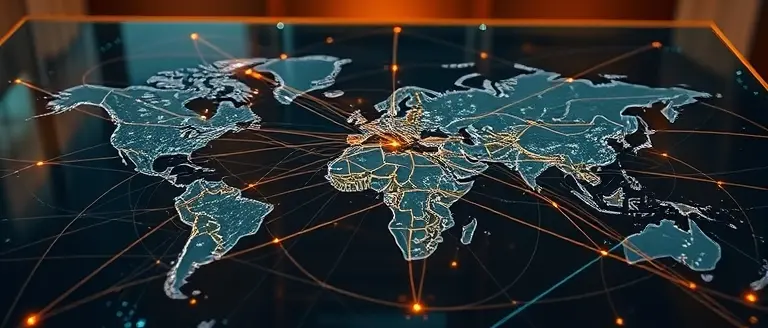
The Cold War era was defined by a rigid, bipolar distribution of power, characterized by two hermetically sealed economic spheres—the Western capitalist bloc and the Soviet-led command economies. Today’s geopolitical strategy landscape has shifted toward a complex, multipolar environment where extreme supply-chain interdependence complicates the binary “us vs. them” logic of the past. While the 20th-century conflict relied on the containment of ideology, the contemporary era is driven by great-power competition over critical infrastructure, semiconductor supply chains, and digital sovereignty. Unlike the limited trade interactions between the US and USSR, modern superpowers are deeply integrated through global financial systems, making sudden decoupling not only economically devastating but strategically unpredictable.
From Ideological Bipolarity to Interdependent Multipolarity
The primary structural divergence lies in the integration of the global economy. During the 1947-1991 period, the lack of commercial overlap allowed for clear demarcations of power. In the 2020s, however, the “Global South” and middle-power nations act as volatile, independent agents, often refusing to fully align with either the United States or its primary rivals. Key differentiators include:
- Supply-Chain Realism: Unlike the isolation of the Eastern Bloc, modern superpowers rely on shared access to raw materials and manufacturing hubs, creating a “mutually assured economic destruction” scenario that acts as a partial deterrent.
- Role of Non-State Actors: During the Cold War, state actors maintained near-total control over strategic technology. Today, massive multinational corporations and private technology firms wield immense power over global data networks and AI development, often operating outside traditional alliance frameworks.
- Proxy Conflicts: Modern proxy competition is less about territorial conquest and more about asymmetric warfare, utilizing cyber espionage, misinformation campaigns, and economic sanctions rather than traditional land-based military maneuvers.
Evidence suggests that while contemporary anxieties mirror the intensity of the 20th century, the mechanism of competition has shifted from isolation to penetration. Leaders and policy experts must recognize that this historical comparison reveals a world where economic friction is now a primary tool of statecraft, rendering the traditional Cold War playbook insufficient for navigating current geopolitical tensions.
Historical Lessons for Modern Geopolitics: Managing Escalation

The original Cold War era offers a foundational playbook for managing great power competition through the lens of nuclear deterrence and crisis communication. During the 1962 Cuban Missile Crisis, the establishment of direct communication channels, such as the Moscow-Washington hotline, proved that de-escalation hinges on reducing ambiguity between adversaries. For modern policymakers, the lesson remains clear: when state actors operate under high-stress conditions, the speed of information often outpaces the capacity for diplomatic verification. In the 2020s, the integration of AI-driven intelligence and rapid-fire social media cycles introduces a new variable: the risk of accidental escalation triggered by algorithmic misinterpretation or state-sponsored disinformation campaigns.
To navigate current geopolitical tensions, leaders must synthesize historical restraint with contemporary technological realities. Evidence suggests that maintaining stable, predictable signals—even during periods of intense rivalry—is the most effective mechanism for preventing localized conflicts from spiraling into total warfare. Experts focusing on geopolitical strategy suggest several actionable frameworks derived from the 1947–1991 era:
Key Strategies for Conflict Mitigation
- Establishment of “Red Lines”: Much like the tacit agreements regarding the Berlin checkpoints, clearly defined territorial and cyber-security boundaries help adversaries understand the threshold for kinetic retaliation.
- Crisis Communication Backchannels: Formalizing non-public diplomatic pipelines is essential to mitigate the influence of misinformation that spreads through digital spheres before official government verification can occur.
- Institutionalizing Restraint: Prioritizing arms control treaties and transparency protocols—even when trust is low—serves to institutionalize de-escalation, preventing the “security dilemma” where defensive posturing is perceived as an offensive threat.
- Decoupling Economic and Military Signaling: Protecting critical trade infrastructure from direct military coercion prevents economic friction from immediately triggering broader strategic escalation.
By mapping these historical precedents onto the current 2020s landscape, modern states can avoid the trap of alarmist reactive policy. Managing current global competition requires an objective commitment to clarity, ensuring that technological advancements do not erode the necessary human-centric safeguards that successfully prevented catastrophe during the most dangerous decades of the 20th century.
The ‘New Cold War’ Debate: Assessing the Risks of Historical Analogies

The frequent use of the term Cold War to describe modern great power competition often obscures more than it clarifies. While historical analogies provide a convenient framework for understanding geopolitical friction, they carry significant risks when applied to the 2020s landscape. During the original 1947–1991 era, the United States and the Soviet Union operated within largely distinct economic spheres, with limited trade interdependence. In contrast, the current era is defined by deep globalization. Modern supply chains, capital flows, and digital infrastructure create a level of mutual reliance that makes the binary, “iron curtain” model of containment largely obsolete. Relying too heavily on these historical precedents may lead policymakers to miscalculate the threshold for conflict, mistakenly assuming that the containment strategies of the past can be directly replicated in a digitally connected world.
Key Divergences from the Historical Cold War
To understand why the “New Cold War” label is analytically incomplete, it is essential to look at the structural differences between the late 20th century and today:
- Economic Integration: Unlike the autarkic Soviet system, current powers are deeply embedded in global markets, making total decoupling both economically devastating and logistically difficult.
- The Cyber Frontier: Conflict today often occurs in the gray zone of cyber warfare, where state-sponsored actors disrupt infrastructure or influence public opinion without the clear, kinetic markers of traditional military movements.
- Transnational Challenges: Issues such as climate change, pandemics, and artificial intelligence regulation require cooperation that defies simple bipolar alliances.
- Asymmetric Alliances: Current geopolitical clusters are more fluid than the rigid Warsaw Pact versus NATO structure, with many nations maintaining strategic partnerships with both the U.S. and China simultaneously.
Ultimately, while the current environment involves high levels of geopolitical strategy and competition, labeling it a direct sequel to the Cold War ignores the unique complexities of modern life. Focusing exclusively on historical nostalgia can trigger a “securitization” of policy that prioritizes zero-sum thinking over the nuanced diplomatic tools required to manage a globalized, high-stakes international system.
Mastering Analytical Clarity in the Age of Complex Geopolitics
Synthesizing the complexities of historical precedents with the volatile realities of the 2020s is an intellectual endeavor that demands sustained, peak cognitive performance. As we have explored, the transition from binary power structures to an interdependent multipolar environment requires a nuanced, objective approach to information absorption. Simply consuming data is not enough; one must be able to parse, retain, and critically evaluate the multifaceted layers of modern global dynamics to truly grasp the significance of these strategic shifts.
Analyzing these multi-layered shifts in power dynamics can often lead to significant mental fatigue, obscuring the very insights required to navigate this landscape. To maintain the sharp cognitive focus necessary for such high-level study, you need a tool that supports your brain’s natural learning and retention capacity. This is exactly where The Brain Song serves as an essential companion, providing the neurological support required to process dense information, combat mental fog, and stay focused while navigating the intricate parallels of the 20th and 21st centuries.
By incorporating this audio routine into your research, you are optimizing your cognitive infrastructure, ensuring that your mental acuity remains as robust as the data-driven frameworks you seek to understand. Don’t let cognitive strain limit your grasp of the critical geopolitical realities shaping our future. Embrace the clarity needed to master these complex historical lessons and maintain your competitive edge in an increasingly interconnected world.

Enhance your analytical focus and combat mental fatigue while studying these historical lessons with The Brain Song.
Get Yours Now