
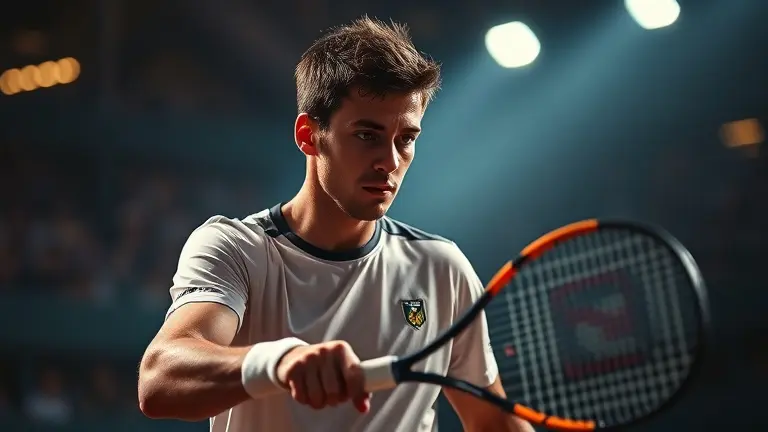
In the high-stakes arena of professional tennis, success is rarely defined by raw talent alone. It is a grueling test of physical endurance, mental fortitude, and the ability to adapt to ever-changing conditions. As of April 2026, Cameron Norrie continues to embody these professional virtues, consistently proving that tactical brilliance and relentless baseline consistency can dismantle even the most aggressive opponents on the ATP Tour.
Norrie’s journey through the 2026 season offers a masterclass in professional preparation. Whether he is navigating the high-paced rallies of hard courts or adjusting his game for the nuanced demands of the European clay, his focus remains sharp. For fans and sports enthusiasts, his approach provides a compelling blueprint for excellence, emphasizing that peak performance is a direct result of iterative refinement and disciplined conditioning.
In this deep dive, we explore how Norrie’s specific tactical adjustments and athletic evolution position him as a perennial threat on tour. We will also examine how the same principles of high-level endurance and metabolic efficiency required by elite athletes can be applied to your own daily life, helping you maintain a consistent edge in a demanding world.
Cameron Norrie’s Current Standing in the 2026 ATP Tour
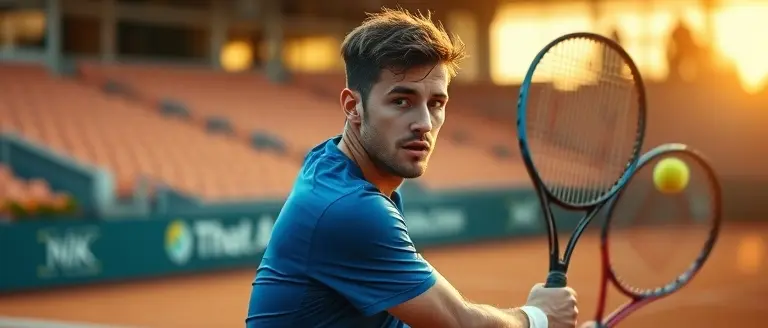
As of April 2026, Cameron Norrie remains a tactical mainstay on the ATP Tour, navigating the mid-spring transition with his characteristic blend of resilience and baseline consistency. Having moved past the initial hard-court swing, Norrie is currently refining his game to suit the European clay-court circuit. Statistical analysis of his 2026 campaign indicates a focused effort on maintaining a high first-serve percentage and shortening points when necessary, a tactical adjustment clearly aimed at preserving stamina for the grueling demands of the upcoming Grand Slam season. While the competition at the top of the ATP rankings remains increasingly dense, Norrie’s ability to grind out victories against top-tier opponents keeps him firmly positioned within the professional elite.
Performance Trends and Tactical Evolution
Recent match results for the British left-hander showcase a player committed to iterative improvement. Rather than relying solely on his well-documented endurance, Norrie has been observed integrating more aggressive forehand variations to dictate play earlier in the rally. This shift in tennis technique is particularly critical as he prepares for high-intensity matches on slower surfaces. His current trajectory suggests he is prioritizing “quality over quantity,” opting for a strategic tournament schedule that emphasizes peak conditioning for marquee events.
Key indicators of his 2026 form include:
- Baseline Efficiency: Improved winners-to-unforced-errors ratio compared to the 2025 season.
- Surface Adaptation: Successful implementation of increased top-spin profiles to counter the slower bounce of European clay courts.
- Match Durability: Consistent performance in high-pressure tie-breaks, proving that his mental toughness remains a core pillar of his success.
As fans track his live scores and progress through the spring, the consensus among analysts is that Norrie is positioning himself as a “dark horse” contender. By focusing on tactical discipline and optimizing his movement, Norrie is effectively managing the physical toll of the tour while staying within striking distance of the world’s top players. His path forward rests on capitalizing on key points during the European swing, a phase that will ultimately dictate his seeding and momentum heading into the mid-year majors.
Anatomy of a Grinder: Analyzing Norrie’s Tactical Playstyle

Cameron Norrie has carved out a formidable reputation on the ATP Tour as one of the game’s premier tacticians, often described as the quintessential “grinder.” Unlike players who rely solely on blistering pace or overwhelming serve-and-volley tactics, Norrie’s success is built upon a foundation of suffocating consistency, high-level endurance, and a unique geometric understanding of the court. His ability to neutralize power hitters stems from a compact, heavy-topspin forehand that allows him to absorb pace while dictating point construction through patient, high-percentage tennis. By frequently altering the height and depth of his groundstrokes, Norrie disrupts the rhythm of his opponents, forcing them into unforced errors during extended rallies.
Key Technical Pillars of the Norrie Game
The effectiveness of Norrie’s playstyle lies in several repeatable technical components that frustrate even the highest-ranked seeds:
- Heavy Topspin Manipulation: Norrie’s forehand possesses a distinct whip, generating significant revolutions that kick up toward the opponent’s shoulder, particularly on high-bouncing surfaces like clay or high-altitude hard courts.
- Defensive Versatility: He excels at transitioning from a defensive crouch to a neutral position, using his lateral quickness to retrieve balls that would be winners against less agile competitors.
- Unconventional Angles: Rather than seeking the direct line, he specializes in finding short, dipping cross-court angles that force opponents to strike from below the net tape, effectively resetting the point dynamics.
- Mental Fortitude: His ‘grinder’ mentality is a tactical asset in itself; he treats every point as a marathon, maintaining an unwavering level of focus that tests the patience and fitness of his rivals over the course of a best-of-five-set match.
This methodical approach makes Cameron Norrie a nightmare matchup for aggressive players who prefer short points. By denying his opponents free points and refusing to engage in ‘ball-bashing’ duels, he forces his counterparts to play an extra shot in every exchange. As he progresses through the ATP season, this blend of physical conditioning and tactical patience remains his greatest weapon, ensuring he stays competitive against the world’s elite by consistently forcing them to prove their technical proficiency under immense pressure.
Adapting to the Red Dirt: Norrie’s Tactical Adjustments for the European Clay Swing

The transition from the high-paced hard courts of the early season to the European clay swing requires a significant recalibration for Cameron Norrie. While his game is built on a foundation of relentless consistency and flat, penetrating groundstrokes that thrive on faster surfaces, the slower, higher-bouncing nature of red clay demands a more nuanced approach. To remain competitive against the tour’s elite clay-court specialists, Norrie has had to evolve his tactical blueprint, moving away from aggressive, short-rally tennis toward a more patient, grind-oriented style that emphasizes point construction over raw pace.
Key Technical and Tactical Modifications
Norrie’s success on clay is largely dependent on his ability to neutralize heavy topspin while maintaining his signature defensive resilience. His adaptations for the European spring season include:
- Increased Use of Topspin and Height: Unlike his flatter hard-court approach, Norrie incorporates more topspin on his forehand to clear the net comfortably and push opponents behind the baseline. This extra margin is critical on clay, where balls sit up, allowing opponents to dictate if the contact point is too low.
- Refined Sliding Technique: Navigating the slippery surface requires precise footwork. Norrie has significantly improved his ability to slide into his backhand, allowing him to recover more efficiently and stay balanced while hitting off-platform.
- Tactical Patience and Point Construction: On hard courts, Norrie often looks to finish points with his inside-out forehand early. On clay, he shifts his mentality, often forcing his opponent to hit the “extra ball” by utilizing more cross-court depth before hunting for a short ball to dictate the rally.
- Serve Placement over Velocity: Recognizing that free points are harder to come by on dirt, Norrie relies less on raw pace and more on variety—specifically utilizing the wide slice serve to pull opponents off the court and open up the open side.
By integrating these tactical adjustments, Cameron Norrie effectively balances his natural instinct for high-percentage tennis with the specialized requirements of the European clay season. His continued growth on the surface suggests a more versatile playing style that serves him well as he navigates the ATP tour’s most demanding transition period.
Career Milestones and the Path to Grand Slam Success

Cameron Norrie has evolved from a steady baseline grinder into one of the most resilient competitors on the ATP Tour. His professional journey is marked by a relentless work ethic and a tactical intelligence that has allowed him to dismantle top-tier opponents across various surfaces. A pivotal milestone in his career remains his breakout 2021 season, capped by a victory at the BNP Paribas Open in Indian Wells. This achievement signaled his arrival as a legitimate contender, proving that his unique, high-spin, and defensive-oriented style could stifle even the most aggressive power-hitters in the sport.
Defining Breakthroughs and Statistical Consistency
Beyond his Masters 1000 success, Norrie’s trajectory has been defined by his ability to maintain high ranking updates through sheer match-play volume and endurance. His semifinal appearance at Wimbledon served as a massive confidence booster, demonstrating his capability to perform under the immense pressure of a Grand Slam environment. Several key factors have contributed to his sustained relevance:
- Tactical Versatility: Norrie’s ability to transition between the low-bouncing conditions of hard courts and the tactical, grinding nature of the clay court season distinguishes him from many contemporaries.
- Physical Durability: He consistently ranks among the top players for matches played per season, an indicator of his elite fitness levels and injury prevention protocols.
- Mental Toughness: His comeback victories in high-stakes matches underscore a psychological resilience that serves as the bedrock of his long-term strategy.
As Norrie navigates the 2026 season, these historical milestones serve as more than just accolades; they are functional evidence of a blueprint that works. By refining his serve and increasing the depth of his groundstrokes, he continues to adjust his game to close the gap between his current level and the ultimate goal of securing a major trophy. His path forward relies on leveraging this deep reservoir of match experience to out-maneuver younger challengers, ensuring he remains a formidable obstacle in any ATP Tour draw.
Unlock Your Peak Performance Potential
Cameron Norrie’s climb to the top of the ATP rankings is a testament to the power of relentless tactical refinement and physical endurance. Whether he is dissecting an opponent’s defense on the European clay or outlasting rivals in high-pressure tie-breaks, his success is powered by an unwavering commitment to maintaining his physical edge. Just as Norrie must optimize his movement and stamina to survive grueling rallies, you must optimize your own internal metabolic processes to sustain the energy levels required to tackle your daily challenges with the same intensity.
To reach the next level of your own personal game, you need more than just willpower; you need a tool that supports your body’s natural rhythm. This is where CitrusBurn becomes an essential component of your routine. By providing consistent, stimulant-free metabolic support, CitrusBurn acts as an ‘athletic-grade’ optimizer, mirroring the steady, enduring stamina that professional players like Norrie rely on to remain competitive at the elite level. It is the perfect bridge for those who want to translate the discipline seen on the tennis court into their own health and vitality goals.
Don’t let fatigue dictate your results. Empower your metabolism and unlock the sustained, reliable energy you need to perform at your absolute best, day in and day out. Regain your competitive edge and experience what it feels like to operate with the efficiency of a high-performance athlete.

Optimize your own internal performance and regain your edge with CitrusBurn.
Get Yours Now