
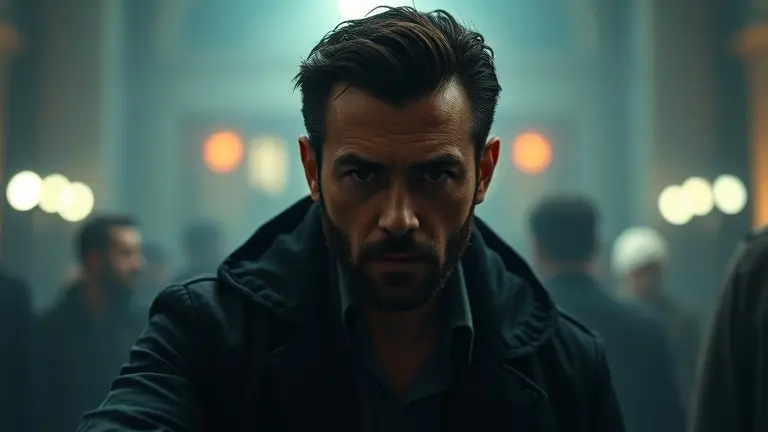
In the landscape of modern television, few performances have managed to bridge the gap between pure entertainment and profound cultural commentary as effectively as Antony Starr’s turn as Homelander in The Boys. By 2026, the actor has moved beyond the typical trending cycle of a streaming-era star, cementing his position as a subject of genuine intellectual curiosity. Fans and critics alike are increasingly looking past the spectacle of his most famous role to interrogate the technical brilliance required to sustain such a volatile character over multiple seasons.
This enduring interest is not merely a byproduct of Amazon Prime Video’s release schedules but a reflection of the sophisticated way audiences are consuming high-concept media. We are no longer content with surface-level reactions; instead, there is a growing appetite for a deeper, more analytical understanding of the craftsmanship behind the anti-villain archetype. To truly deconstruct the layers of Antony Starr’s performance, one must approach the material with the same precision and focus that the actor brings to the screen.
In the following analysis, we move beyond the headlines to explore the career trajectory, methodology, and psychological depth that make Antony Starr a singular force in contemporary acting. This is a deep dive designed for the viewer who views prestige television not just as entertainment, but as an intellectual challenge to be dissected and understood.
The Sustained Cultural Impact of Antony Starr in 2026

As of 2026, Antony Starr has transcended the typical lifecycle of a trending television actor, cementing his place as a permanent fixture in global pop culture discourse. While many stars rely on the frantic, short-lived energy of breaking news cycles, Starr’s relevance remains remarkably “evergreen.” This phenomenon is largely attributed to the cultural ubiquity of his portrayal of Homelander in Amazon’s The Boys. Rather than fading into the background between production cycles, Starr has become a central subject of intellectual analysis, evolving from a mere performer into a shorthand for modern political and social satire. His character is consistently dissected across platforms like Reddit and Twitter, where audiences treat the psychological nuances of the anti-villain archetype as a mirror for contemporary societal anxieties.
The transition of Antony Starr from a reactive trending topic to an iconic status is driven by a profound symbiosis between his intense screen presence and highly engaged fan communities. The discourse surrounding his career now frequently avoids superficial tropes, focusing instead on:
- The Actor’s Craft: Detailed technical breakdowns of Starr’s micro-expressions and physical performance, which anchor the hyperbolic nature of his character.
- Symbolic Satire: The ongoing exploration of how the Homelander persona functions as a foundational case study for examining power dynamics in mass media.
- Evergreen Appeal: A consistent stream of community-driven content that treats his performance as a seminal contribution to the anti-hero genre, independent of specific seasonal release schedules.
By distancing himself from reliance on industry “scandals,” Starr has successfully cultivated a professional brand that prioritizes the longevity of his work. Evidence suggests that his ability to maintain this level of organic engagement is rare, positioning him not just as a television lead, but as a critical reference point in film and television theory. His continued presence in the zeitgeist serves as a testament to the power of character-driven acting, which consistently resonates with audiences long after the cameras have stopped rolling.
Beyond the Cape: The Acting Evolution of Antony Starr
To understand the unsettling precision of Antony Starr as the face of modern television villainy, one must look far beyond the red-white-and-blue mantle of Homelander. Starr’s career trajectory is a masterclass in character-driven storytelling, rooted in the rugged, character-focused landscape of New Zealand television. His breakout performance in the cult classic Outrageous Fortune provided the essential training ground for his current success. By playing the dual roles of twins Jethro and Van West, Starr demonstrated an early aptitude for internalizing psychological duality—a skill that has become the hallmark of his portrayal in The Boys.
From Kiwi Television to Global Stardom
Starr’s transition from regional dramas to international acclaim was not an overnight shift but a result of cumulative technical rigor. His work in productions like Banshee, where he portrayed the stoic, enigmatic Lucas Hood, showcased his ability to command screen time through physical stillness rather than dialogue. This progression highlights why he is currently regarded as a preeminent character actor in the United States; he does not merely play roles but constructs them from the ground up.
- The Outrageous Fortune Foundation: Developing the ability to inhabit distinct personalities simultaneously, which laid the groundwork for complex anti-villain archetypes.
- The Banshee Era: Refining the “menace through minimalism” approach, prioritizing non-verbal communication and precise, intense body language.
- The Homelander Phenomenon: Synthesizing years of stage and screen craft to portray a character that relies on the terrifying intersection of god-like power and profound, fragile narcissism.
This evolution reveals that the performance Antony Starr delivers in The Boys is an organic byproduct of decades of versatility. By avoiding typecasting early in his career, he developed a nuanced repertoire that allows him to anchor the satirical, dark intensity of his current projects. Rather than relying on simple tropes, he consistently injects vulnerability into his portrayals, ensuring that even his most monstrous characters remain grounded in a recognizable, albeit twisted, human logic. This trajectory confirms that Starr’s rise to prominence is built on a foundation of deliberate, sophisticated acting choices that transcend the genre-heavy material he is currently famous for.
The Methodology of the Anti-Villain: Deconstructing Homelander

Antony Starr has redefined the contemporary anti-villain archetype through a masterclass in psychological realism. His portrayal of Homelander in The Boys transcends the typical tropes of comic book antagonism, relying instead on a precise, calculated methodology that prioritizes subtext over melodrama. Starr utilizes a technique defined by “controlled instability,” where the character’s god-like physical power is perpetually undermined by an underlying, fraying human fragility. His performance serves as a scathing critique of absolute power, grounding the absurd premise of a Superman-esque deity in the recognizable rot of profound narcissism and abandonment-driven insecurity.
The Anatomy of Performance: Micro-expressions and Physicality
Starr’s ability to manipulate audience perception rests on his command of subtle, often imperceptible, physiological cues. Rather than relying on grandiose gestures, he employs a suite of specific acting techniques:
- Micro-expressions: Starr frequently utilizes rapid, incongruent shifts in facial expression—often transitioning from a manufactured, PR-approved smile to a cold, dead-eyed stare within a single frame. This jarring contrast highlights the character’s dissociation.
- Physical Posture: While Homelander is physically imposing, Starr portrays him with a rigid, unnatural verticality. His posture suggests a man holding himself together by a thread, emphasizing that his “heroic” stance is a performance he must consciously maintain.
- Voice Modulation: The actor shifts between a saccharine, media-trained baritone and a jagged, whispered tremor when the character is provoked. This modulation reinforces the volatility of an anti-villain who views his own humanity as a weakness to be suppressed.
By balancing the terrifying projection of an untouchable deity with the petulance of a deeply damaged individual, Antony Starr creates a character that is as repulsive as he is magnetic. This dichotomy is the engine of his performance; it forces the audience to reconcile their admiration for his craft with the genuine discomfort evoked by Homelander’s psychological breakdown. Ultimately, it is this commitment to the “humanity” of the monster that has cemented Starr’s status as one of the most compelling actors in modern prestige television.
Differentiating the Man from the Myth: A Comparative Analysis
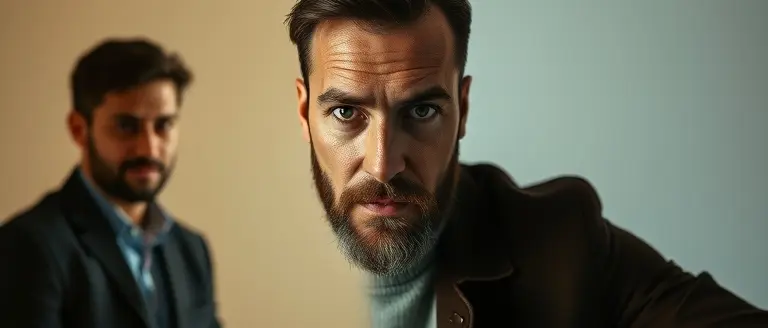
The cultural ubiquity of Antony Starr as the terrifyingly unhinged Homelander has created a unique psychological phenomenon where audiences struggle to decouple the actor from his most iconic role. While Homelander serves as a masterclass in narcissistic rage and repressed instability, Starr’s real-world persona offers a sharp, often jarring, point of contrast. Observers of his long-form interviews and public appearances often note a grounded, introspective individual who approaches his craft with a level of humility and intellectual rigor that is entirely absent in his screen counterpart. This dissonance is not a result of chance but is a calculated byproduct of his commitment to professional character acting, where the performance is meticulously synthesized rather than derived from a projection of self.
The Methodology of Transformation
Starr’s ability to vanish into the Homelander archetype—and indeed, his previous roles in shows like Banshee—relies on a distinct technical approach that prioritizes physical economy over theatrical excess. To differentiate the man from the myth, it is helpful to examine the specific techniques he employs:
- Micro-expressions: While Homelander’s menace is often silent and internalized, Starr uses subtle facial tics to convey internal turbulence, a stark contrast to his expressive and often self-deprecating demeanor in press junkets.
- Vocal Control: Starr adopts a specific, modulated cadence for his antagonist roles, which stands in direct opposition to his natural, approachable speaking voice.
- The ‘Anti-Villain’ Theory: Unlike actors who rely on personal intensity, Starr treats the character as a puzzle to be solved, allowing him to step away from the role immediately once the cameras stop rolling.
This professional detachment has allowed Antony Starr to avoid the pitfalls of typecasting that frequently plague actors who achieve immense success with a single, high-profile villainous role. By treating each performance as a technical exercise in psychological layering rather than an extension of his own identity, he ensures that the “myth” of his characters remains confined to the screen. His trajectory proves that his enduring popularity is not merely a reaction to a popular show, but a testament to a versatile craftsman capable of navigating the complex nuances between his public identity and the dark, satirical figures he brings to life.
Ultimately, Antony Starr’s meteoric rise is not merely a product of pop culture luck, but the result of a deliberate, masterfully executed craft. By deconstructing the anti-villain archetype with such surgical precision, he has forced audiences to look past the superficial tropes of genre television and engage with the deeper psychological undercurrents of the characters he brings to life. To truly appreciate the layers of vulnerability, narcissism, and calculated power that define his performance, one requires an audience that is as sharp and focused as the actor himself.
Just as an actor must sharpen their mind to inhabit a complex persona, audiences require acute cognitive focus to truly peel back the layers of dark, satirical performances. The intensity of modern prestige television demands that we bring our full intellectual capacity to the screen to unlock the subtext hidden within every micro-expression and silent stare. By choosing to treat the act of watching as an intellectual exercise, you elevate your experience from passive consumption to deep, rewarding analysis.
Optimize your cognitive performance to fully grasp the nuances of modern screenwriting and performance—try The Brain Song today. This is the ultimate tool for the discerning viewer who values high-quality content and wishes to maximize their intellectual engagement with the media that shapes our world.
 Optimize your cognitive performance to fully grasp the nuances of modern screenwriting and performance—try The Brain Song today.Get Yours Now